

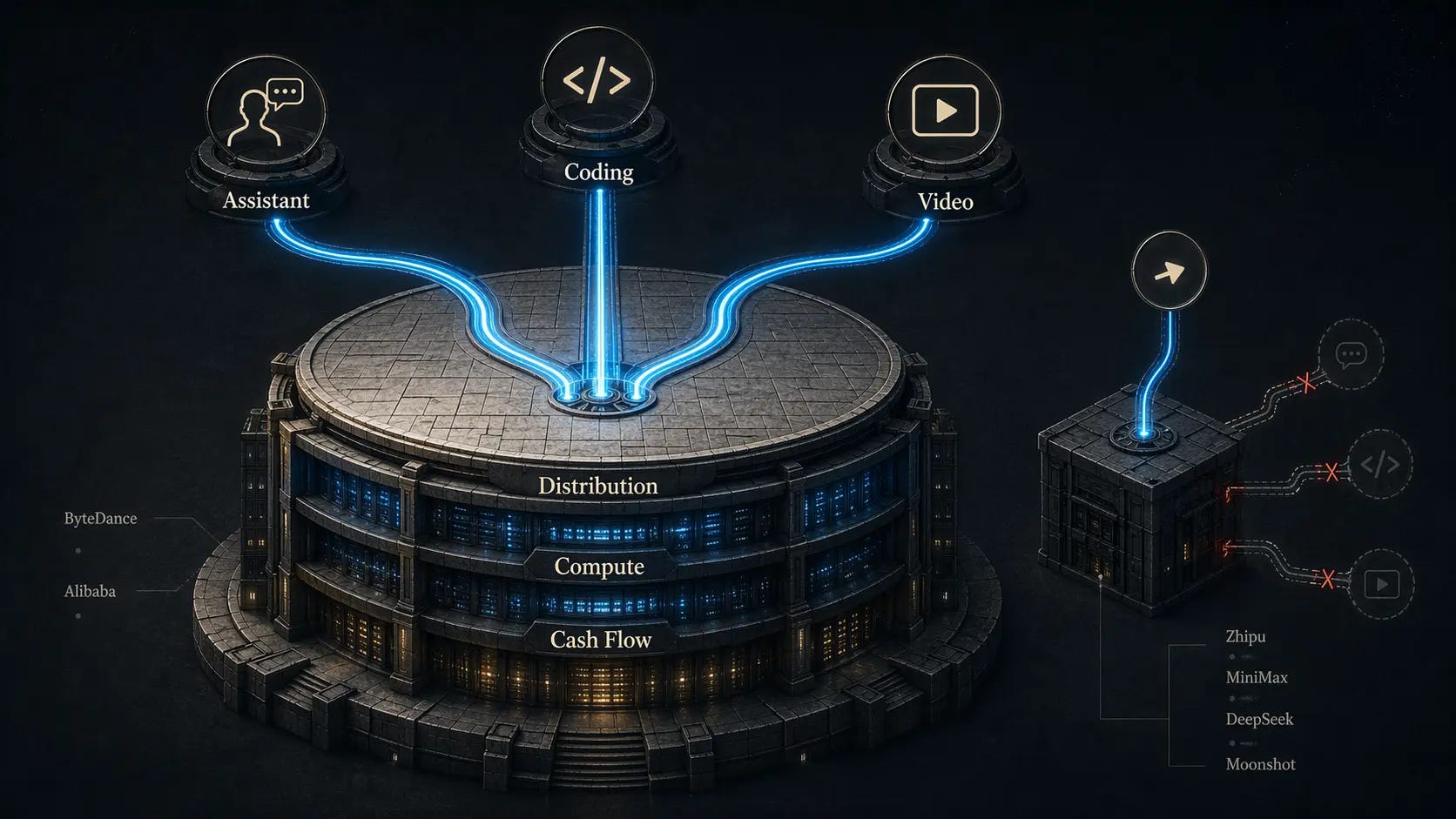
Six months ago, Zhipu AI still modeled its strategy on OpenAI, building general-purpose models across every modality. Today it calls itself the Chinese Anthropic, focused almost entirely on coding tools. MiniMax spent its first three years deliberately avoiding enterprise customers, convinced that China’s B2B market would trap it in low-margin customization. It recently hired a former Huawei Cloud executive to lead an enterprise push. DeepSeek, the company that defined itself by refusing outside money, is in discussions to raise at least $300 million. Moonshot AI, which launched as a consumer chatbot, just released a model designed to coordinate up to a thousand sub-agents in parallel.
These shifts did not happen in sequence. They happened within the same few months of early 2026, and they share an underlying cause. The AI model market in China has matured enough to reveal its structural fault lines. The widening gap between independent model companies and the platform giants entering the same lanes is becoming the most consequential competitive divide in China’s AI industry.
Platforms Get the Whole Menu
By early 2026, three commercial pathways had emerged for AI model companies globally. General-purpose AI assistants, led by ChatGPT, demonstrated that consumer subscriptions could reach significant scale. Coding and agent tools, led by Anthropic’s Claude Code, became one of the highest-value product categories in the industry. And video generation, among the largest consumers of inference compute, established a third axis of monetization.
Chinese companies recognized these lanes early. The divergence lies in how different types of players can approach them.
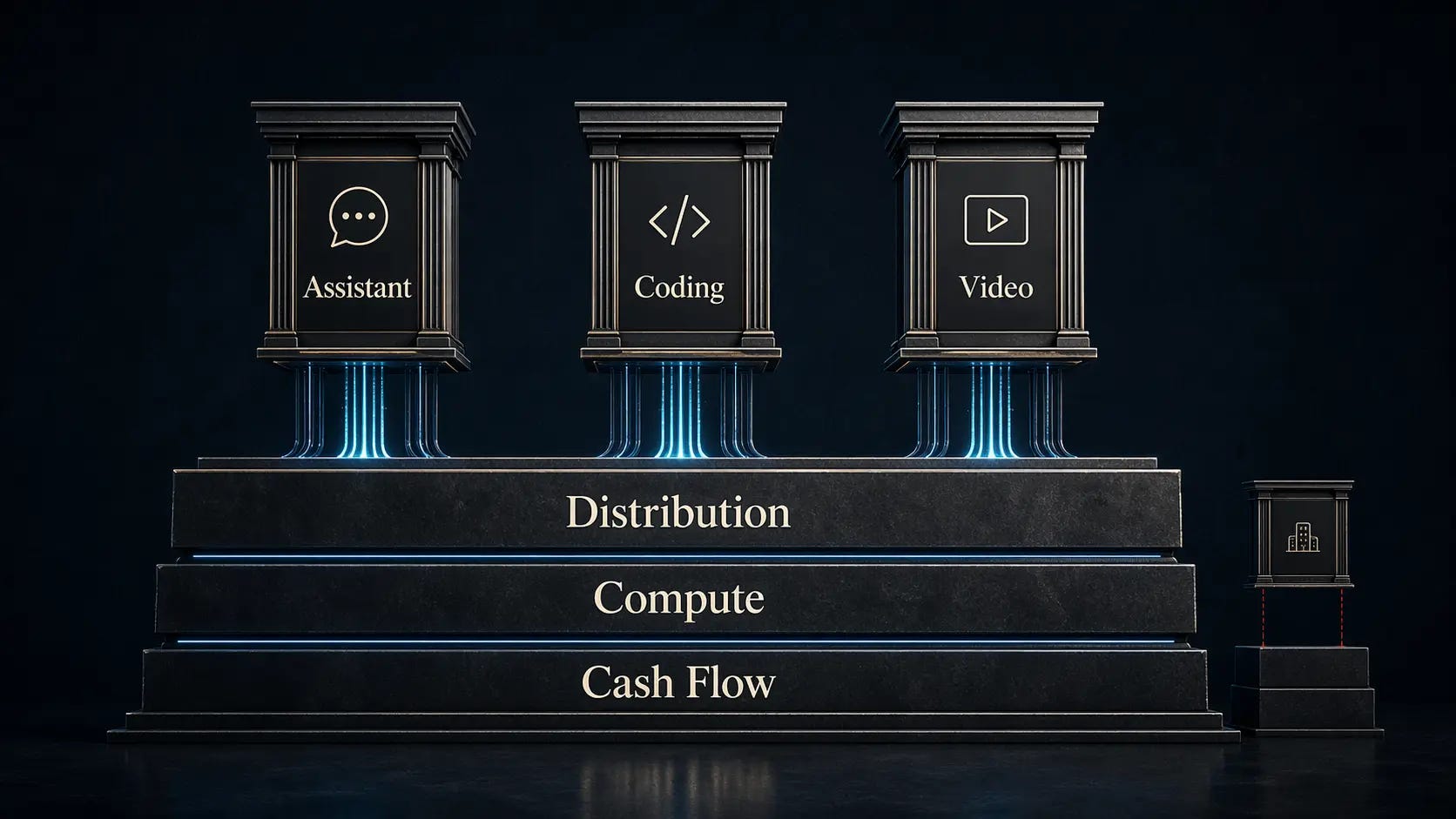
ByteDance shows what the platform advantage looks like in practice. Volcano Engine said in early April that Doubao’s daily token usage had surpassed 120 trillion. The company is pushing on multiple fronts at once, from video generation to agent products to cloud model services. Chinese media reports say Volcano Engine’s MaaS revenue target for 2026 has been set above RMB 10 billion, up from around RMB 2 billion in 2025. Even if the exact number is not officially disclosed, the direction is clear: ByteDance is trying to turn token demand into a cloud business, not just an app feature.
Alibaba tells a similar story from the organizational side. In March, the company separated its AI business from the cloud arm and created a new AI group led directly by CEO Eddie Wu. The new structure consolidates the company’s AI research lab, model-as-a-service platform, and consumer and enterprise AI products under a single organization. The point is not that Alibaba has already won. It is that platform companies can enter several monetization lanes at once because they already control infrastructure, distribution, and cash flow from other businesses.
That combination of advantages has three dimensions. First, distribution: ByteDance feeds inference demand through its own consumer apps, its cloud API, and embedded AI across the product portfolio. Independent model companies must acquire each user and each enterprise customer from scratch. Second, infrastructure: platform companies own or control their compute at scale, while most independents still procure it as a service. Third, cross-subsidy: a platform can treat AI model development as a strategic cost center for years, absorbing losses that would bankrupt a standalone company. A loss at that scale is manageable inside a platform company’s consolidated business. For an independent model company, it is existential.
Four Pivots, One Pressure
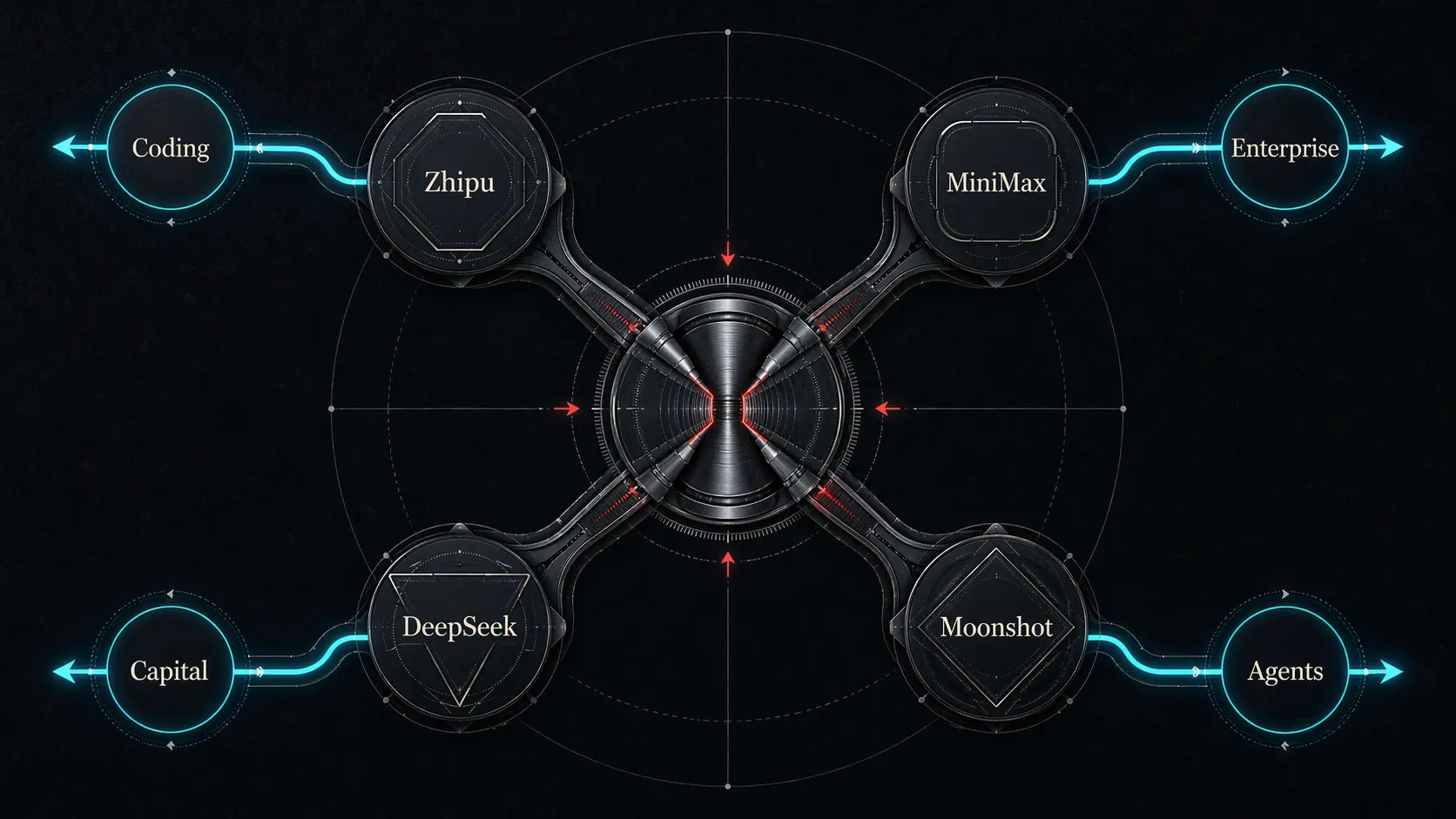
The identity shifts underway at China’s AI model companies reveal how each has tried to resolve the tension between ambition and constraint.
Zhipu made the most deliberate pivot. Through 2025, the Tsinghua-backed company spread its resources across model types and product categories, broadly tracking OpenAI’s full-stack approach. The shift came when it concentrated on coding. Its GLM-5.1 model and Coding Plan subscription sold out within minutes of each limited-quantity release. Developers wrote automated scripts to secure access.
The survival thesis behind this focus is that model quality creates pricing power. Zhipu’s first post-IPO earnings offered early evidence: API prices rose 83%, coding subscriptions went up 30%, and demand still exceeded supply. But the pivot also exposed how thin the operational margin is. Outages and degraded response times have become more frequent as usage scales, and the company has priced its models above most Chinese competitors on third-party aggregators, steering traffic to its own infrastructure rather than competing for platform volume. The coding niche is working. The infrastructure to sustain it is still catching up.
MiniMax made the pivot it had spent years trying to avoid. The company was founded on a deliberate rejection of China’s enterprise AI market, where bespoke projects and thin margins had defined the previous generation. It built consumer social products for global users, and its open-source distribution flywheel pulled in developers at near-zero marketing cost, with models among the most called on major aggregator platforms, priced at roughly one-twentieth of Claude Opus.
But consumer revenue hit growth ceilings earlier than expected, and margins stayed thin. The company recently brought on a former Huawei Cloud regional vice president and began appearing at government and enterprise industry events. It is investing in its own data center infrastructure and partnering with major streaming platforms and state media on AI video production. Each step marks a departure from the capital-light consumer model MiniMax was designed to be. The distribution advantage is real. Whether it can be converted into enterprise revenue without falling into the customization trap the founders originally fled is the open question.
DeepSeek faces a transformation that is partly chosen and partly imposed. The company that defined itself by turning away outside money is now in discussions to raise at least $300 million. The immediate driver is talent retention: competitors have reportedly offered two to three times what DeepSeek can match, and without external funding, the company’s equity has no market-validated price.
The less visible pressure is hardware. Beyond building V4, the team has invested substantial engineering hours adapting the model to run on Huawei’s latest Ascend processors, work that people familiar with the effort say has materially extended the development timeline. Fifteen months without a major model release is a long gap in a market where competitors ship updates in weeks. DeepSeek remains a research lab being asked to simultaneously perform industrial-scale hardware migration, and the budget for both is stretching thinner.
Moonshot AI placed the most technically ambitious bet. Kimi K2.6, released in April, can orchestrate hundreds of sub-agents in parallel, scaling up to a thousand according to the company, with demonstrations showing autonomous operation over multiple days. Rather than competing on model benchmarks, Moonshot is wagering that agent orchestration architecture will matter more than any individual model’s performance. The commercial path from impressive demo to repeatable revenue remains unclear for this category globally. But the bet is that getting the architecture right early creates structural advantages that a better model alone cannot replicate.
What Listing Didn’t Fix
MiniMax and Zhipu both completed Hong Kong IPOs in early 2026. The listings resolved the immediate liquidity crisis. When both companies filed in December 2025, each had narrowed its runway to months. MiniMax ended 2025 with $1.05 billion in reserves, before counting $614 million in IPO proceeds. Zhipu raised substantial capital as well.
The IPO fixed liquidity. It did not fix industrial position.
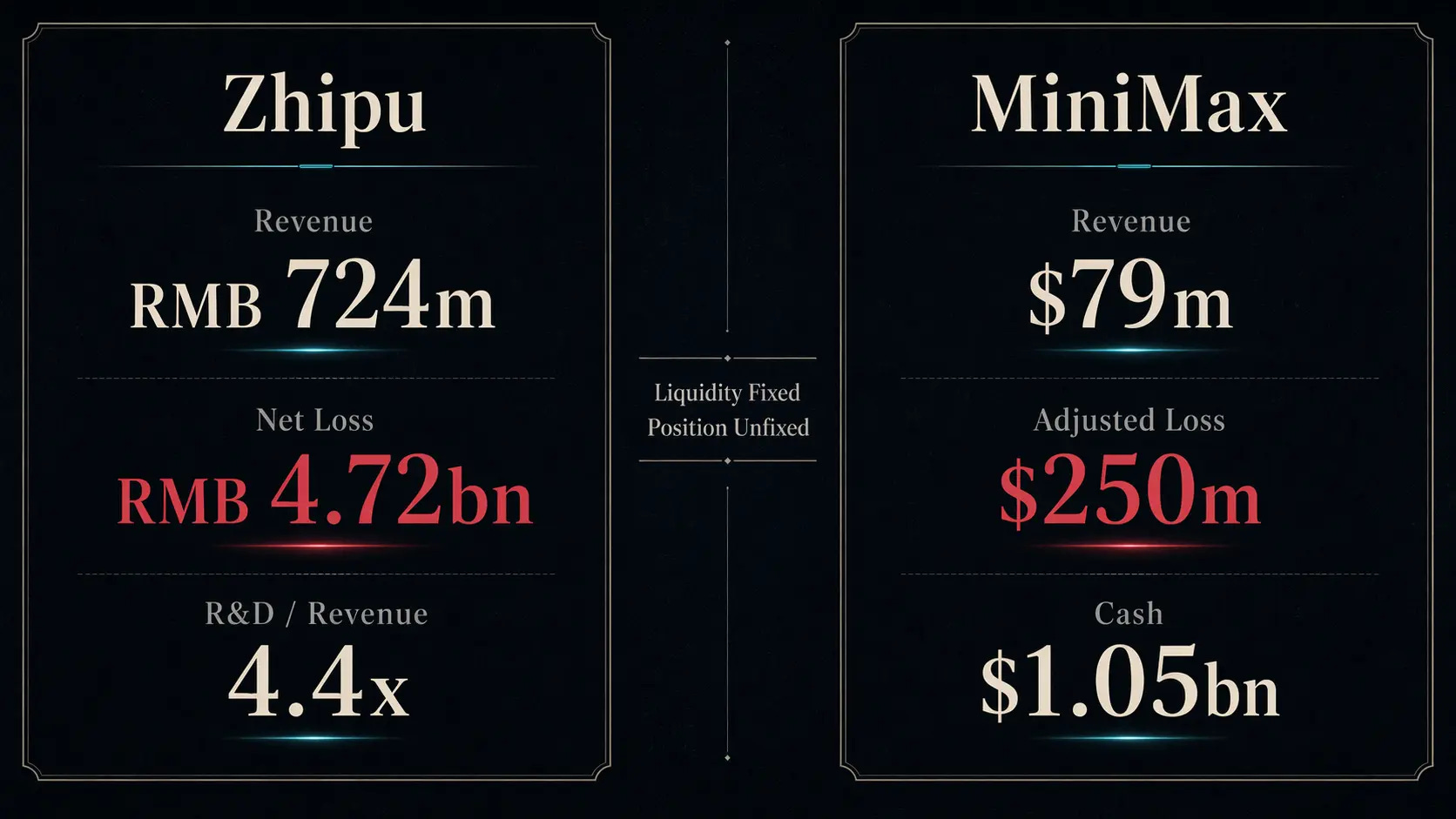
Zhipu reported RMB 724 million ($104.8 million) in 2025 revenue, with R&D spending running at 4.4 times revenue and net losses widening to RMB 4.72 billion. MiniMax generated $79 million in 2025 revenue against an adjusted net loss of $250 million. Both companies showed improving trajectories, with revenue growing faster than R&D spending for the first time at each firm. But the absolute gap remains vast, and neither has yet shown that the improvement can survive the next competitive shock.
The comparison with platform companies underlines the scale difference. According to Chinese media reports, ByteDance’s cloud division has set a MaaS revenue target above RMB 10 billion for 2026. Alibaba has set a goal of reaching $100 billion in annual cloud and AI revenue within five years. These figures suggest a different kind of contest. Independent model companies compete for customers. Platform companies compete for market architecture.
A Temporary Window in Coding
One pattern cuts across the Chinese AI landscape. Coding, agent capabilities, and multi-step reasoning have become the focal point of both product strategy and commercial investment.
The convergence follows economic logic. AI coding tools represent one of the clearest paths to sustained, high-value inference demand. Token consumption per coding session can run ten to a hundred times above a typical chat interaction. Enterprise willingness to pay for developer productivity has proven more resilient than for general-purpose assistants.
Model companies and platform companies are converging on this market from opposite directions. Independent model companies enter from the model layer: Zhipu’s coding subscriptions, MiniMax’s aggressive API pricing, Moonshot’s agent architecture. Platform companies enter from the application and distribution layer: ByteDance has begun sponsoring infrastructure for the OpenClaw ecosystem’s Chinese developer community, signaling a play for ecosystem control. Alibaba is launching coding and agent products through its newly reorganized AI group.
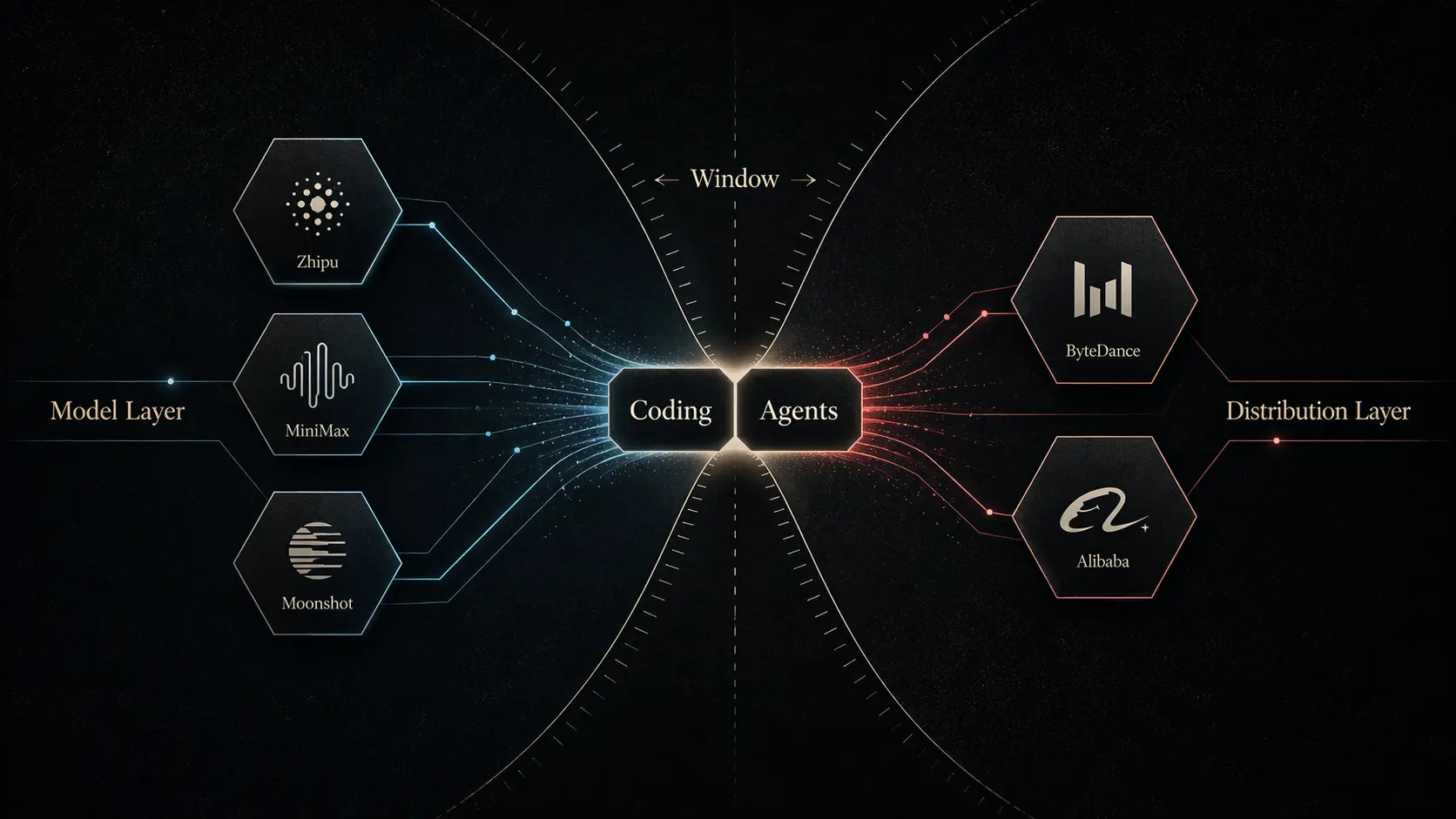
For now, coding may offer focused model companies a temporary window before the platforms fully commit. Industry assessments suggest that platform companies have not yet concentrated their resources on coding and agent products to the same degree, and Zhipu’s coding tools have reportedly surpassed several domestic Big Tech competitors in developer evaluations, though the gap between Chinese offerings and Anthropic’s Claude remains meaningful. This window exists in part because platform companies initially treated AI coding as a feature of their cloud business rather than a standalone product category. Model companies that build user bases and developer habits before the platforms arrive in force may establish enough switching cost to defend their position. But the window shows signs of narrowing. ByteDance’s recent shift from aggressive API price-cutting to margin-conscious pricing suggests a company moving past the land-grab phase.
Too Big to Be Startups, Too Small to Be Platforms
China’s independent AI model companies occupy a position with few precedents. They are too large, too well-capitalized, and too technically capable to be called startups. Zhipu and MiniMax are publicly listed. DeepSeek may soon carry a valuation above $10 billion. Their models compete credibly on global benchmarks.
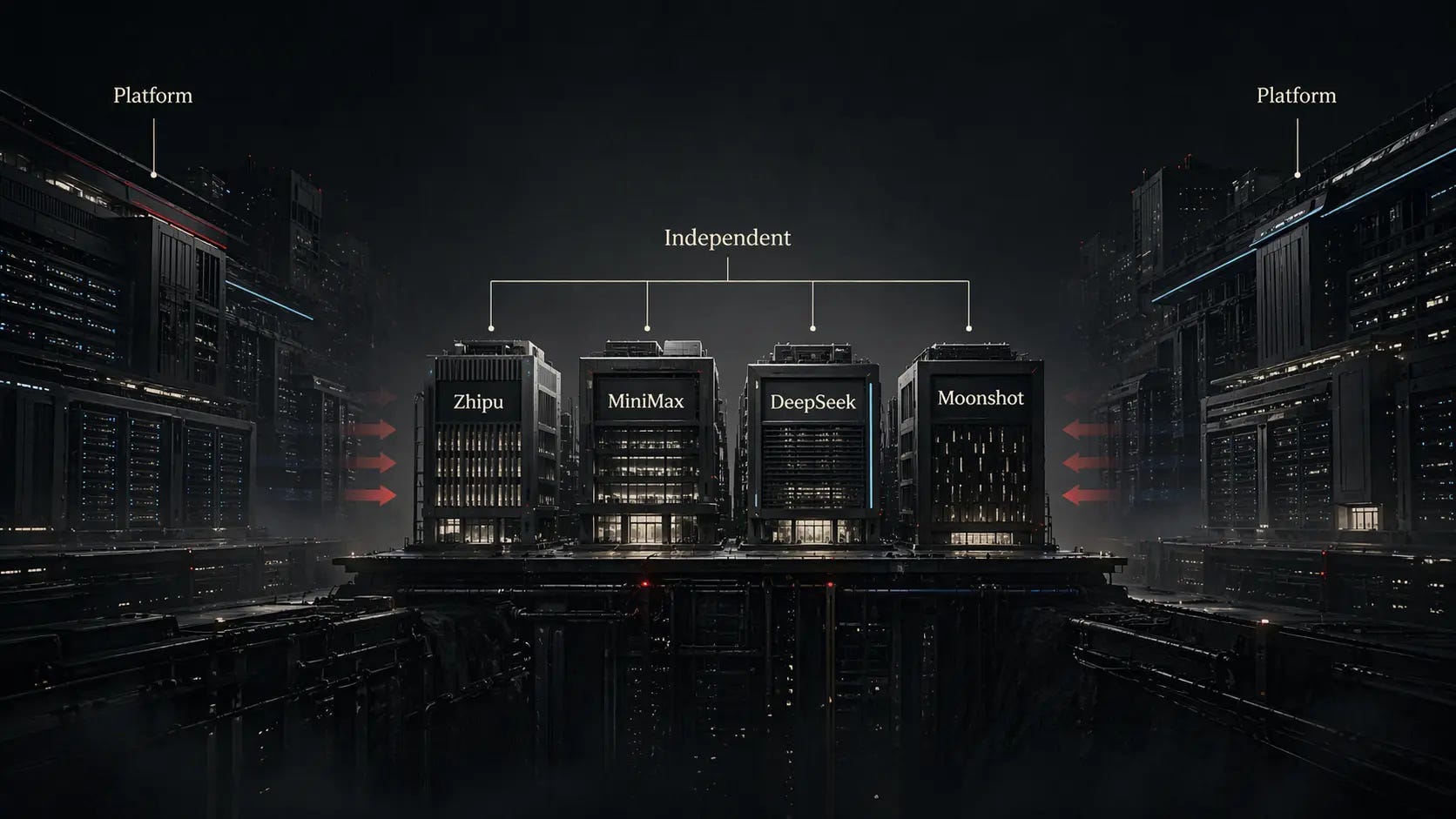
Yet they lack what defines platform companies: owned distribution channels, diversified revenue, compute infrastructure at scale, and the financial capacity to sustain multiple business lines simultaneously. They must function as research laboratories, product companies, and infrastructure builders at the same time, on budgets that strain to cover any one of those roles.
Each company’s strategic choice looks different on the surface. Beneath that difference sits the same budget constraint. And each lane leads toward territory where platform companies are arriving from the other direction, carrying resources that independents cannot come close to matching.
The deeper pattern is not that these companies lack strategy. They do not. The pattern is that their strategic freedom is being compressed from two sides at once: by the capital intensity of staying competitive in model development, and by the speed at which platform companies are entering the same product categories. Whether the depth of focus that comes from having to choose one bet can outweigh the breadth of resources that comes from not having to choose at all is the question that defines the next chapter of China’s AI industry.