

On March 6, nearly a thousand people lined up outside Tencent’s headquarters in Shenzhen. Some carried NAS drives. Others brought MacBooks. A few showed up with mini PCs under their arms. They were waiting for Tencent Cloud engineers to install an open-source AI agent called OpenClaw onto their devices, free of charge. Appointment slots ran out within an hour.
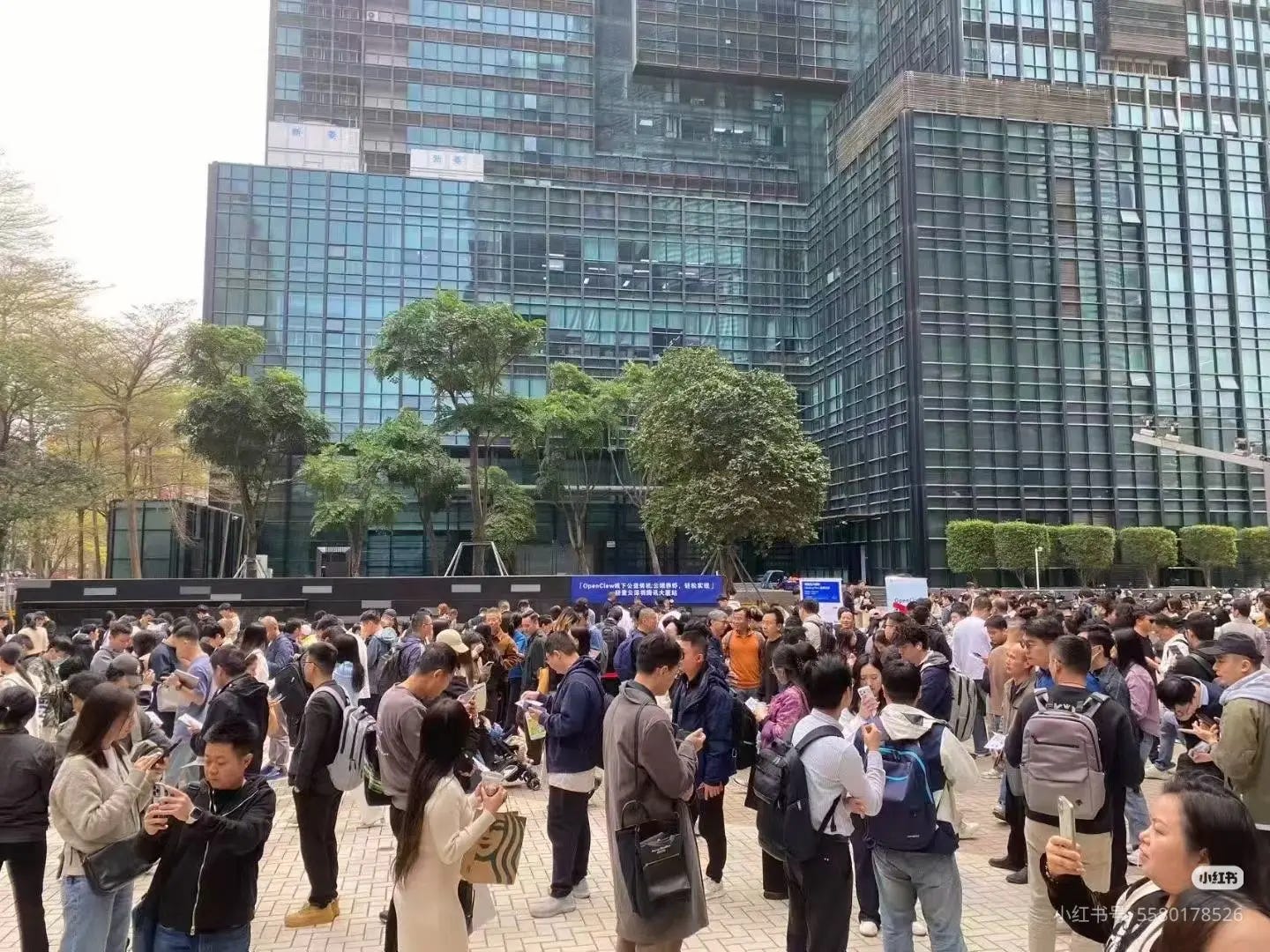
OpenClaw runs locally on personal devices and connects to large language models through API calls. It operates across messaging platforms including Slack, WhatsApp, Telegram, and Feishu (the Chinese workplace app similar to Slack), and executes multi-step tasks autonomously: browsing the web, writing and debugging code, managing calendars, sending emails. Built by Austrian engineer Peter Steinberger, the project took roughly 100 days to become the most-starred repository in GitHub history. Chinese media were already framing it as having surpassed Linux’s all-time star count, a milestone that took Linux over 30 years to reach. Of the more than 142,000 publicly visible OpenClaw agents tracked by monitoring platforms, nearly half originated from China.
International coverage has framed this mostly as spectacle. China is even more excited about AI than Silicon Valley. That reading captures surface energy but misses the structural story running underneath.
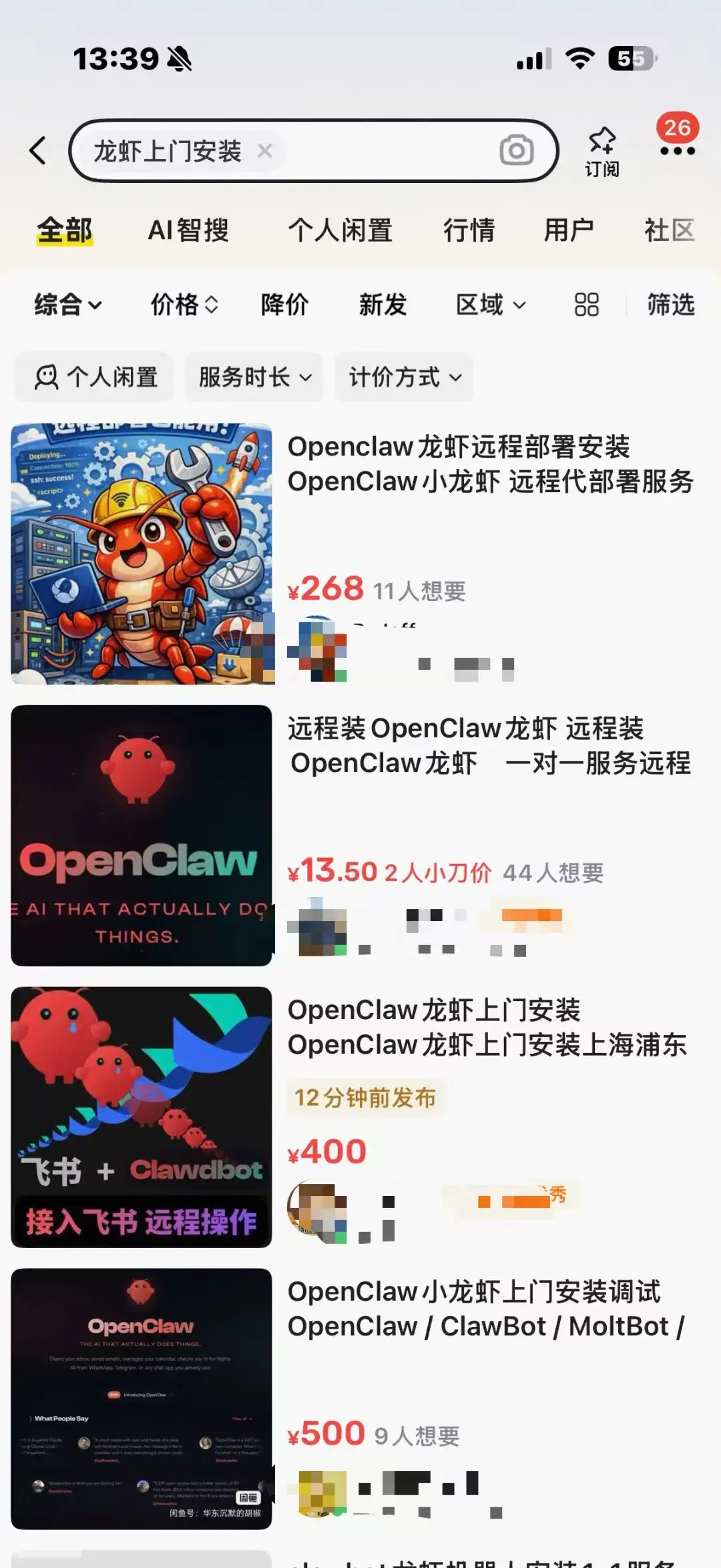
The speed of adoption does reflect forces specific to China’s demand side. On Xiaohongshu (China’s answer to Instagram) and Xianyu (Alibaba’s secondhand marketplace), paid installation services appeared almost overnight, typically $7 to $40 for remote setup and up to $100 for in-person visits. Tutorial videos flooded Douyin and Bilibili with titles promising AI mastery in minutes. Installers who spoke to Chinese reporters said many of their clients had no clear use case. They deployed first and figured out the purpose later. A cottage industry of middlemen, some of them former computer repair shops, began recruiting programmers to handle overflow demand across cities from Shenzhen to Chengdu. The urgency was less about productivity gains and more about not falling behind.
But the more durable story sits on the supply side. The companies that raced to support OpenClaw were not simply responding to user enthusiasm. They were solving their own structural problems.
Blocked and Embraced
In December 2025, ByteDance launched Doubao Phone Assistant, an AI agent embedded in a ZTE smartphone. The product used screen-reading technology to operate apps on the user’s behalf. The pitch was functionally identical to OpenClaw: AI that completes real tasks across multiple applications.

Within 48 hours, WeChat forced users to log out. Taobao triggered CAPTCHA challenges. Financial apps flagged security risks. ByteDance retreated, disabling WeChat operations and publicly calling for “alignment between technology development and industry acceptance.” (I wrote about the structural dynamics behind that episode here.)
Three months later, OpenClaw arrived with a broader feature set. It runs around the clock, calls model APIs hundreds of times per day, accesses local files, and operates browsers. The response from China’s tech establishment was the opposite of what ByteDance experienced. Tencent Cloud, Alibaba Cloud, Baidu Cloud, and Volcano Engine (ByteDance’s own cloud arm) all rushed to offer one-click deployment. Moonshot AI and MiniMax built hosted versions around their own models. Xiaomi announced a mobile agent inspired by OpenClaw’s design.
Same ambition. Opposite reception. Every layer of China’s AI stack found something to gain from OpenClaw. But those gains were only possible because of an architectural choice that Doubao Phone did not make.
$60 Billion in Servers, Looking for Work
China’s major tech companies committed heavily to AI infrastructure over the past year. ByteDance, Alibaba, and Tencent spent an estimated $60 billion in combined capital expenditure. That level of spending created enormous pressure to find sustained inference demand. Standard chatbot usage was not generating it. A typical chat session consumes a few hundred tokens per exchange. Users ask a question, get an answer, and close the app. The arithmetic did not work.
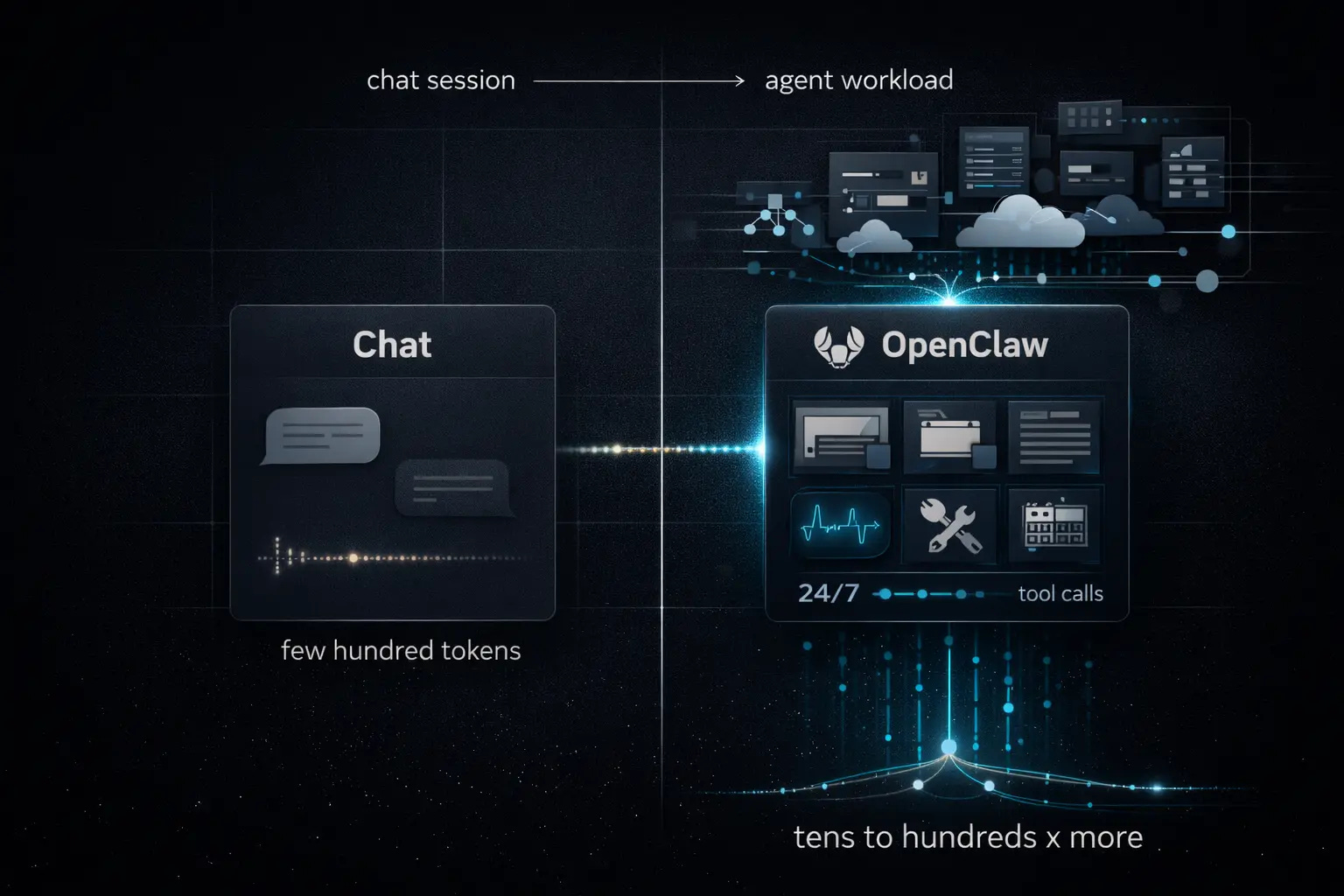
OpenClaw resets the consumption math. A single configured instance with active tools can burn through tens to hundreds of times more tokens per day than a chatbot user. According to a widely circulated account in the developer community, one overseas user reported spending $20 daily on API calls with minimal productive output, driven largely by background polling. That figure sits at the high end, but the directional point holds at any scale: agent workloads consume far more inference than chat sessions.
Every installed OpenClaw instance becomes a round-the-clock source of API calls flowing to cloud and model providers. That is why Tencent engineers were setting up folding tables in front of headquarters to help strangers install free software. The cost advantage of Chinese open-source models made them natural fits for this consumption pattern. Lower API prices encourage more frequent calls, which flow directly into cloud vendor revenue. The incentive loop is self-reinforcing: the cheaper the model, the more users run their agents, the more infrastructure gets sold.