

On April 8, Alibaba CEO Eddie Wu sent another company-wide letter. He has been writing more of them lately: the previous one, announcing a sweeping AI business group called Alibaba Token Hub, landed just 23 days earlier. This letter announced a Technical Committee for AI, upgraded the company’s model research laboratory into a full business unit, and reshuffled three of its most senior technology leaders. One appointment stood out: Zhou Jingren, previously CTO of Alibaba Cloud, received the title of Chief AI Architect.
The word carries intention. An architect designs systems for consistency and scale. The role implies that Alibaba’s AI challenge has moved beyond pushing scientific boundaries and into building machinery that produces reliably, at volume, around the clock. In the space of three weeks, Alibaba has executed three organizational moves that together amount to one of the clearest attempts this year to turn AI research into industrial production. Each addressed a different layer of the same problem: how to convert AI research into a commercially viable industrial operation.
Three Moves in Three Weeks
The sequence began on March 16, when Wu announced the formation of Alibaba Token Hub (ATH), a new first-tier business group that unified five previously separate AI units under a single commercial framework organized around the production, distribution, and monetization of tokens. As I analyzed in my earlier reporting, ATH formalized the thesis that Wu had been articulating since late 2025: that the token is the foundational unit of AI commerce, the way the kilowatt-hour measures electricity.
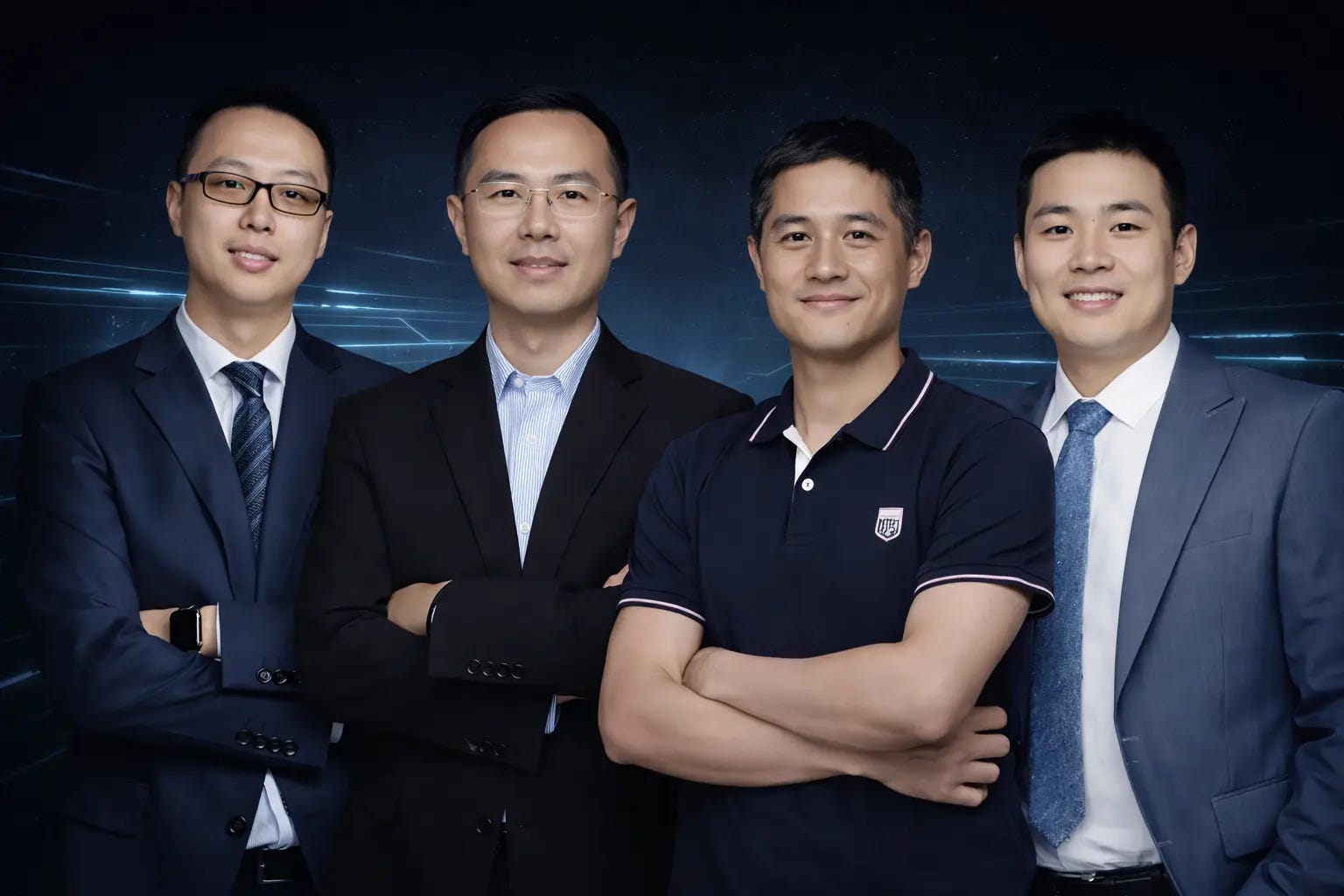
The second move arrived on April 8. Wu established a four-person Technical Committee at the group level, heading the committee himself. Zhou Jingren, Li Feifei (a database systems expert who spent years building Alibaba Cloud’s data infrastructure, and a different person from Stanford’s Fei-Fei Li), and Wu Zeming (Group CTO) fill the remaining seats. On the same day, Tongyi Lab, which houses the Qwen model family, was upgraded into the Tongyi Large Model Business Unit under Zhou Jingren, a structural elevation that formalizes the lab’s central role in the company’s model development strategy. Zhou now leads both the business unit and serves as the committee’s Chief AI Architect.
The third move was the quietest and possibly the most consequential. Between late March and early April, Alibaba released three new AI models in rapid succession: the multimodal Qwen3.5-Omni, the image generation model Wan2.7-Image, and the flagship Qwen3.6-Plus. Across these releases, Alibaba kept its most commercially important new capabilities inside hosted distribution rather than making them freely downloadable as open weights. Qwen3.6-Plus, the most significant of the group, is available through Alibaba Cloud’s API, with smaller variants in the Qwen3.6 family expected to be open-sourced later. Qwen3.6-Plus reached the top of OpenRouter’s usage rankings shortly after launch.
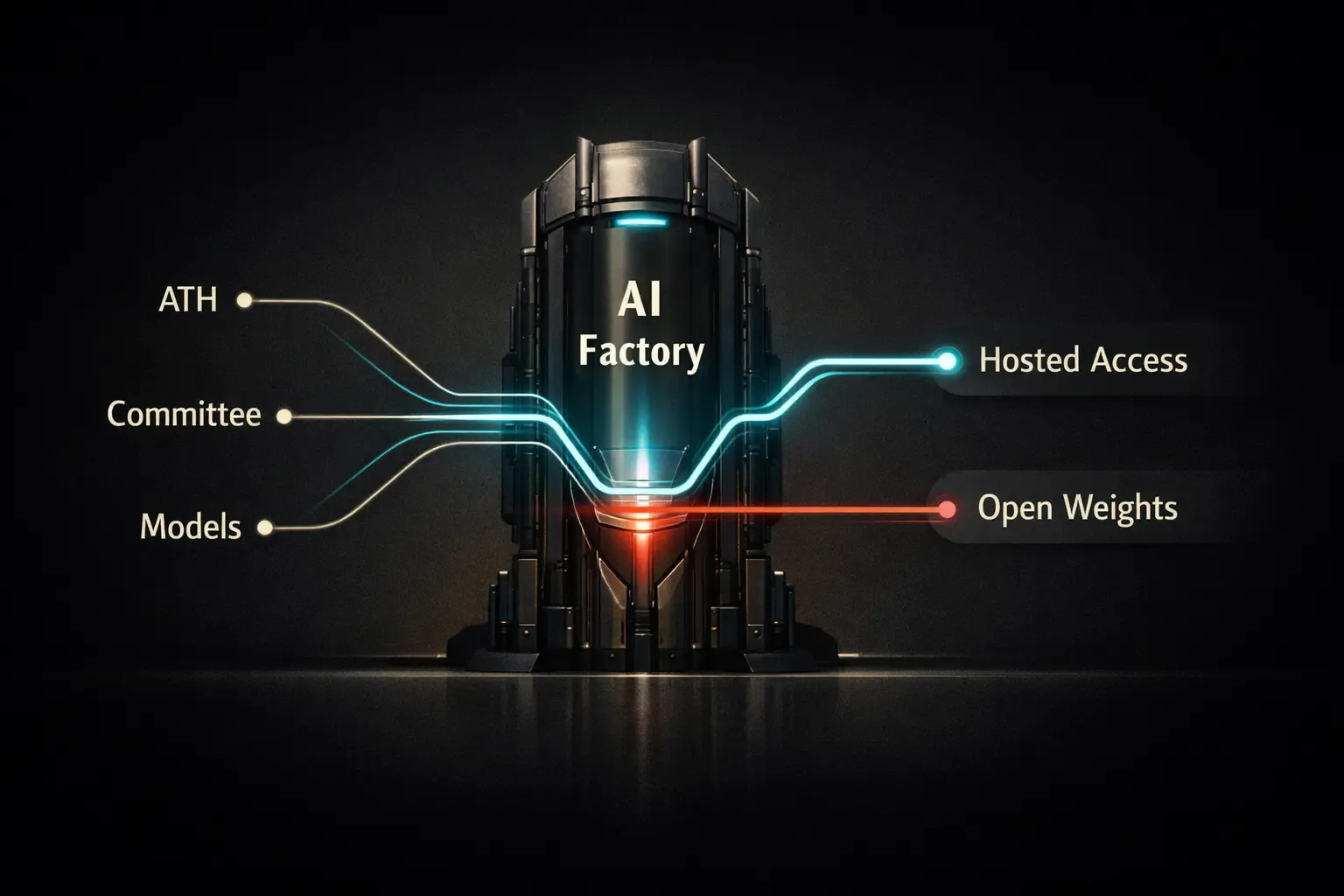
Each move addressed a distinct layer. ATH defined the commercial logic: how tokens get sold. The Technical Committee and the new Tongyi Business Unit defined the production logic: how tokens get made, transported, and delivered. The closed-source pivot defined the product logic: the best capabilities are no longer free. Together, the three steps completed a transformation from a research institution pursuing scientific ambition to a production operation pursuing commercial scale.
An Assembly Line with Three Foremen
The Technical Committee’s composition maps precisely onto the token supply chain that ATH was designed to monetize.
The most revealing appointment may be Li Feifei’s. He replaces Zhou Jingren as CTO of Alibaba Cloud, but he is a fundamentally different kind of technologist. Li is a database and storage systems specialist who joined Alibaba in 2018, an ACM Fellow and IEEE Fellow whose career was built on making large-scale data infrastructure perform reliably under load. Putting him in the Cloud CTO seat signals that Alibaba now treats its AI infrastructure layer as an engineering discipline, where uptime, cost efficiency, and throughput matter more than algorithmic novelty.
Zhou, freed from the Cloud CTO role, takes ownership of the asset that everything else depends on: model development. As I reported in my earlier column on Qwen’s restructuring, the departure of Qwen’s technical lead Lin Junyang in early March left a vacuum at the top of model research. Zhou stepping into a dedicated role fills that gap with a veteran whose career has spanned cloud infrastructure, search algorithms, and AI research across two decades. Every token in the system begins as output from a foundation model. Zhou now owns that origin point as his primary mandate.
The third seat belongs to Wu Zeming, Group CTO, who takes responsibility for the inference platform and serves as the committee’s Convener. Inference is where models process requests and generate output at production volume. In a system where every commercial transaction is an inference call, this is the bottleneck that determines whether the token economy can operate profitably. Wu’s convener role also makes him the coordination point between the other two members.
Read together, the three roles form a supply chain rather than a research consortium. One produces the core asset. One runs the machinery underneath. One manages the delivery layer in between. The CEO sits above all three. The committee exists to keep the line synchronized.
Continue reading with a paid subscription.
