

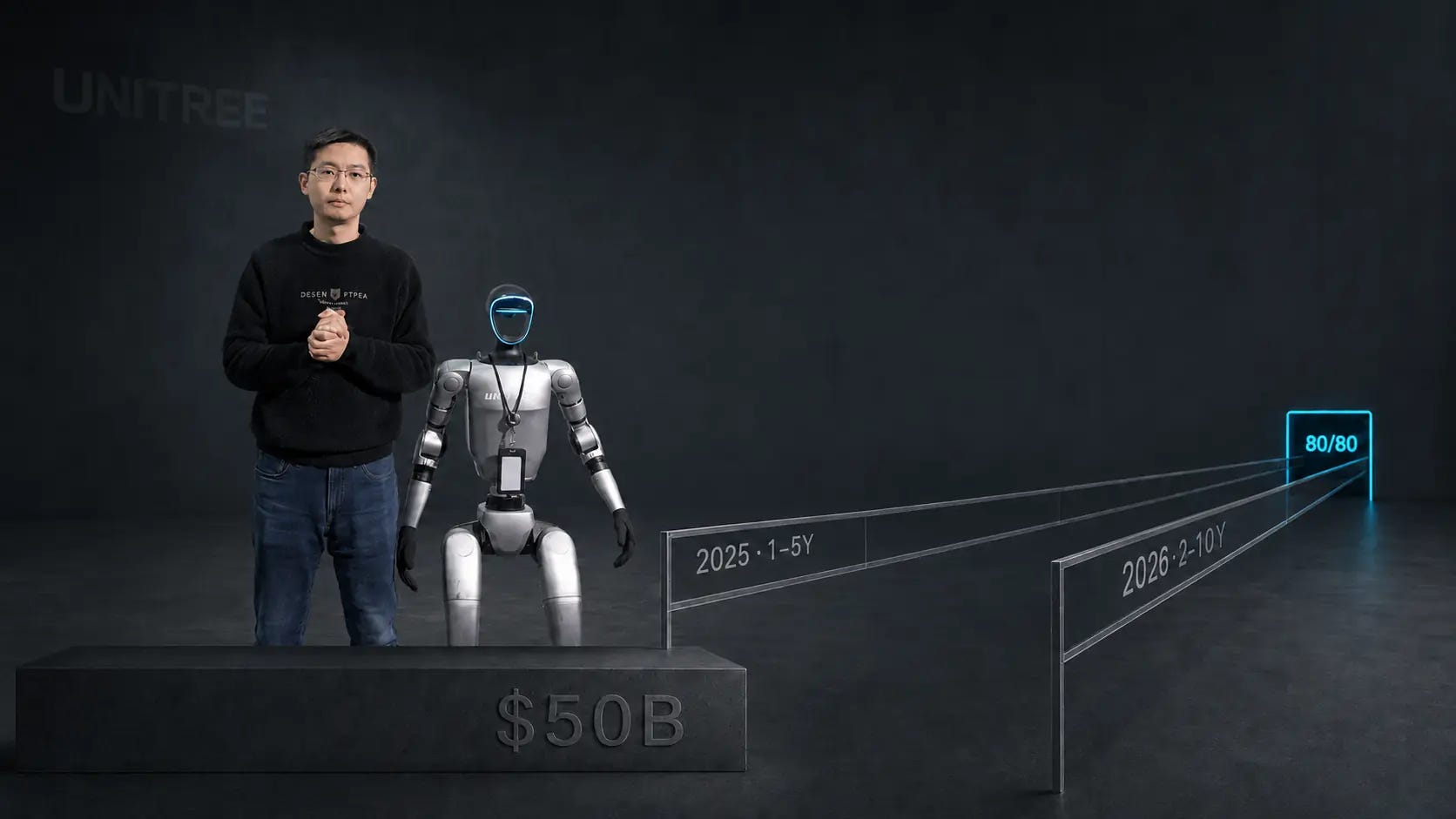
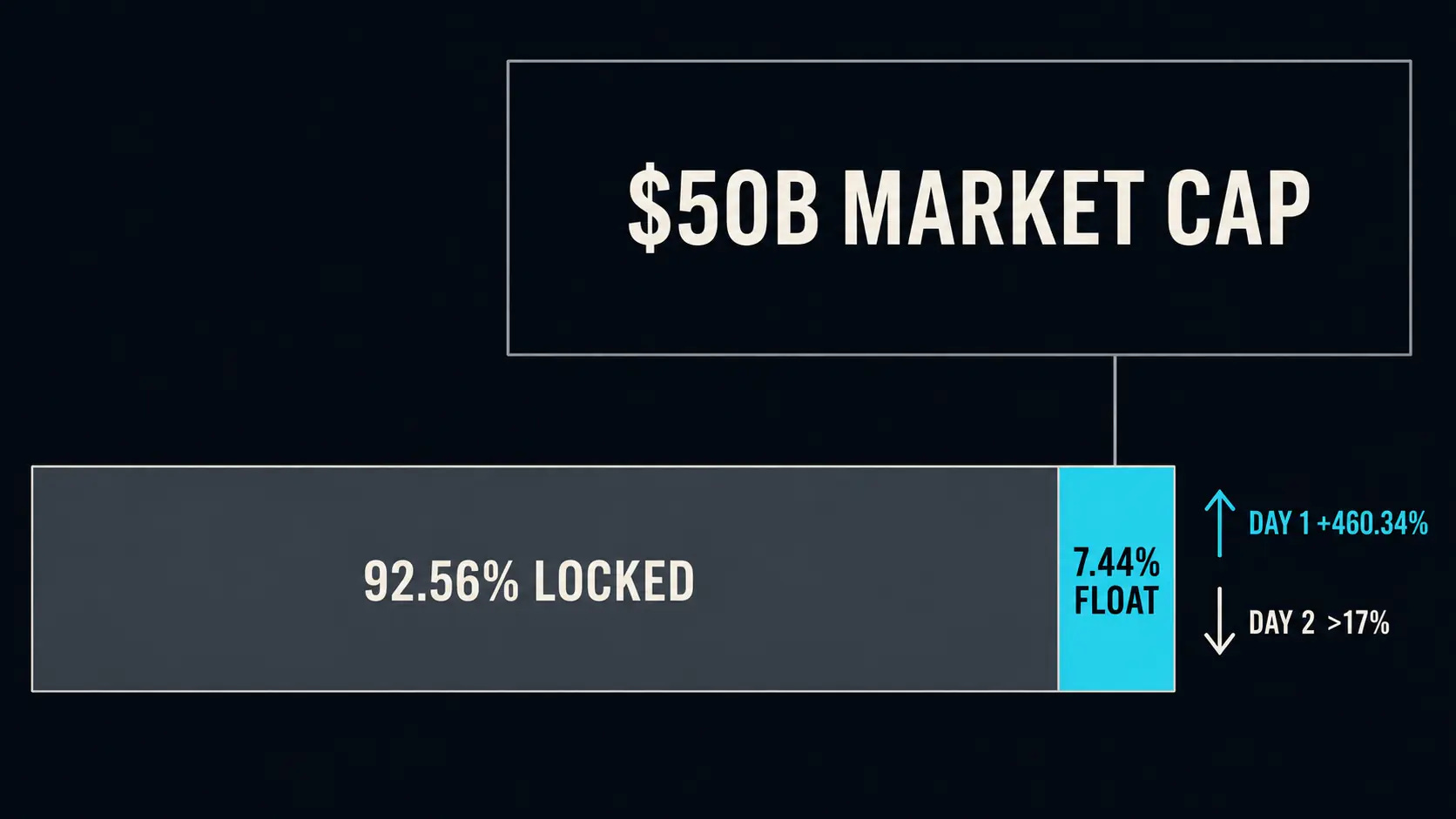
Unitree Robotics, the Hangzhou company that has become the public face of China’s humanoid robot boom, listed on Shanghai’s STAR Market, the mainland’s Nasdaq-style technology board, on August 19. The stock closed its first day at Rmb 845 a share, up 460.34% from the Rmb 150.80 offer price. The close valued the company at Rmb 341.77bn, about $50bn. Against the Rmb 288m net profit reported in its March IPO filing, that equals roughly 1,190 times earnings.
The next morning, on August 20, Wang Xingxing spoke at the World Robot Conference, an annual industry event in Beijing. It was his first public speech as the founder of a listed company. He used part of it to reset his own deadline.
Wang has a benchmark for the moment humanoid robots become an industry rather than a stage act. Take a robot across a range of unfamiliar environments, homes included, and have it complete about 80% of tasks in about 80% of those settings through voice or language instructions. He calls this the sector’s ChatGPT moment, and by March 2026 he had given it that measurable form. What keeps changing is the date. At this valuation, investors have left themselves little room for the slow end of his range.
This piece builds on Hello China Tech’s March reading of Unitree’s IPO filing, which flagged the 80/80 threshold as the line between a hardware vendor and a platform company. If tracking that kind of claim across filings, speeches, and listings is useful to you, subscribe free to get every new analysis as it publishes.
Two Augusts, Two Timelines
Wang has now dated what he calls the ChatGPT moment twice, at successive World Robot Conferences, one year apart.
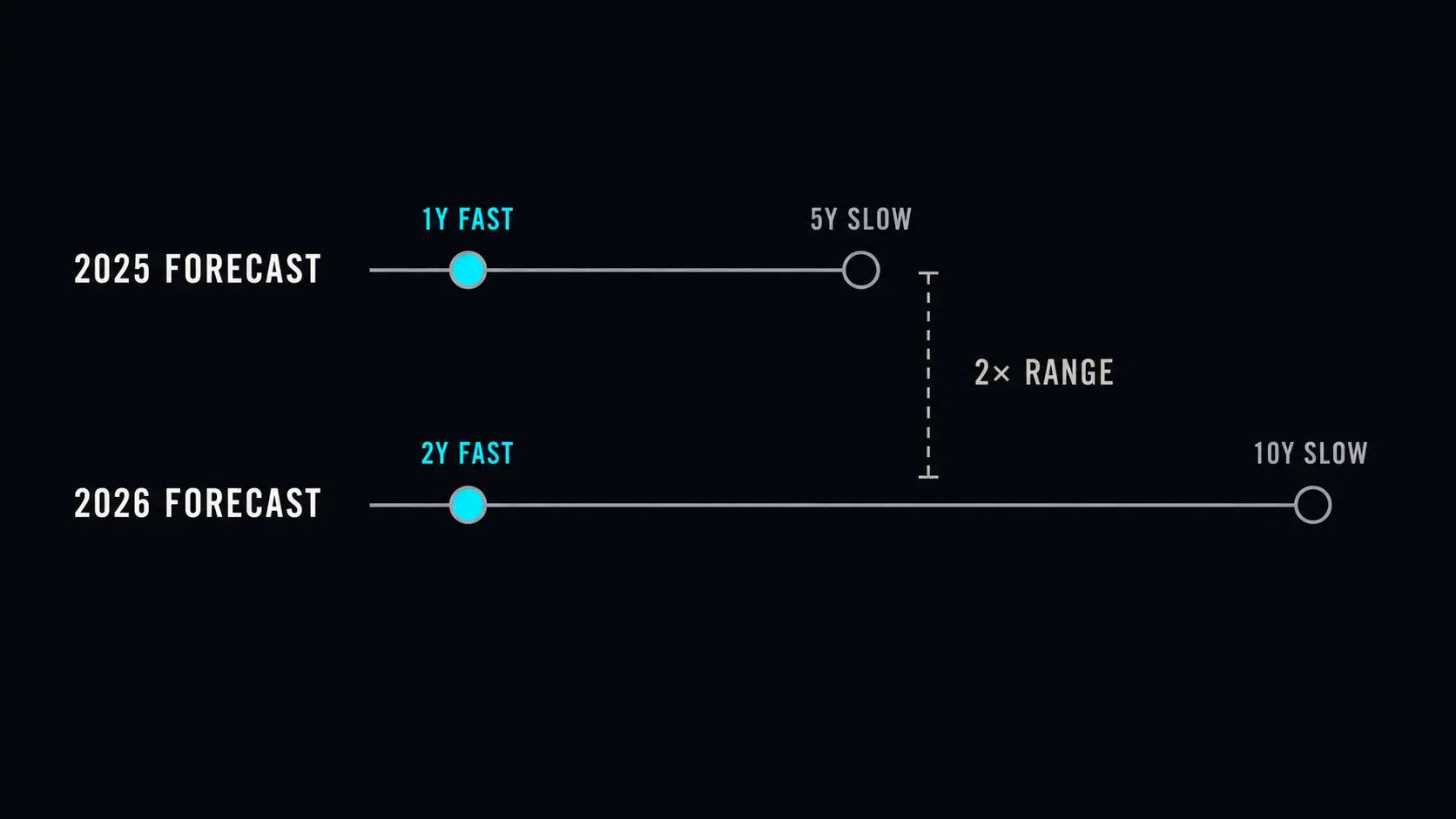
At the 2025 conference, he put it this way, per Sina Finance’s unreviewed transcript: “At the fast end, the next one or two years, or two to three, is quite possible. At the slowest, I estimate three to five years, with high probability.” He added an invitation: keep watching this.
On August 20, per a Tencent Tech transcript republished by 36Kr, the estimate became: fast, two to three years; slow, somewhere between five and ten.
The arithmetic needs care, because two clocks run here. Measured as remaining time, the earliest estimate moved from one year to two, and the far end moved from five years to ten. Measured on a calendar, the shift is larger, because a year had already passed. The earliest date moved from 2026 to 2028. The slow window moved from 2028–2030 to 2031–2036. The full range doubled in width, from four years to eight.
Both versions carried an optimistic note. Last year it was “quite possible.” This year, Wang said the pace of progress might make the moment arrive “a tiny bit faster” than his own estimate. His optimism stayed in place. The dates behind it moved.
This reads as an update, not a retraction. Founders adjust timelines, and a transcript of a conference speech is an imperfect record. But each adjustment has pointed the same way: outward.
The Threshold Is the Multiple
A founder’s soft dates would not matter much if the stock were priced on the business that exists. It is not.
The business that exists is a profitable hardware company. Listing-day disclosures show revenue of Rmb 1.152bn for the first half of 2026, up 48.54% from a year earlier. Net profit reached Rmb 274m, against a Rmb 32m loss in the same period of 2025. The hardware business is financially real. It is also decelerating: year-on-year revenue growth fell from 335% for full 2025 to 68.49% in the first quarter and 48.54% for the half. The prospectus, as I noted in March, describes embodied AI models that have not been scaled into commercial products and were tested only in controlled pilots. It calls the whole field still at the “research and testing stage.”
The 80/80 threshold marks the border between that company and the one the multiple requires. Below it, Unitree remains what its filing shows: a seller of research platforms to a customer base with natural limits. Above it, robots justify deployment through versatility, and the company changes category. A price near 1,190 times reported earnings is far easier to defend under the fast case than under a five-to-ten-year wait.
The Prospectus, Read Aloud
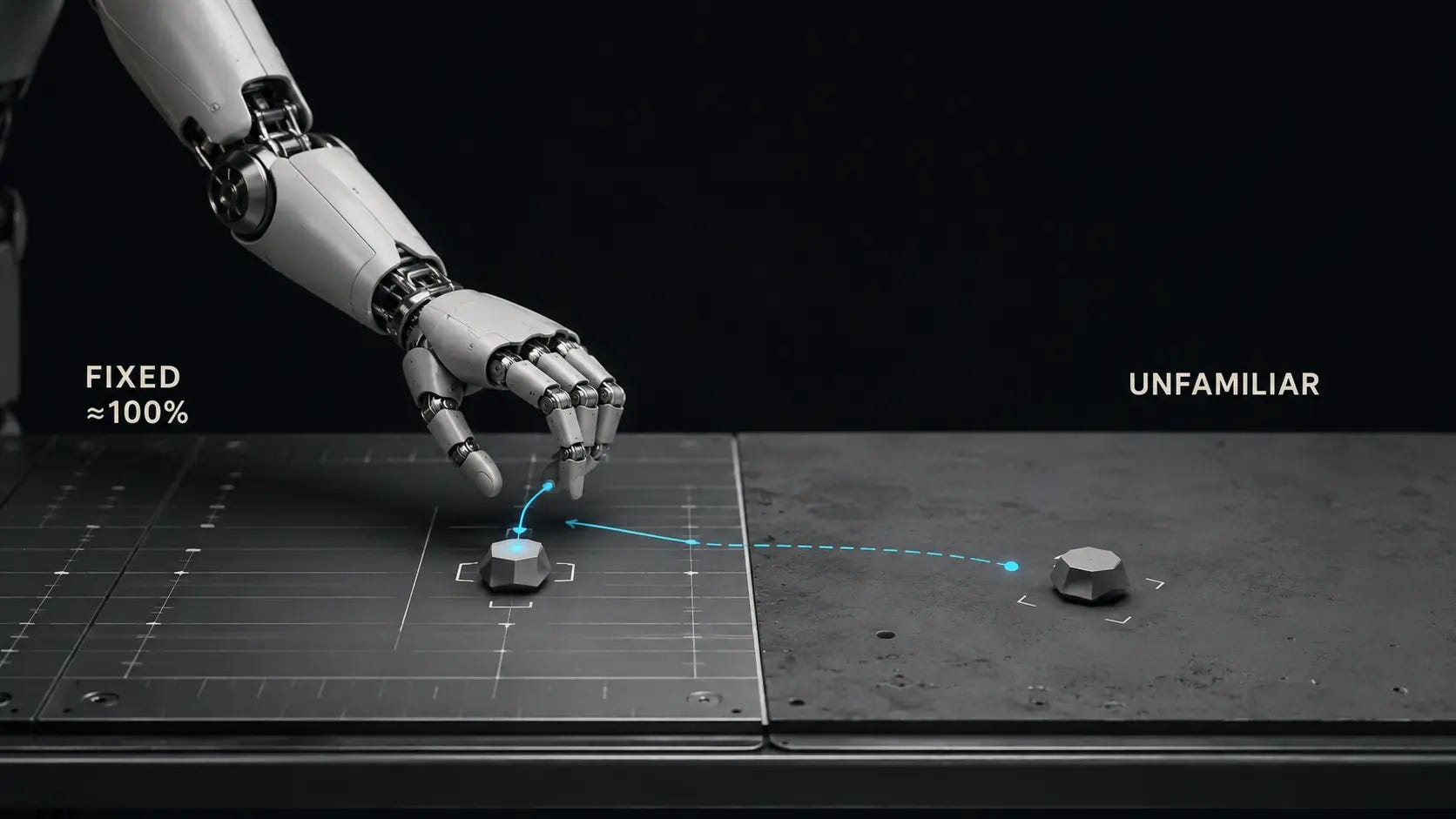
What Wang said on stage was franker than the share price suggested. Many of the polished robot routines audiences have watched for years, he said, relied on actions trained in advance. The new demos, generated in real time from voice commands, carry a delay of several seconds. The system recognizes the speech, generates and checks an action in the cloud, then sends the command back to the robot. A model trained thoroughly on one fixed scene approaches 100% success; change the object or the environment slightly and the success rate collapses. Each new task still requires retraining. Unitree’s own world-model effort began in early 2020, was shelved by the end of that year for poor results, and was revived in 2025.
None of this is new in the legal sense. The risk section of the prospectus carried the substance five months ago, in filing language. What changed is how directly it was said. Risk factors are written to be skimmed. A founder telling a conference hall that the smooth demos were trained in advance is meant to be heard. In a sector that has often rewarded being seen over being ready, plain speech from its most visible founder is worth recording.
His proposed way across the border is a self-evolution loop. A frontier language model drives an agent that reads new papers, writes robot control code, and tests it in simulation. The code then runs on physical machines, and AI plus human judgment scores the results. He attached no budget, no timeline, and no benchmark to it. It is a research direction, announced the day after the listing, in an area Wang described as the company’s largest current commitment of money and people.
A 7.44% Float Sets the Price
The listing measured demand more clearly than it measured conviction about Wang’s timeline. Retail subscriptions ran to more than 8,000 times the shares available. Regulators had approved the listing in 104 days, the fastest review in the STAR Market’s history. The stock opened at Rmb 1,100, up 629.44%, before settling at Rmb 845. Chinese financial media quoted a closing multiple near 585 times, computed on a different earnings basis from the figure above, against a sector reference average of 38.56.
The structure helps explain the valuation. Only 30.09m shares, 7.44% of the total, traded freely. CXMT, China’s leading memory-chip maker, rose 466% in July on a 6.73% float. Thin floats let small pools of money set large prices, and the same report ties Unitree’s swings to its scarce tradable supply. The stock fell more than 17% on its second day, the day of the speech. The float can amplify moves in either direction; the available record does not settle a single cause.
A price built this way measures scarcity more than belief in any timeline. Chinese media describe Unitree as the first humanoid robot stock in mainland China’s domestic A-share market. If the share price carries little information about the threshold, then the week’s material statement on it came from the stage, not the market.
The Clock to Watch
The test Wang set has two virtues rare in this sector: he defined it himself, and anyone can check it. A robot, unfamiliar environments, voice instructions, and an 80% task-success rate across about 80% of those settings. At the 2025 conference he told his audience to keep watching. One year of watching produced one data point: the full range widened, and every revision pointed outward.
The useful evidence from here will not be another polished demo. It will be a reported success rate in unfamiliar settings, less retraining for each new task, or revenue from deployments running Unitree’s own models. If Wang updates the range again at the 2027 conference, investors get another public data point. A narrower range would mean buyers at roughly 1,190 times earnings reached the platform company early. A wider one would leave them holding a hardware maker whose first-half revenue grew 48.54%, valued as though general-purpose autonomy were much closer.