

An official in an eastern Chinese province recently offered Nikkei Asia a rare moment of candor. Her city had set up a special AI task force with 9 working groups staffed by officials seconded from different departments. New policies supporting OpenClaw were on the way. But when asked about the substance behind the effort, she was blunt: “Even our whole province doesn’t really have much of a foundation. The only direction we can realistically pursue is adding a few more AI application scenarios.”
She then added the quiet part: “You have to talk about AI all the time, otherwise you may appear to lag behind.”
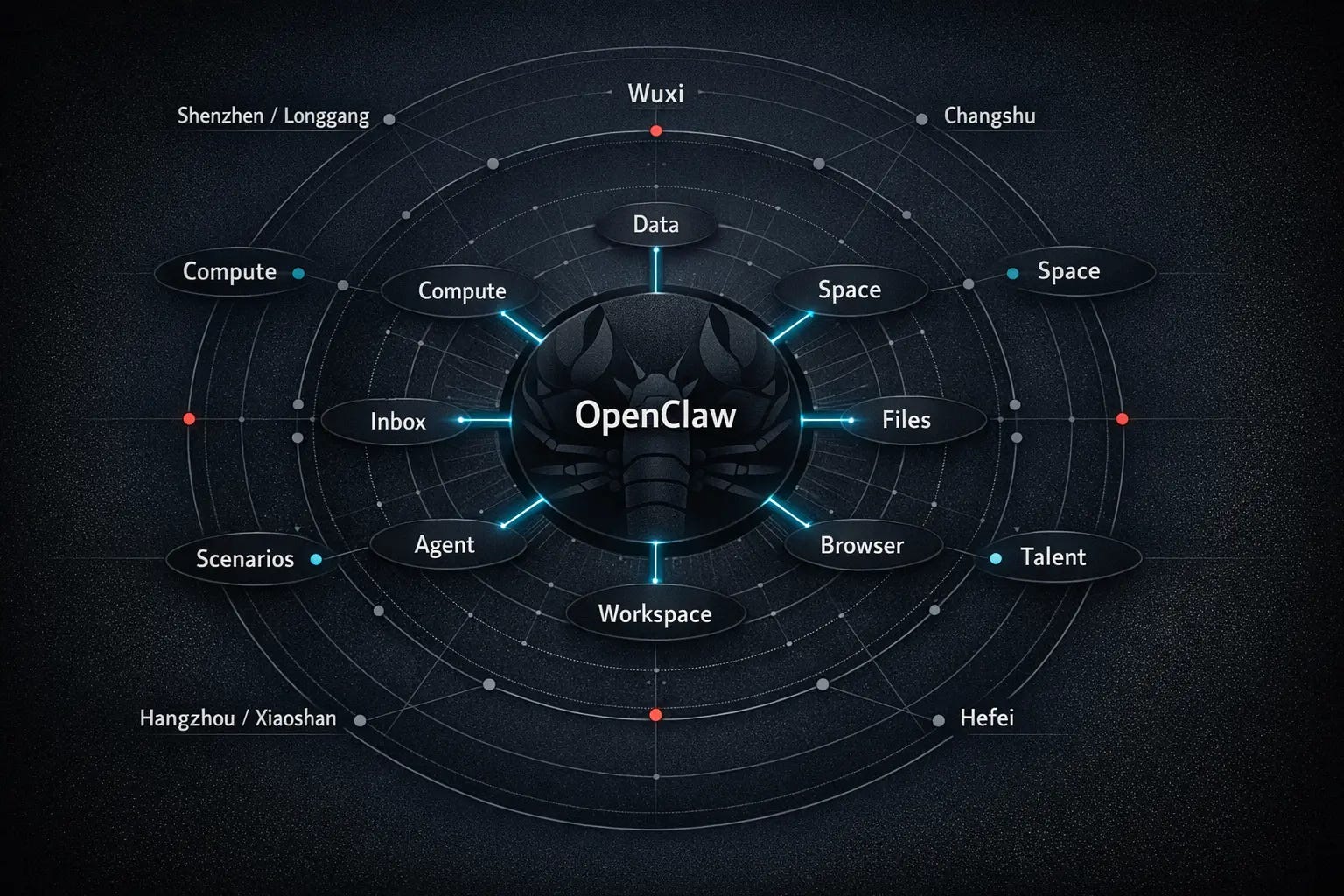
That admission captures the mood across China’s local governments this week. Within the span of a single week in early March, local authorities across at least 6 districts, development zones, and county-level cities rolled out support measures for OpenClaw adoption. Shenzhen’s Longgang district fired first on March 7 with a 10-point plan. Wuxi’s High-Tech Zone followed 2 days later with 12 measures. Changshu, also in Jiangsu province, posted 13 measures. Hefei’s High-Tech Zone in Anhui province unveiled 15. Hangzhou’s Xiaoshan district and Nanjing’s Qixia High-Tech Zone joined in quick succession. Foshan’s Chancheng district in Guangdong partnered with China Telecom to offer free deployment at a local retail store.
The subsidies are substantial. Hefei’s High-Tech Zone is offering up to Rmb10 million ($1.4 million) in compute vouchers for qualifying projects. Hangzhou’s Xiaoshan district will cover up to Rmb20 million ($2.8 million) per entity per year in compute costs. Even Changshu, a county-level city better known for its textile industry, is putting up Rmb6 million ($830,000) in comprehensive support for top applicants.
A clear majority of these policy packages converge on a shared target: OPC, short for One Person Company. Some programs, like Foshan Chancheng’s free installation service, are closer to public outreach than targeted recruitment. But the centerpiece policies from Shenzhen, Wuxi, Changshu, and Hefei are all designed to attract individual developers and micro-entrepreneurs who use AI agents as their primary workforce. In Shenzhen Longgang’s draft policy language, the explicit goal is to “build an AI OPC entrepreneurial ecosystem.”
This marks a notable departure from how Chinese local governments have historically competed for economic growth. For decades, the playbook centered on attracting factories and corporate headquarters through land grants, tax holidays, and infrastructure packages. The target was always the firm. Now, across half a dozen cities in a single week, the target has become the individual.
That shift carries real structural significance. It also carries an unresolved cost problem that none of these policies have adequately confronted.
I covered the supply-side dynamics behind OpenClaw’s adoption across China’s tech ecosystem in Monday’s analysis, and Tencent’s specific strategic calculus in Wednesday’s piece. This third installment examines the policy layer: what local governments are actually competing for, and whether the economics can sustain their ambitions.
The policy race looks frenzied on the surface. Beneath it sits a more considered bet on a new economic unit. But that bet depends on compute costs that local budgets may struggle to absorb.
