
Weekend Brief: The $18,600 Philosophy Gap
Four stories. Two continents. One question: Who wins when China ships “good enough” robots while America perfects the impossible?


Over the past few months, Hello China Tech has tracked the global humanoid robot race through multiple lenses–capital structures, order credibility, manufacturing scale, and strategic positioning. This weekend, two product launches crystallize what we’ve been documenting: a fundamental split in how China and the US are approaching the same technological frontier.
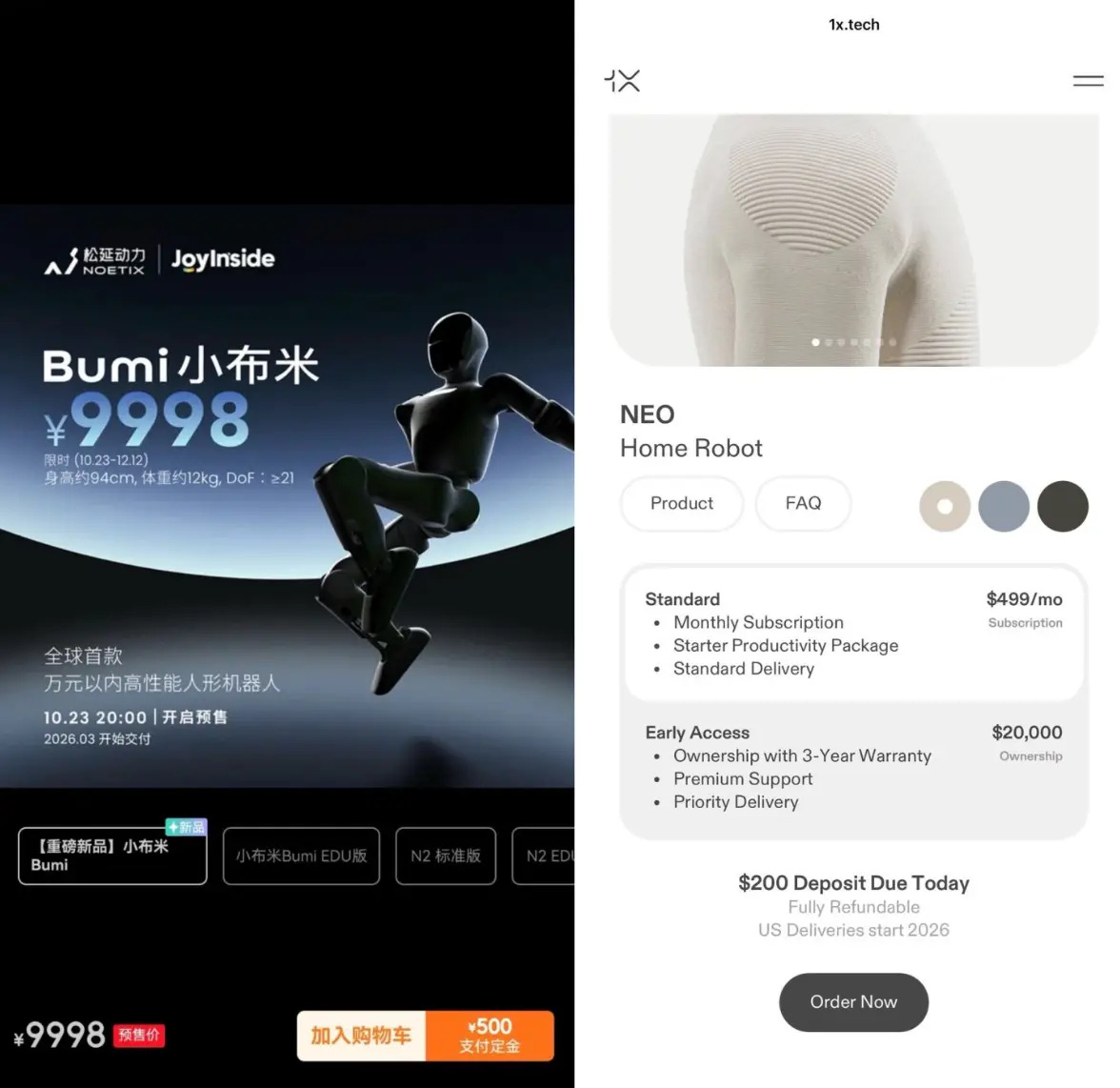
In China, Noetix Robotics just opened pre-orders for Bumi, a 94cm humanoid priced at $1,400. Within hours, it hit 300 orders. The robot can walk, dance, fall and get back up–basic mobility for entertainment and education markets. It’s not sophisticated. It doesn’t need to be.
In California, 1X launched NEO at $20,000. It promises autonomous home assistance–opening doors, fetching items, turning off lights. But there’s a catch: to teach NEO complex tasks, human teleoperators will remotely control the robot inside your home, cameras active, gathering training data. Early adopters aren’t just customers; they’re paying to become part of a massive AI training operation.
The $18,600 price gap isn’t about hardware costs. It’s about philosophy. China is weaponizing imperfection–flooding markets with functional-but-limited robots to collect deployment data at scale. America is pursuing technical perfection–building general-purpose platforms that require years of supervised learning before mass deployment. The articles we’ve published recently weren’t disconnected analyses. They were documenting different facets of this strategic divergence. Here’s what the full picture reveals.
The Philosophy Gap in Action
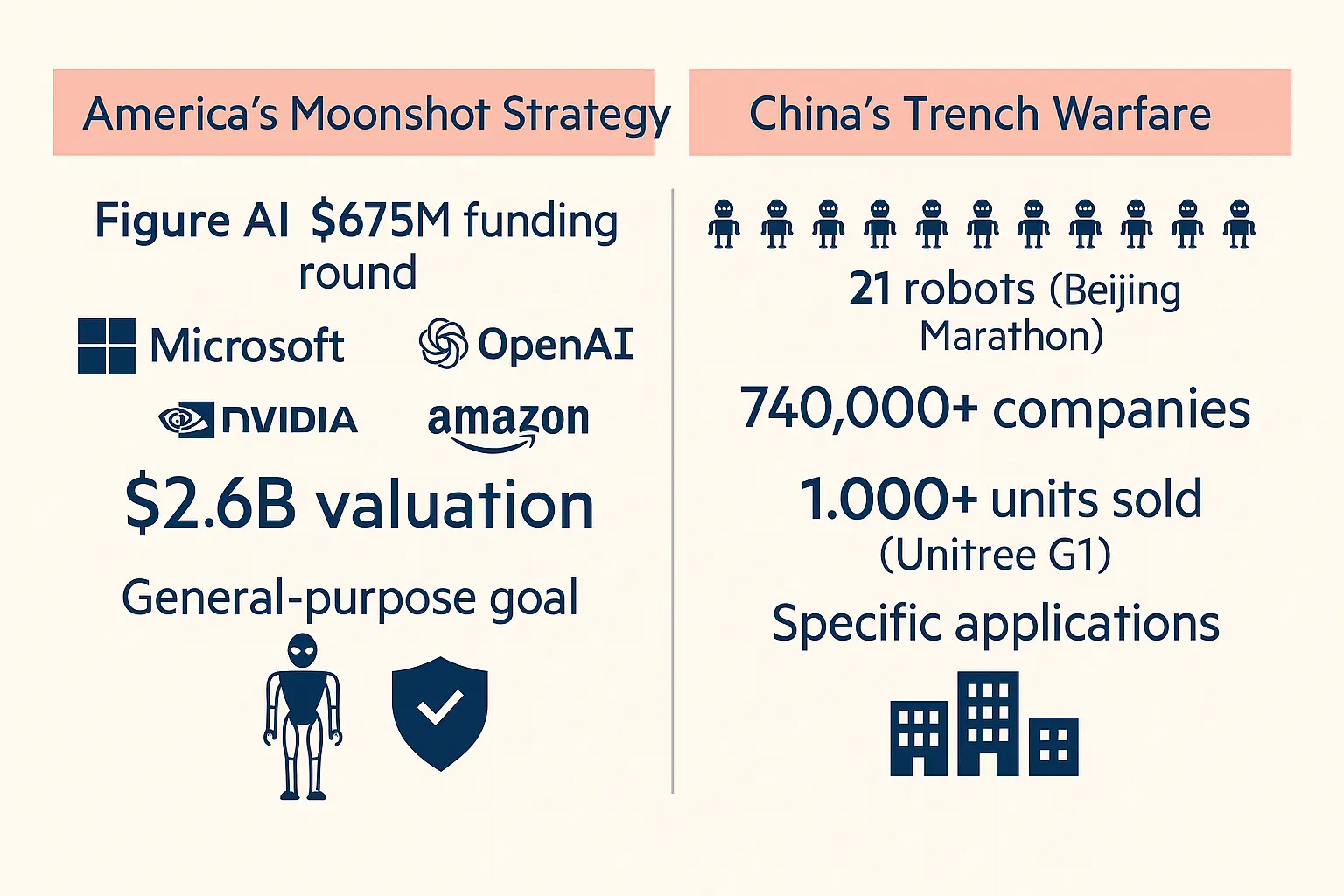
China’s Robot “Trench Warfare” vs America’s AI Moonshot Strategy (Free) established the conceptual framework. While Figure AI secures $675 million from Microsoft, OpenAI, and Nvidia to build general-purpose humanoids, Chinese companies stage robot marathons and boxing matches with GPT-2-level autonomy–and convert the publicity into immediate sales. The stumbling robots in Beijing weren’t technical failures; they were market penetration tools. Noetix Robotics saw its valuation triple after that marathon. Unitree sold 1,000+ G1 robots during the 618 shopping festival. The strategy isn’t about impressing engineers; it’s about generating commercial momentum before the technology is polished.
This explains Bumi’s $1,400 price point. It’s not trying to be a home assistant. It’s capturing market share in education and entertainment–segments where “good enough” autonomy creates immediate value. Every deployed unit generates real-world operational data without requiring Silicon Valley’s obsession with technical perfection.
The Robotic Divide: China’s State-Engineered Challenge to Silicon Valley (Free) revealed how China’s “trench warfare” is systematically enabled. When China Mobile placed a ¥124 million order with two startups barely past prototype stage, it wasn’t market validation–it was state-curated demand creation. The pattern is consistent: state-owned enterprises provide guaranteed revenue, creating financial runways while companies iterate toward profitability. More crucially, these deployments generate proprietary datasets that no laboratory can replicate.
This is why 1X NEO’s teleoperation strategy faces structural disadvantages. American companies must convince individual homeowners to accept remote operators in their homes, navigating privacy concerns one customer at a time. Chinese firms get bulk deployment orders from state entities where privacy concerns are subordinate to industrial policy goals. The data asymmetry compounds over time.
The cost dimension is equally structural. Unitree’s G1 bill of materials shows frameless motors account for 32–49% of total hardware costs. By relentlessly driving down component prices through domestic supply chain integration, Chinese manufacturers aren’t just making cheaper robots–they’re building moats in the manufacturing ecosystem. When Bumi sells at $1,400, it’s leveraging supply chains that 1X NEO can’t access at any price point.
But two Premium pieces reveal the hidden instabilities beneath China’s speed-first approach.
China Humanoid Robot Orders: Real Deals vs Fake Hype (Premium) exposed how the order rush distorts reality. UBTECH’s ¥250 million “record-breaking” contract made headlines. Less visible: Tiantai Jiqiren announced a 10,000-unit order from a buyer incorporated 12 days before the deal. Investigation revealed overlapping personnel between buyer and seller–a non-arm’s-length transaction designed for valuation inflation, not deployment.
The credibility hierarchy matters because it determines which companies survive “delivery hell”–the brutal transition from signed contracts to successful large-scale deployment. Manufacturing 1,000 units requires coordinating hundreds of suppliers and maintaining quality at unprecedented scale. Many firms announcing massive orders have never manufactured beyond dozens of units. The execution gap will separate genuine operators from publicity-focused players over the next 18 months.
China’s Robot Funds Hunt Exits Over Engineering(Premium) revealed the ultimate driver: Beijing’s robotics funds aren’t patient capital–they’re exit vehicles. With ¥26 billion deployed across municipal funds, managers claim triple-digit returns and are queuing portfolio companies for IPO within 12–36 months. One fund manager stated their book value tripled in a year, with three companies slated for public listing.
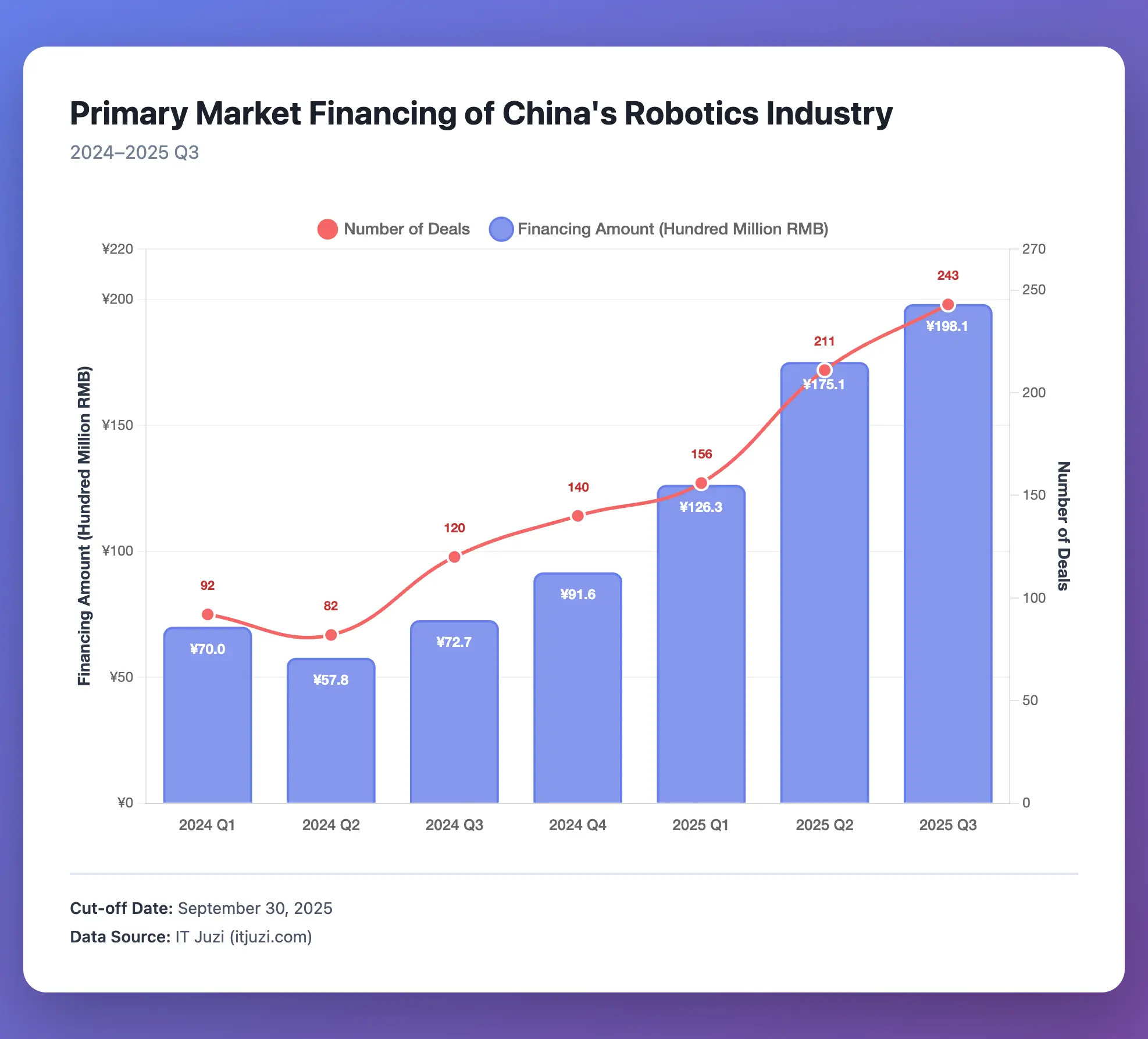
This explains why speed trumps perfection. Fund timelines demand liquidity events before the technology matures. Local governments converting land-sale revenue into robotics investments aren’t betting on technical breakthroughs–they’re engineering listable “advanced manufacturing champions” for future fiscal cycles. Whether robots work matters less than whether IPOs clear.
Why This Gap Defines the Next Decade
For investors, the philosophy gap creates divergent risk profiles. American moonshot valuations–Figure AI reportedly approaching $40 billion–offer high-beta opportunities with catastrophic downside if visions fail. Chinese firms focused on immediate revenue may produce more resilient businesses, but face valuation corrections when delivery failures expose order quality issues. The key metric isn’t technology sophistication; it’s the delivery ratio–verified deployments versus announced orders.
For competing manufacturers, ecosystem integration increasingly trumps individual company capabilities. 1X NEO’s teleoperation approach requires convincing consumers one household at a time. Chinese competitors get bulk state orders that generate deployment data at scale, creating AI training advantages that compound over time. Western firms need strategies accounting for this bloc-based reality–either hyper-specialization in applications where Chinese firms can’t compete, or accepting that China’s manufacturing base enables prototyping and production currently impossible elsewhere.
For technology strategists, the gap reveals a deeper question: which data collection path is more sustainable? China’s “consumers pay to be testers” model accelerates deployment but risks customer backlash when robots underperform. America’s “supervised learning before scale” model ensures higher quality but may miss market timing. The $18,600 price gap reflects this fundamental trade-off: speed versus perfection, scale versus sophistication, market penetration versus technical excellence.
The Unresolved Questions
Three tensions remain unresolved:
When does “good enough” hit technical ceilings?Bumi’s 21 degrees of freedom work for entertainment. But climbing value chains toward industrial or service applications requires breakthroughs in actuators, sensors, and AI that China still trails on. The question: can iteration velocity compensate for initial capability gaps?
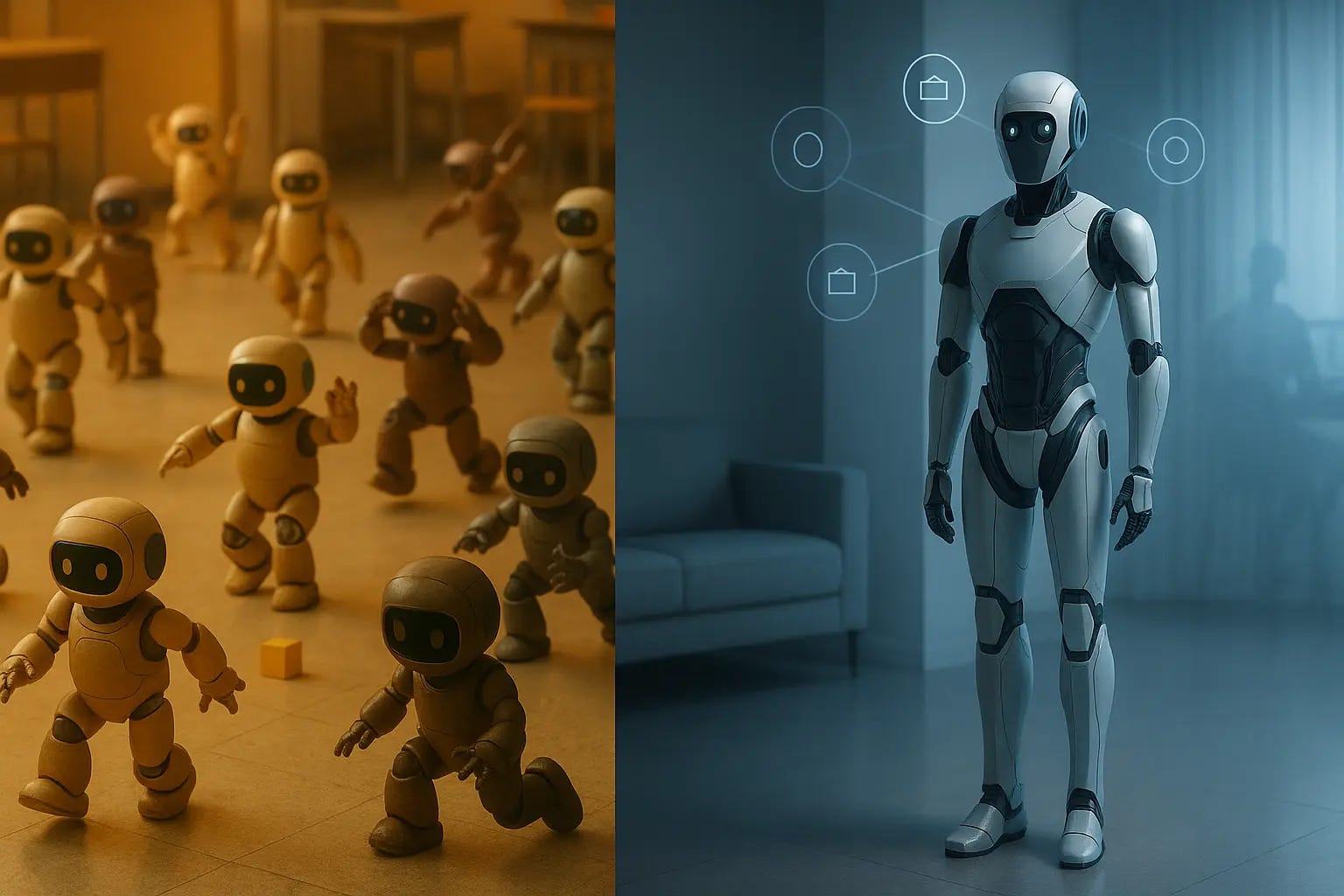
Will privacy concerns limit teleoperation scalability? 1X NEO’s approach requires homeowners to accept cameras and remote operators inside private spaces. This works for early adopters but faces resistance at mass scale. China sidesteps this by deploying through state channels first. Who reaches general-purpose capability faster–supervised learning in privacy-sensitive markets, or mass deployment in privacy-permissive environments?
Does capital engineering create or destroy value?Beijing’s municipal funds are manufacturing exits, not nurturing technology. If IPOs clear before commercial viability proves out, shareholders absorb losses while insiders exit. But if state capital successfully bridges the valley of death, it creates globally competitive champions. The outcome depends on whether “delivery hell” culls weak players before they reach public markets.
What You Just Read–and What You’re Missing
You’ve just absorbed a synthesis of four analyses spanning strategic positioning, capital structures, order credibility, and funding dynamics in the global robot race. Together, they reveal the $18,600 philosophy gap: China shipping functional-but-limited robots to capture deployment data, America perfecting general-purpose platforms through supervised learning.
The free analyses provided the framework. China’s Robot “Trench Warfare” vs America’s AI Moonshot Strategy established the speed-versus-perfection dichotomy. The Robotic Divide showed how state capital and supply chain integration systematically enable China’s approach. These pieces help you understand the gap exists and why it matters.
But understanding the strategic split is different from evaluating its sustainability. That requires seeing what’s hidden beneath headline announcements.
Premium analysis revealed the instabilities. When UBTECH announces ¥250 million orders while smaller competitors fabricate deals with related parties, you need frameworks to distinguish signal from noise. China Humanoid Robot Orders: Real Deals vs Fake Hype provided that credibility hierarchy–teaching you to track delivery ratios, verify customer backgrounds, and identify non-arm’s-length transactions before they blow up.
When Beijing deploys ¥26 billion claiming triple-digit returns in months, you need to understand the endgame. China’s Robot Funds Hunt Exits Over Engineering revealed that municipal funds prioritize listings over technology maturation–meaning valuation corrections are coming when execution failures surface. Premium subscribers saw this before the market did.
The difference: timing and mechanism. Free analysis identifies strategies after patterns become visible. Premium analysis reveals structural forces while they’re still driving decisions–the fund timelines forcing premature IPOs, the related-party transactions inflating order books, the delivery gaps that will separate survivors from casualties.
💎 Premium Membership Gets You:
Proprietary analytical frameworks separating genuine orders from valuation theater–investment-grade methodologies for navigating China’s robotics consolidation
FlashPoint rapid-response analysis on market-moving developments–strategic implications delivered while others scramble to understand fund exits and order announcements
Exclusive deep-dive research on emerging opportunities–investment thesis and risk assessment before companies hit Western radar
Comprehensive quarterly China tech sector intelligence–AI, EVs, robotics, and semiconductors with competitive positioning analysis
Direct access for China tech strategic questions–priority responses from me personally
The philosophy gap is real. The execution risks are substantial. The investment opportunities exist–but only for those who can distinguish engineering from financial engineering.
Questions? Reply to this email–I read every message.