

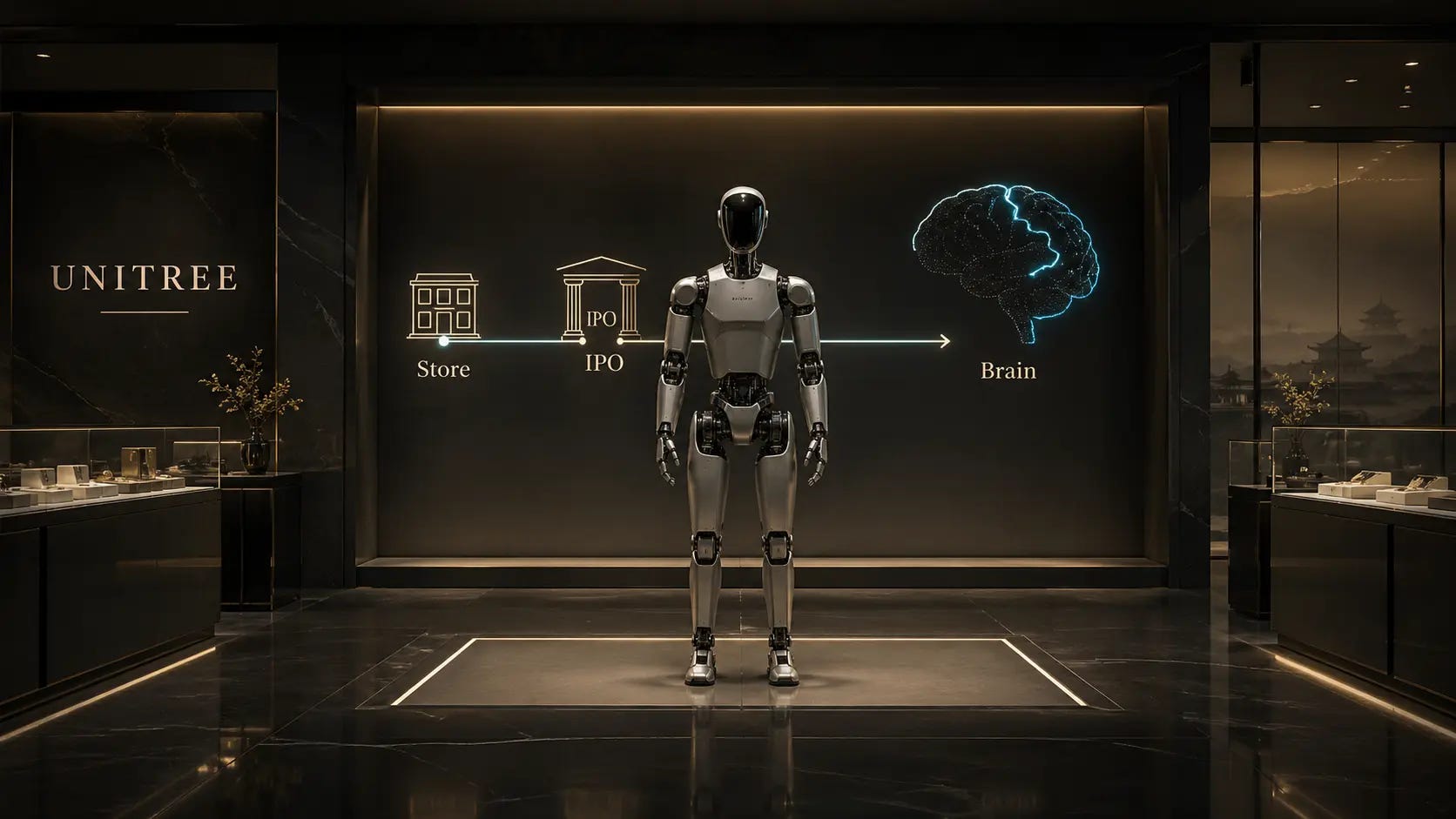
The ground-floor retail space at a luxury mall on Beijing’s Wangfujing used to sell jewelry. On the eve of China’s five-day May Day holiday, it put humanoid robots on the retail floor.
Unitree Robotics, the company whose machines performed synchronized martial arts on the nationally watched 2025 Spring Festival Gala, opened its first directly operated store here ahead of the holiday week. The location sits adjacent to showrooms for two domestic electric vehicle brands, diagonally across from Huawei’s phone flagship. Inside, reporters noted G1 and R1 humanoid robots priced from roughly RMB 80,000 to over RMB 100,000 ($11,000 to $13,800), alongside Go1 and Go2 quadruped robot dogs in the RMB 10,000 to 20,000 range. Staff will run live robot performances throughout the week.
The store is one piece of a broader retail buildout. Unitree already operates two other locations in Beijing and Wuhan under various partnership formats. A larger experience center on Shanghai’s Nanjing West Road, described as Unitree’s first embodied-intelligence experience center in Asia, is scheduled for late May, with over 100 square meters of interactive space where visitors can operate robots themselves. Job listings for store staff specify at least one year of consumer electronics retail experience, with monthly salaries in the RMB 10,000 to 15,000 range.
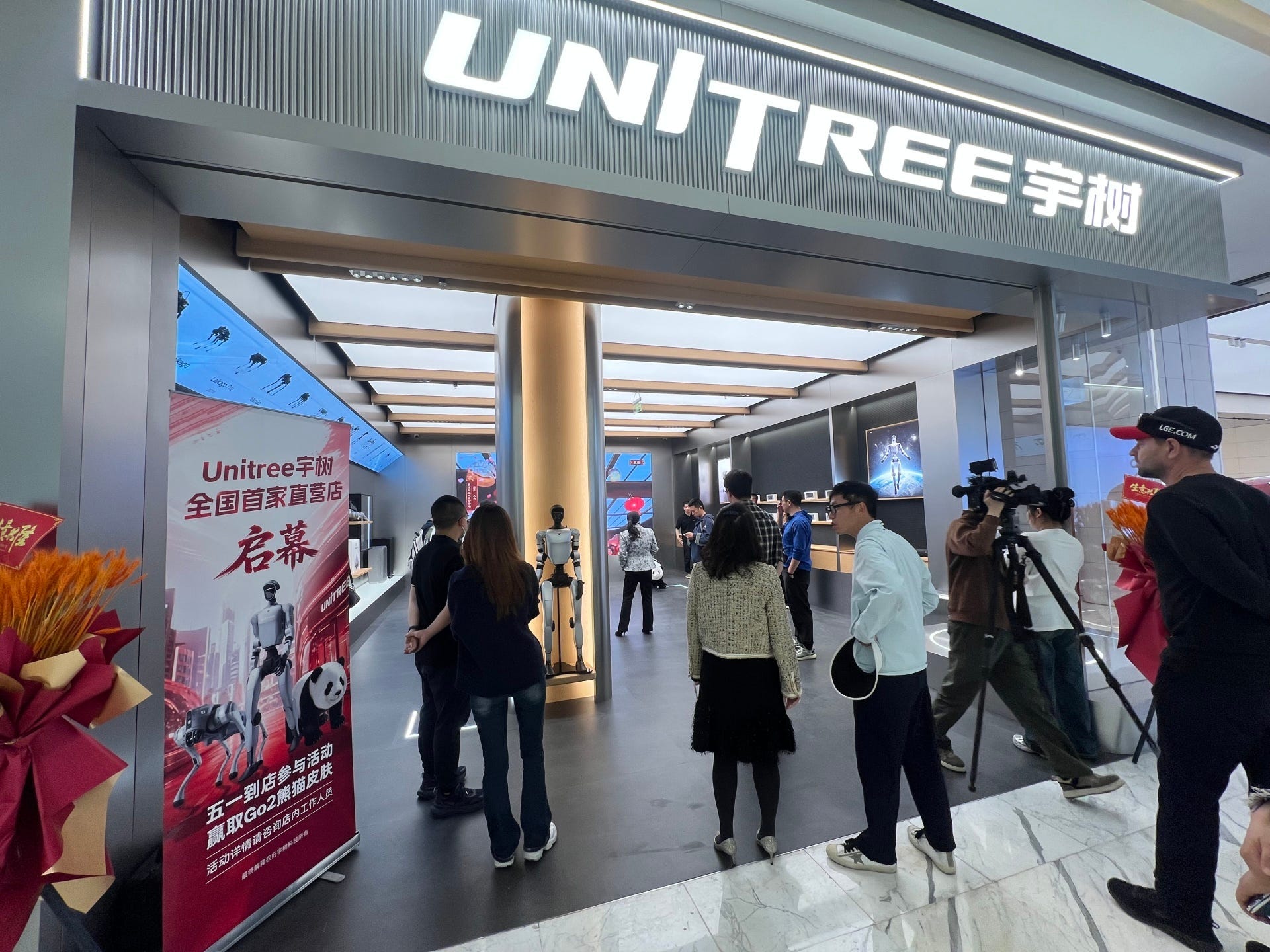
Unitree’s chief marketing officer told reporters the company had started planning the store in late 2025 but postponed when the team was pulled into Gala preparations. With an IPO application pending on Shanghai’s STAR board, seeking to raise RMB 4.2 billion ($610 million), the Golden Week opening serves more than one audience at once.
A Store Between Two Markets
The tourists lining up for selfies with dancing robots provide visibility. The commercial logic of the store points somewhere else.
Unitree’s CMO framed it in consumer electronics terms: prices have become accessible enough that interested buyers can order directly and take a robot home. The language invites comparison to how DJI marketed drones a decade ago, or how Tesla built showrooms in shopping malls to familiarize the public with electric vehicles before the category matured.
The comparison holds to a point. When Apple opened its first retail stores, the devices inside already served a clear daily function for walk-in customers. When Tesla placed cars in malls, those vehicles could replace the ones shoppers drove to get there. The humanoid robots at Unitree’s Wangfujing store execute choreographed sequences with impressive precision. They do not yet perform autonomous productive work in an unstructured setting.
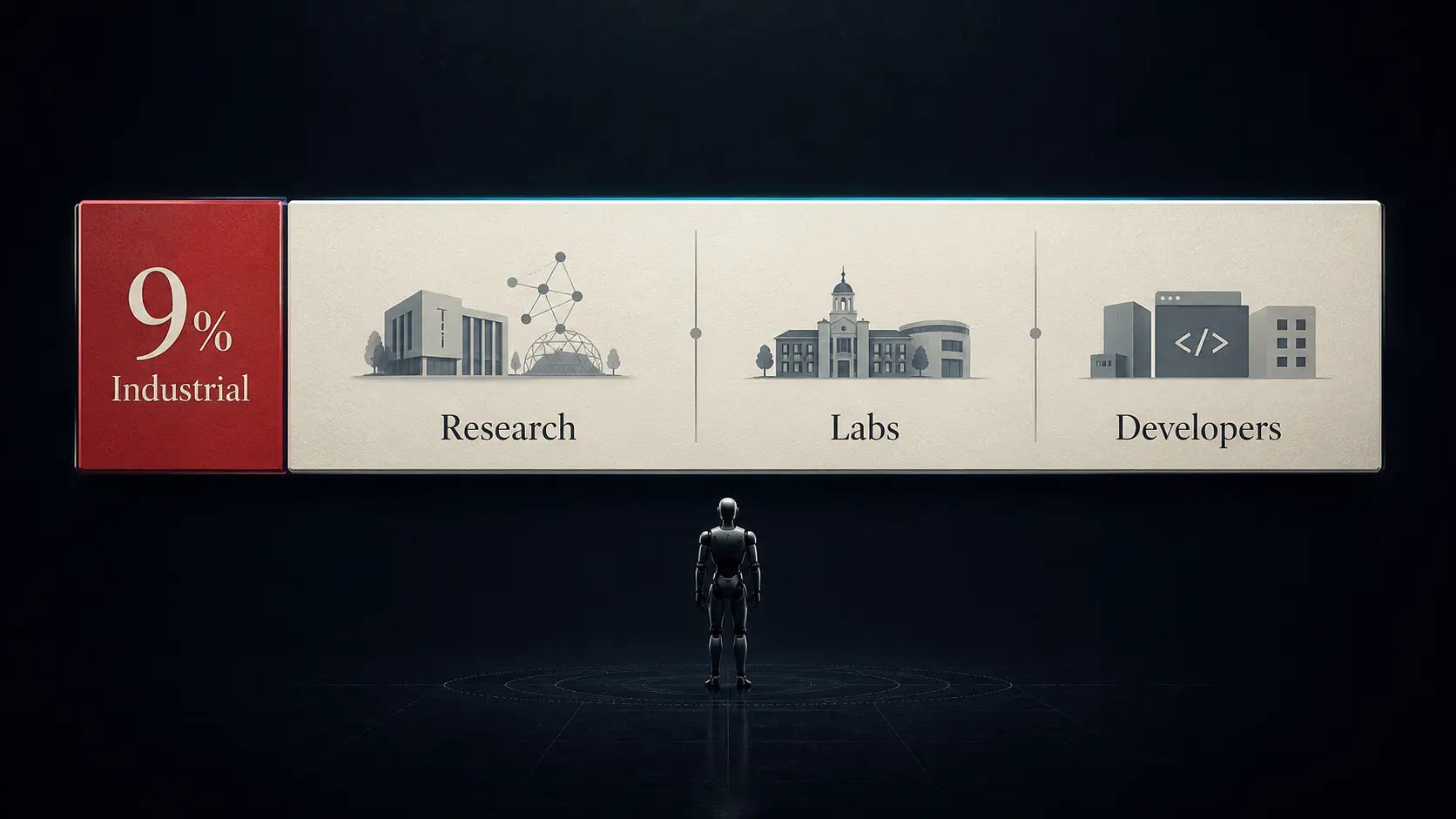
The company’s own IPO filings confirm who the current buyers are. Industrial applications represented just 9% of Unitree’s humanoid revenue in the first nine months of 2025. The overwhelming majority went to researchers, universities, AI laboratories, and individual developers purchasing hardware platforms. This is a profitable business selling sophisticated research equipment at scale, not yet a company delivering labor substitution to factory floors.
That customer profile explains why Unitree would open a directly operated store on the eve of an IPO. The Wangfujing location gives researchers a place to handle a G1 before committing, gives corporate events teams a full performance preview, and gives developers a chance to compare platforms in person. It also plants a consumer-brand flag on the same block as Huawei and adjacent to EV showrooms. For institutional investors who will soon price the company’s shares at an implied valuation approaching $5.8 billion, that visual proximity to established consumer technology brands is part of the message.
The deeper question lies beneath the retail strategy. The humanoid robotics industry is approaching a structural shift. The machines in Unitree’s showroom can dance, spar, and follow rehearsed paths. They cannot independently handle an unfamiliar task in an uncontrolled environment. How the leading companies are spending the time before that capability matures, and where capital is flowing in the interim, reveals the tensions that will shape this sector’s next chapter.
This analysis continues below for Hello China Tech Premium subscribers.