

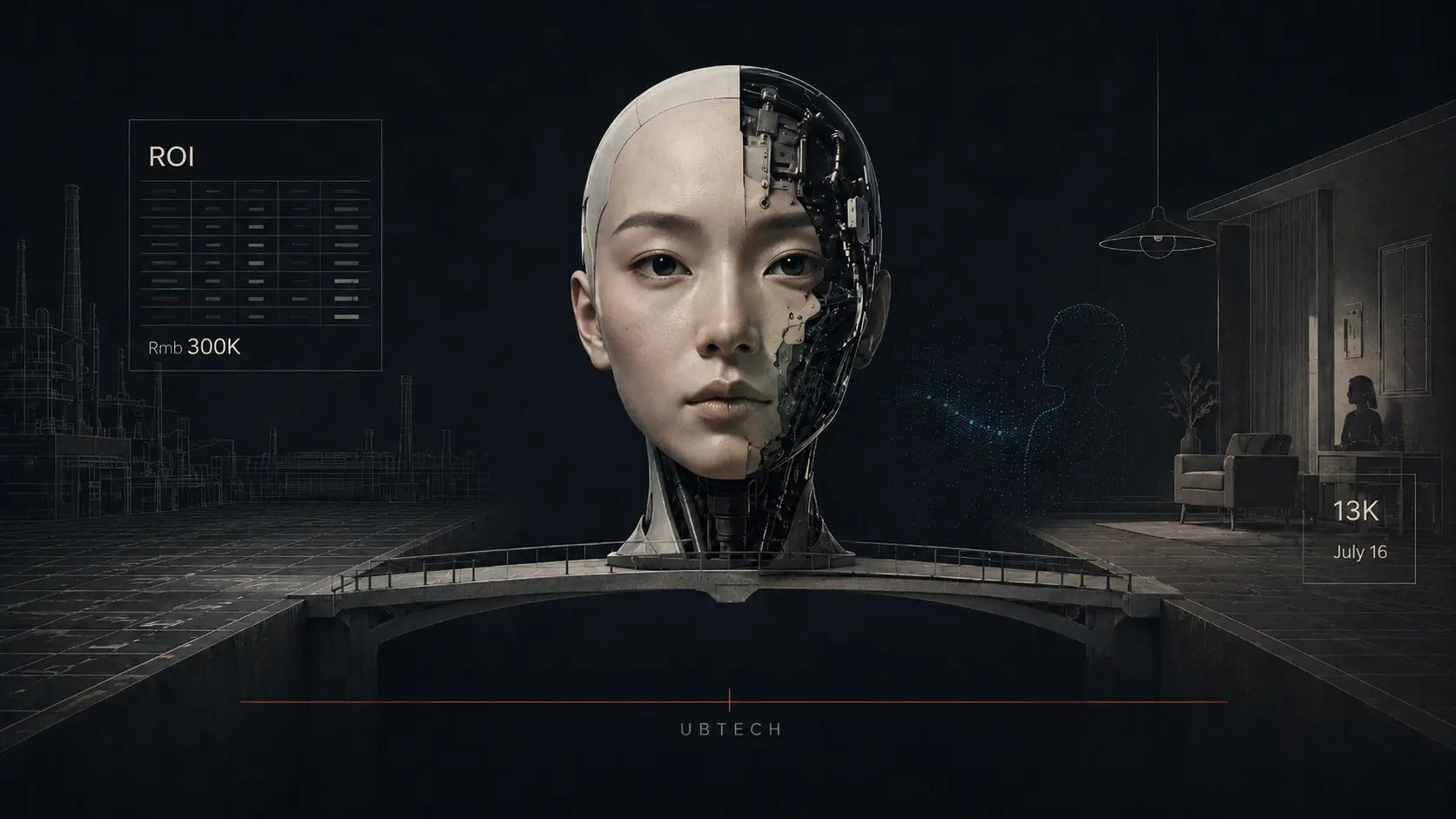
The Order That Defied the Spreadsheet
In four weeks, UBTECH (优必选, Hong Kong-listed robotics company and China’s self-described “first humanoid robot stock”) collected over 13,000 refundable deposit orders for a product that, by its own account, cannot do housework.
The U1 series, launched June 30 under UBTECH’s new consumer brand YouWorld (优世界), is a bionic companion-robot line sold across half-body and full-body versions. The full-body versions stand 1.68 to 1.83 meters tall, covered in medical-grade silicone with visible pores, it carries 88 degrees of freedom and an on-board emotion model that identifies over 20 emotional states. The robots blink, smile, hug, and hold hands. They have not demonstrated autonomous walking, and they do not cook or clean. Sales are restricted to adults. Pricing spans Rmb 119,800 for a half-body desktop version to Rmb 990,000 for a full-body male model.
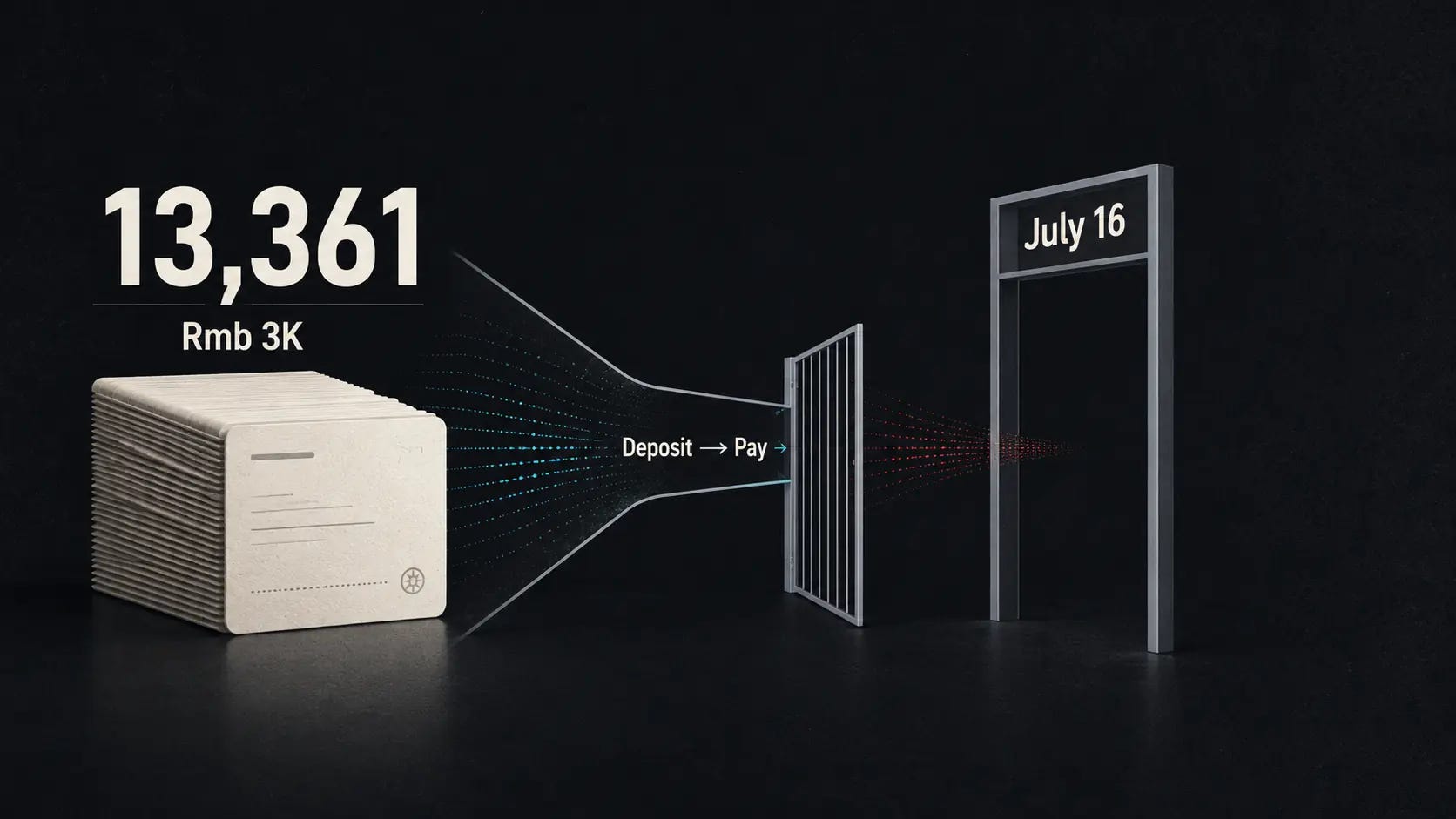
One detail cuts through the spectacle. Most of those orders were placed before UBTECH disclosed pricing. More than 11,000 had been committed when CEO Zhou Jian took the stage; the total reached 13,361 by the event’s close. Buyers paid Rmb 3,000 refundable deposits without knowing whether the final price would be Rmb 120,000 or Rmb 990,000. The balance-payment deadline is July 16. Until then, the order count measures curiosity, not commitment.
For context: UBTECH delivered 1,079 full-size Walker S industrial humanoid robots in all of 2025. If the first 10,000 U1 orders convert at the entry-level Lite price, implied revenue reaches roughly Rmb 1.2bn, more than half the company’s Rmb 2bn in 2025 revenue. UBTECH shares rose 7.48% on launch day.
The pre-order numbers point to genuine appetite. They do not yet describe a business.
Why the Factory Was Not Enough
UBTECH’s consumer pivot looks less like strategic expansion than like repositioning away from an industrial contest it was losing. The company still targets 5,000 Walker S units in 2026, but the new factory, the marketing weight, and the headline numbers all belong to U1.
Since 2022, the company has accumulated over Rmb 4.2bn in net losses. Accounts receivable reached Rmb 1.3bn by end of 2025, more than 40% aged past one year, reflecting heavy exposure to public-sector customers with extended payment cycles. Operating cash flow has been negative for three consecutive years. To stay funded, UBTECH raised roughly HK$6.3bn ($810m) through three share placements in 2025 alone, diluting shareholders less than two years after listing.
The company it once outranked has pulled decisively ahead. Unitree (宇树科技, the volume leader in Chinese humanoid robots) shipped over 5,500 unitsin 2025 at an average price of roughly Rmb 167,000, achieving profitability with 60% gross margins. UBTECH’s humanoids averaged roughly Rmb 760,000 per unit, but the company as a whole remained deeply loss-making. Unitree runs a flywheel: volume generates operational data, data improves models, cost compression attracts more buyers. UBTECH has yet to build a comparable loop.
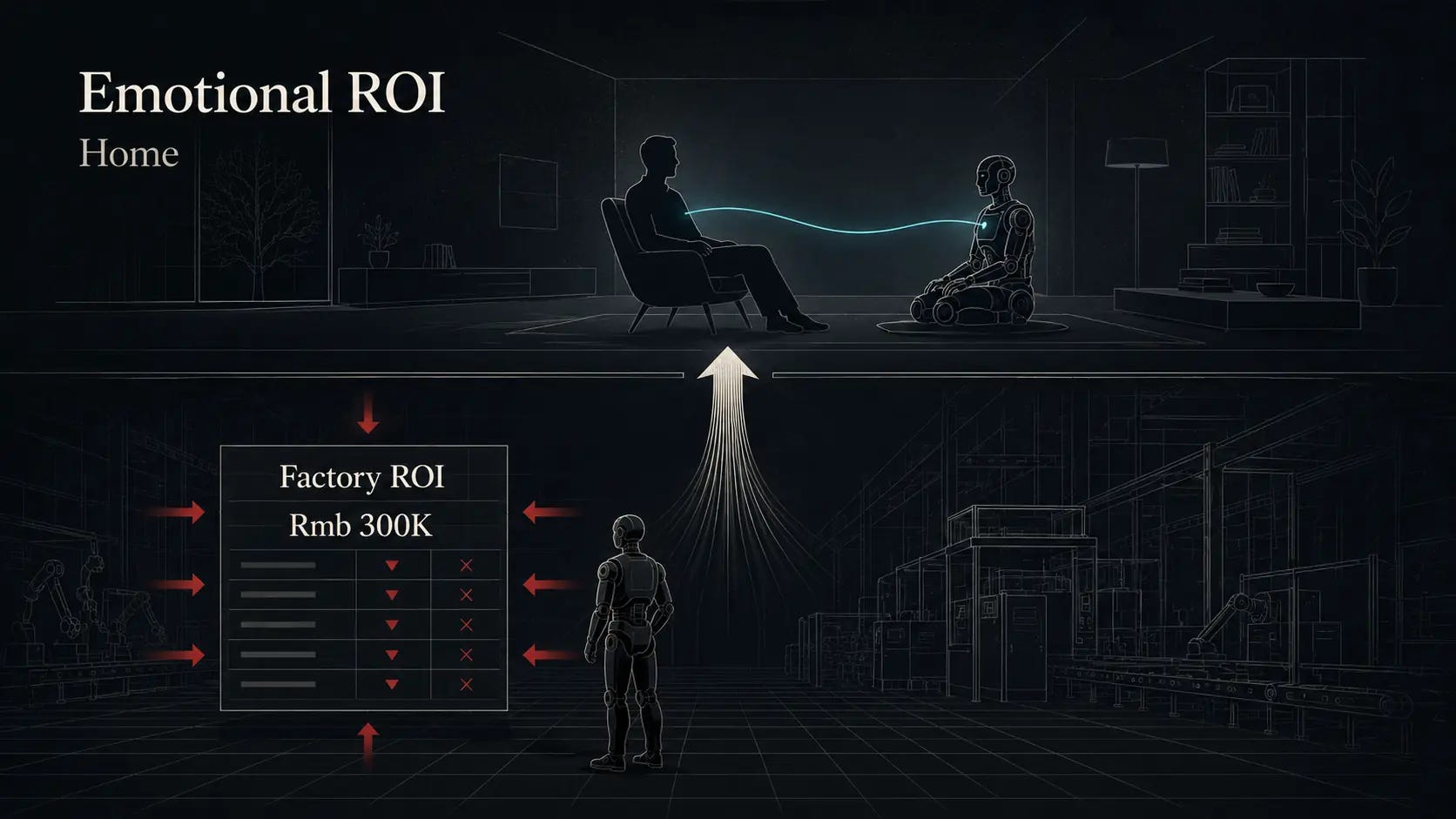
The factory economics explain why this gap keeps widening. In Chinese manufacturing clusters, comprehensive labor costs run roughly Rmb 150,000 per worker annually. Robots must deliver comparable output at total ownership cost below Rmb 300,000 over two years to justify purchase. Most current platforms cannot clear this bar. CEO Zhou Jian (周剑) acknowledged that industrial robots “may one day become pure hardware” with limited ecosystem value. The more promising frontier, he argued, is the home.
U1 is that frontier: a search for buyers who evaluate purchases on emotional return rather than factory ROI.
The pre-order surge demonstrated appetite for bionic companions above Rmb 100,000. What it has not tested is whether that appetite survives contact with the product, a new regulation that takes effect before the first unit ships, and a manufacturing challenge with no precedent at this scale. China’s AI consumer sector has already produced a structural answer to the retention question. The data is not encouraging.