

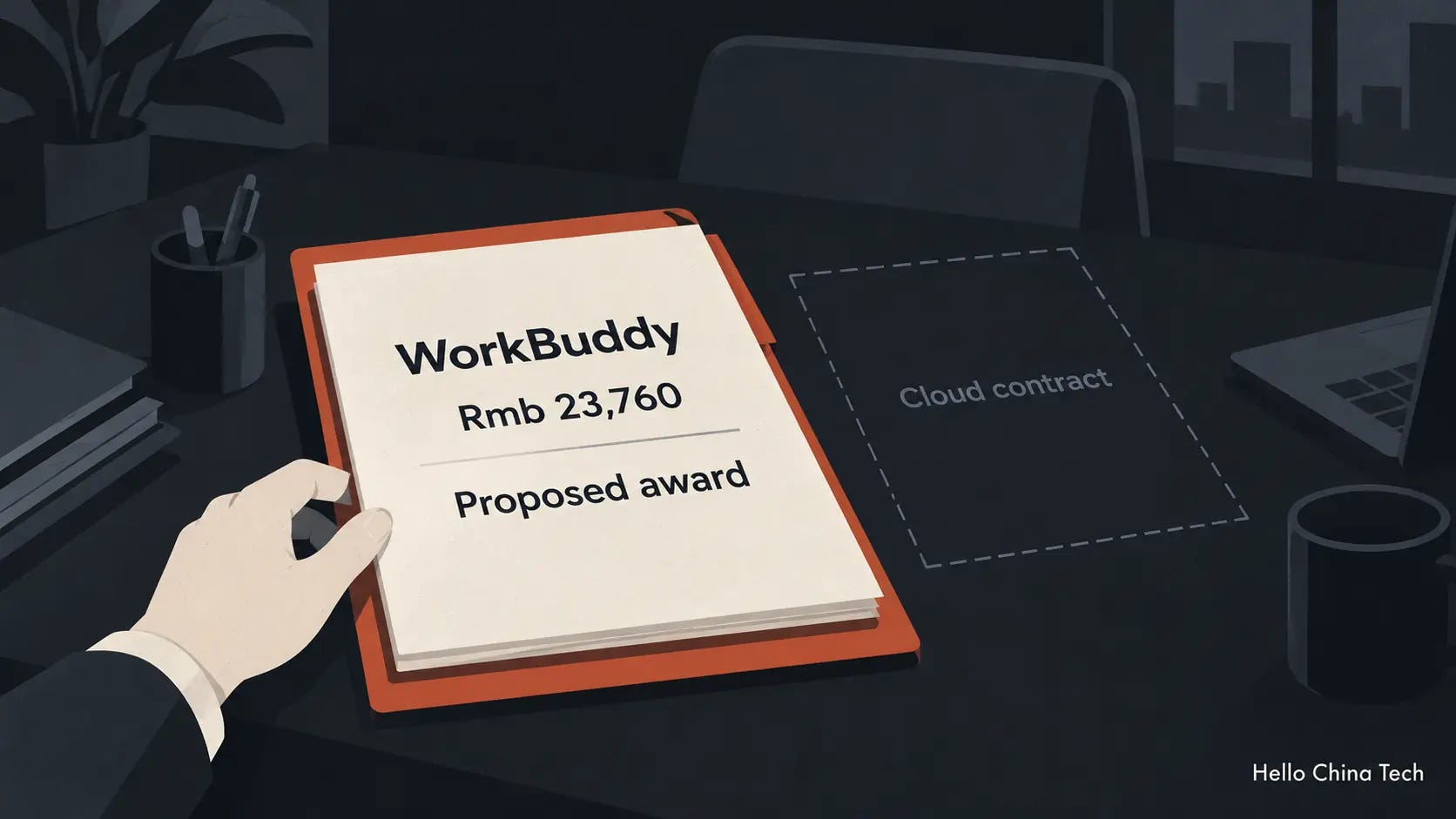
FlashPoint is our paid quick-strike column on market-moving China tech events. Today: Tencent reports about 2,000 WorkBuddy partners, and a public procurement notice describes a one-year WorkBuddy bid priced at Rmb 23,760. In September, I examined Tencent’s reseller requirements, including two certification exams and Rmb 60,000 in deposits. Tencent is now showing what this sales effort looks like in practice. Whether it leads to larger cloud contracts remains an open question.
The notice came from a water-sector design consultancy in Shenzhen. On October 14, its procurement platform named Tencent Cloud as a candidate supplier for one year of WorkBuddy flagship accounts, at Rmb 23,760. The notice records a proposed award, with no information on a signed contract, payment or the company’s previous purchases from Tencent.
WorkBuddy is Tencent’s AI office agent. At Tencent’s October 29–30 conference, cloud vice-president Wu Qisheng said a sale might bring in only tens of thousands of renminbi. The company hopes further cloud business could follow.
I read this as a test of a familiar enterprise software strategy: start with a small purchase, then expand the account. Tencent has shown an entry point. The larger sale remains a proposal.
To reach more businesses, Tencent Cloud opened WorkBuddy to channel sales in May. By late October, it reported around 2,000 partners, with more than 60% described as new. But Tencent has not said how many partners passed certification, made sales or brought in customers new to its cloud business.
Partners and new cloud customers are different groups. Existing customers may buy WorkBuddy too.
The next question is what happens after that first purchase: whether customers spend more with Tencent, and how much of that spending becomes income after costs.
What follows examines how Tencent could earn from the first WorkBuddy account, how third-party software payments are handled, and what would count as evidence of a larger cloud business.
