

FlashPoint is our paid quick-strike column on market-moving China tech events. Today: Tencent's third-quarter profit, and which part of the business slowed. In Tencent's Second Book Is One Number, published in August, I argued that Tencent's two profit figures showed what its new AI products subtract and little else. In that article's terms, the first book is the existing business and the second book is the new AI products. This quarter, profit growth in the first book slowed.
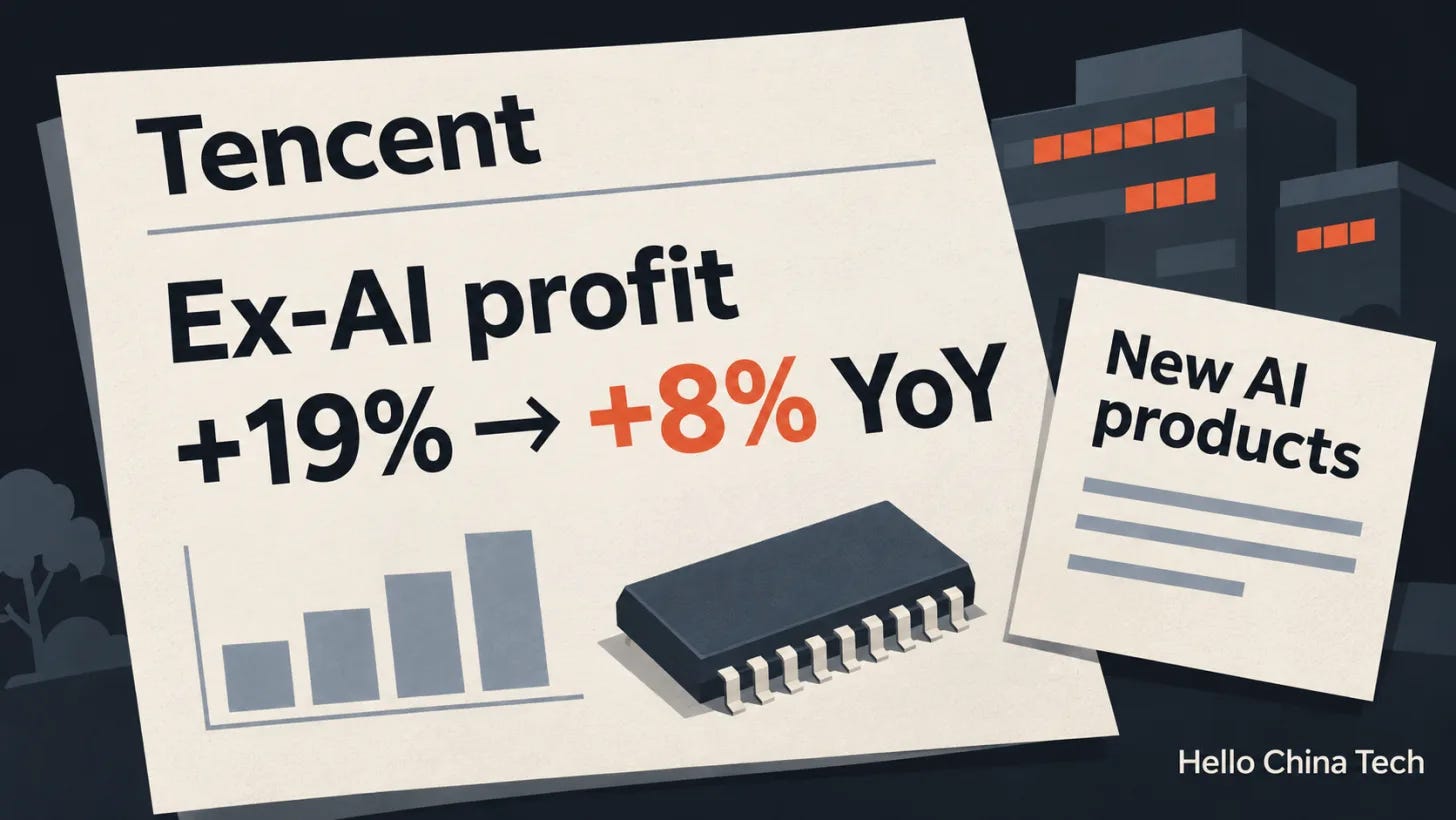
On November 18, Tencent, the owner of WeChat, reported third-quarter non-IFRS operating profit of Rmb 68.1bn, down 6% year on year. It also reported the same measure excluding new AI products, or ex-AI profit for short. That figure rose 8% to Rmb 83.3bn, after 19% growth in the second quarter. The gap between the two figures is the net effect of the new AI products, counting both their revenue and their costs. A wider net drag explains why group profit fell. It does not explain why ex-AI growth fell from 19% to 8%.
Hello China Tech reads China's AI, chip, robotics and EV sectors from primary sources that English coverage rarely reaches. Subscribe free to get each new analysis as it publishes.
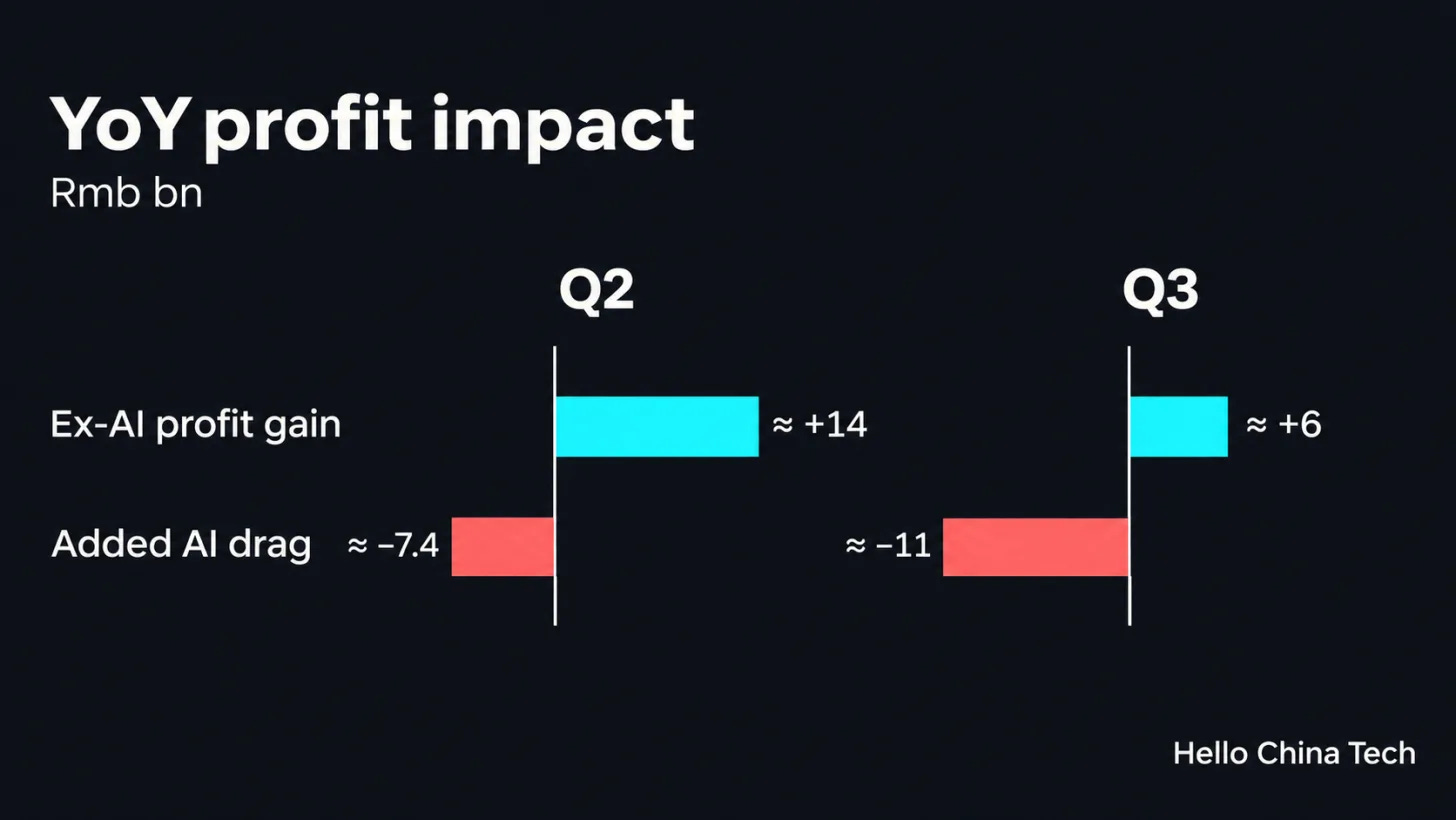
The net drag grew from Rmb 10.5bn in the second quarter to Rmb 15.2bn. On rough arithmetic, it rose about Rmb 11bn from a year earlier, while ex-AI profit rose about Rmb 6bn. Measured the same way, the second quarter looked different: ex-AI profit was up about Rmb 14bn on the year, and the net drag up about Rmb 7.4bn. Between the two quarters, the core's year-on-year gain shrank by about Rmb 8bn, while the drag's year-on-year increase grew by about Rmb 3bn. On that measure, most of the turn in profit growth came from the core. Group revenue growth slowed from 11% to 8%. The ex-AI margin was 2.8 points higher than a year earlier in the second quarter, and broadly unchanged at about 40% in the third. The paid section sorts the four pressures management named and ends with one question to ask of any profit measure that excludes new AI products.
What follows is a line-by-line check of where memory, content and AI operating costs land between Tencent's two profit figures, and what that implies for any profit line that excludes AI. Only need this article? Buy the full article as a PDF for $3. No subscription needed.