

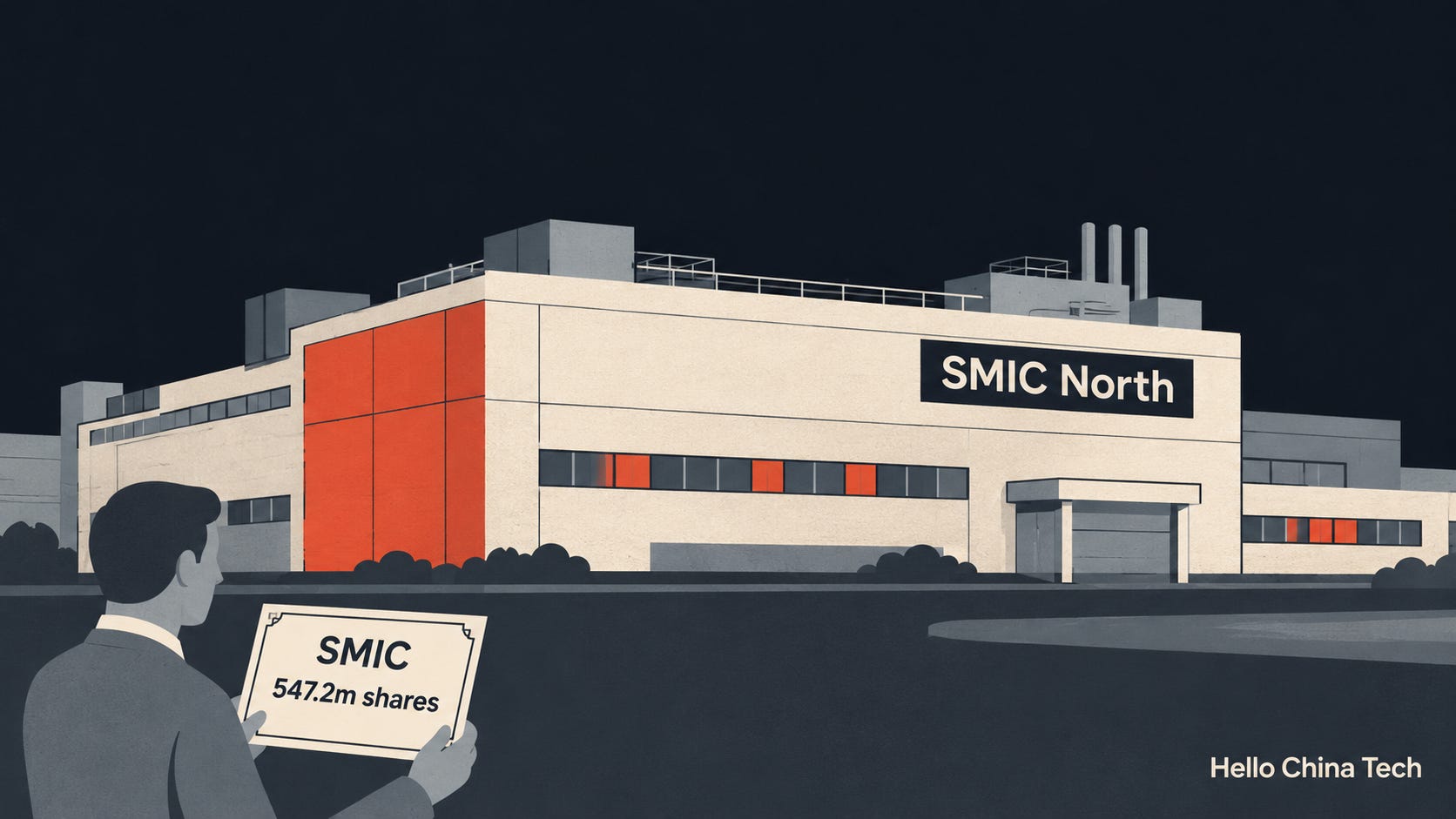
FlashPoint is our paid quick-strike column on market-moving China tech events. Today: why third-quarter profit at SMIC, China’s largest contract chipmaker, still leaves a third of the earnings with subsidiary partners even after the company bought out its Beijing fab. In May, Hello China Tech examined the AI siphon effect and SMIC’s Rmb 40.6bn deal (about $5.8bn at the time) for the remaining 49% of SMIC North. That buyout completed its equity transfer on June 12, making the third quarter the first full period with the Beijing unit wholly owned.
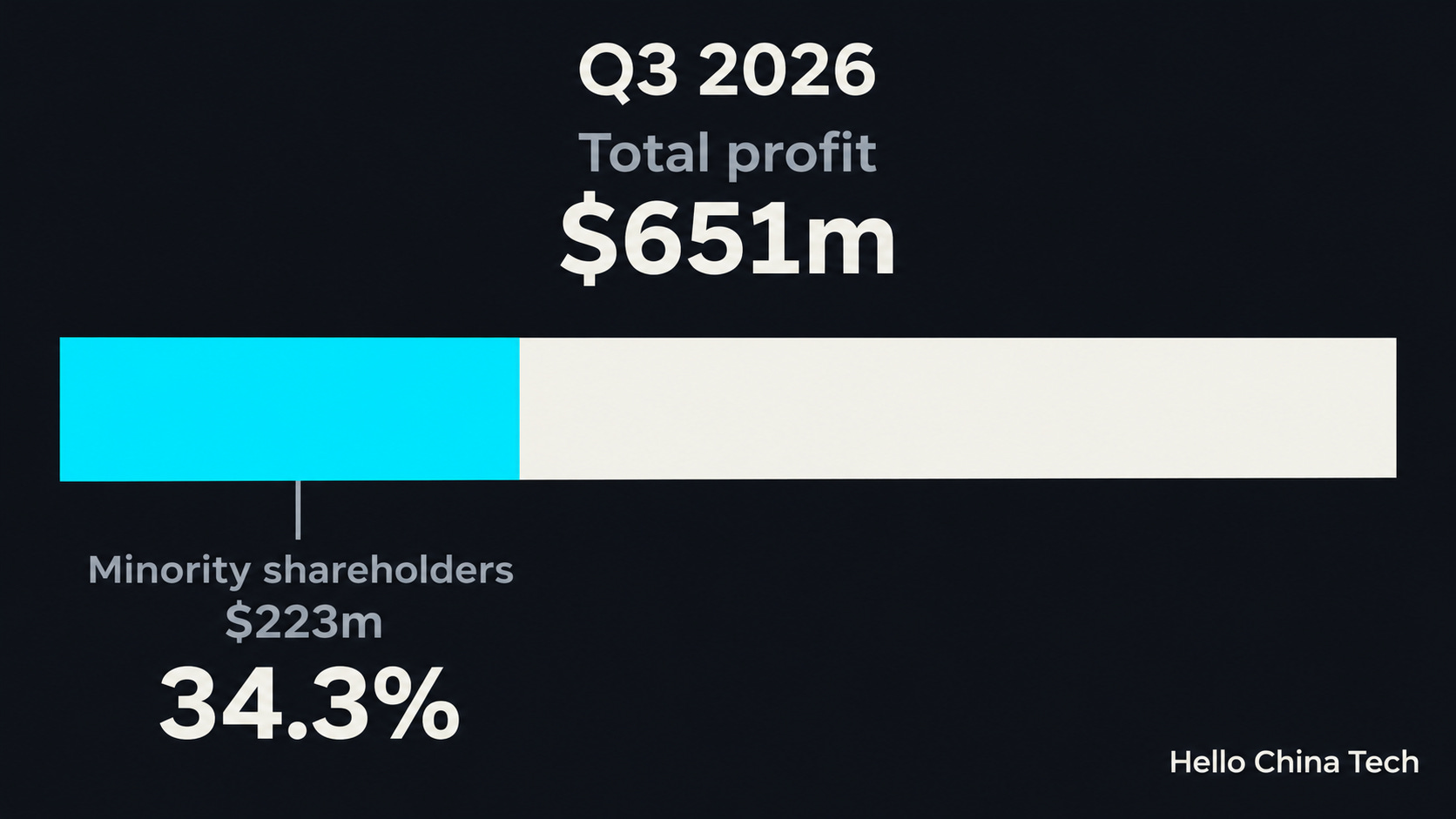
On November 12, SMIC reported third-quarter revenue of $3.19bn, up 33.9% year-on-year, with gross margin rising 4.6 percentage points sequentially to 29.9%. Under Chinese accounting standards, recurring net profit attributable to parent shareholders rose 107.3% year-on-year to Rmb 2.64bn. Under international accounting standards, total quarterly profit doubled to $651m, yet $223m, or 34.3%, was attributable to minority shareholders in SMIC’s subsidiaries. I read SMIC’s consolidated statements as the top layer of a rotating fab-financing structure.
Hello China Tech reads China’s AI, chip, robotics and EV sectors from primary sources that English coverage rarely reaches. Subscribe free to get each new analysis as it publishes.
Across China’s wafer buildout, SMIC forms fab-level joint ventures with state investors led by the National Integrated Circuit Industry Investment Fund, known as the Big Fund, and municipal funds. Those partners supply construction capital inside subsidiaries. Once a fab’s expansion phase matures and turns profitable, SMIC can buy out those stakes with new parent shares. SMIC North completed that cycle in June for 547.2m Shanghai-listed shares. Meanwhile, SMIC South in Shanghai is taking in $7.78bn in fresh joint-venture capital. Below: a two-line check on SMIC’s financial statements, a valuation calculation on the SMIC North shares, and a comparison with Intel’s fab co-investment model.
What follows is the balance-sheet breakdown of how Big Fund phases rotate across SMIC’s fab subsidiaries and why that relay model shifts the cost of capacity onto public equity. Only need this article? Buy the full article as a PDF for $3. No subscription needed.