

One Launch, Three Consolidations
On August 3, Alibaba opened QwenWork to public beta, turning an internal consolidation into a commercial product. QwenWork combines QoderWork’s desktop control, MuleRun’s cloud execution and Wukong’s enterprise-agent capabilities. Its web version and standalone PC client are now available, while built-in entry points in DingTalk’s desktop and mobile apps are due to follow.
Alibaba released the product alongside Qwen3.8, its new flagship model for coding and professional work. The pairing makes the architecture explicit: the model supplies intelligence, QwenWork coordinates execution, and enterprise systems provide data, permissions and organizational context.
The launch completed a two-week sequence across China’s three largest internet companies. Tencent moved QClaw, its desktop AI agent, into the department running WorkBuddy on July 20. On July 30, ByteDance split Feishu, its collaboration suite known internationally as Lark, between Doubao and Volcano Engine. Alibaba then brought three previously separate agents together under QwenWork on August 3.
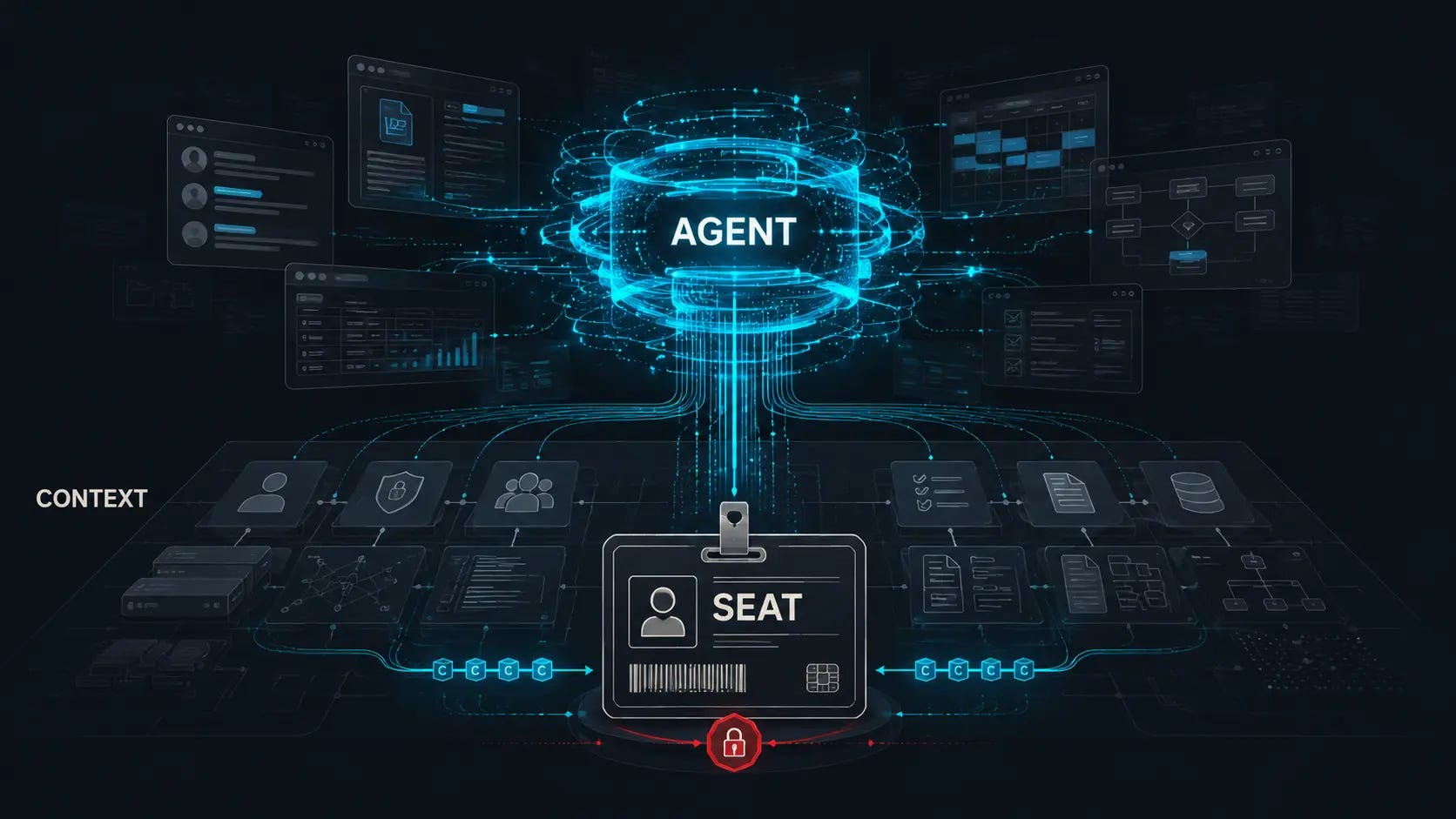
The three structures differ, but they point in the same direction. Office software is becoming the context, permissions and execution layer beneath AI agents. The agent increasingly owns the interaction; collaboration systems retain the organizational data and access controls required to complete the work.
A Demotion During Growth, Not Decline
The timing appears counterintuitive. Caijing, one of China’s most prominent financial magazines, reported that Feishu’s 2025 revenue exceeded Rmb3bn, with Q2 2026 revenue growing more than 100% year over year. ByteDance has not confirmed either figure. ByteDance told media that more than 90% of new Feishu clients had purchased AI products, though reports differ on whether the figure covers Q2 or 2026 year to date. By the metrics that defined enterprise software success over the past decade, Feishu was accelerating.
The restructuring points toward a different set of books. ByteDance plans to spend more than Rmb200bn ($29bn) on capital expenditure this year, roughly 60% of its reported 2025 profits. Doubao, with more than 200 million daily users, generates under Rmb1m per day, while LatePostestimated its daily inference costs at tens of millions of yuan.
The revenue figure refers to Doubao’s consumer app. According to unaudited company-provided figures based on July consumption, ByteDance’s broader large-model business was running at an annualized $4bn. Its scope, including the treatment of internal usage, discounts and application revenue, remains unclear. The two figures cannot be reconciled into a single AI P&L. Together, however, they show why ByteDance has an incentive to combine product distribution, enterprise sales and cloud delivery.
A product explanation also applies. Feishu’s product team had maintained a dotted-line reporting relationship with Doubao since September 2025. The pattern resembles Microsoft, where Copilot is becoming an interface across Microsoft 365, and Google, where Gemini was folded into Workspace subscriptions. ByteDance may be following the same integration path: the AI model becomes the interface, while the collaboration suite supplies the underlying enterprise context.
Over two weeks, three companies changed reporting lines or combined previously separate agent products. None introduced an outcome-based billing unit tied to completed work. Where enterprise pricing is public, Alibaba and Tencent have converged on the same number and the same structure. The commercial question remains: how should software charge when the work is performed by agents rather than employees?
The three restructurings differ, but they point in the same direction: collaboration software increasingly serves the agent. The two companies with disclosed enterprise pricing still charge by the human seat. The tension between how these products work and how they are sold appears most clearly in the pricing data.
If the structural tension between AI agents and per-seat software pricing is new to you, this is a preview of what Hello China Tech covers three times a week: China’s AI, chip, robotics and EV sectors read from primary sources most English coverage never touches. Subscribe free to get every new analysis as it publishes.