

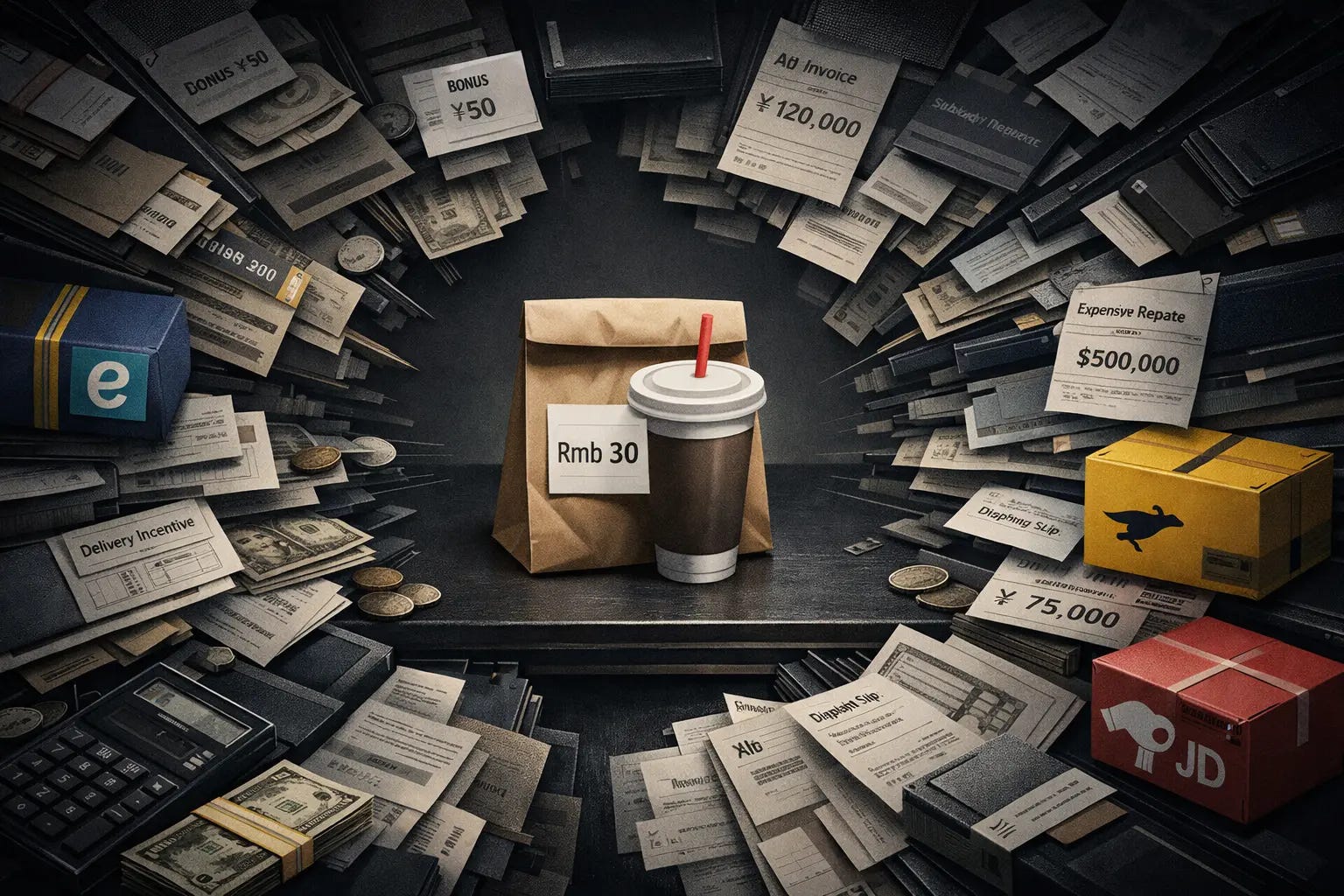
In 2024, Meituan, China’s dominant food delivery and local services platform, earned an adjusted net profit of Rmb 43.8 billion. It was one of the most reliable cash generators in Chinese tech. Twelve months later, the company reported an adjusted net loss of Rmb 18.6 billion for 2025. The swing exceeded Rmb 62 billion in a single year.
The cause was a subsidy war of extraordinary scale. When JD.com, China’s largest direct e-commerce retailer, launched its own food delivery service in early 2025, it triggered a three-way battle with Meituan and Alibaba’s Ele.me for control of on-demand delivery. Over roughly 6 months, the three companies collectively spent an estimated Rmb 80 billion to Rmb 100 billion in direct consumer subsidies. Total war-related spending ran far higher: Meituan’s promotion and advertising expenses alone nearly doubled, from Rmb 39.1 billion in 2024 to Rmb 74.5 billion.
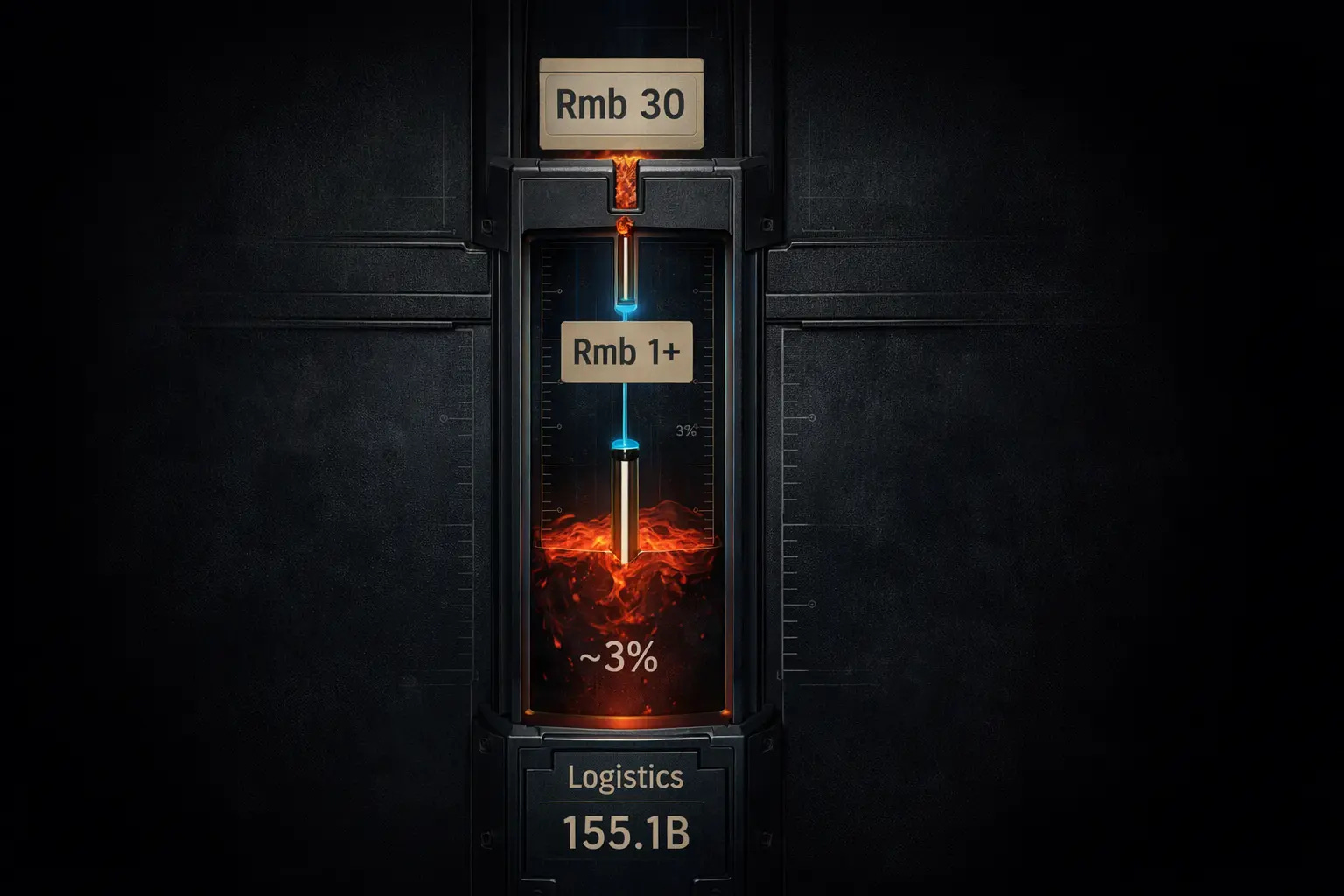
All of it to compete for orders averaging Rmb 30. About $4.
From Merchant Margins to the CPI
The damage extended well beyond balance sheets.
A Fudan University survey of over 40,000 merchants found that after the war escalated in mid-2025, average daily order volumes rose 7% while average daily revenue fell 4%. Platforms subsidized orders at price points that undercut restaurants’ own pricing, generating traffic that diluted margins rather than building them.
The macro footprint followed. Food and dining carry roughly 30% weight in China’s consumer price index. During Q2 and Q3 of 2025, core CPI (excluding food and energy) was actually rising. The drag came specifically from food prices, pushed down by platform subsidies that returned restaurant meal prices to levels not seen in a decade. Goldman Sachs estimated the combined profit reduction across the 3 platforms at approximately Rmb 70 billion, with associated tax revenue losses exceeding Rmb 10 billion.
By late 2025, the war was showing signs of exhaustion on all sides. Meituan began narrowing its per-order losses in Q4. Alibaba merged its Taobao Flash Purchase unit with Ele.me to reduce redundancy. JD scaled back its delivery team and pivoted toward niche categories.
Regulatory attention reinforced the shift. In February 2026, China’s State Administration for Market Regulation convened meetings with executives from the major platforms on anti-unfair-competition practices. On March 25, Economic Daily, a State Council-affiliated newspaper, published a commentary titled “The Delivery War Should End.” The regulator reposted it the same day. Investors read the signal clearly: Meituan surged 13%, Alibaba rose 4.6%, JD gained nearly 5%.
The delivery war appears to be winding down. But the question of who actually benefited, and whether the cost was worth it, demands a closer reading of Meituan’s annual report. What follows is an analysis of the economics that made this war self-limiting, the structural shifts it produced, and the divergent strategies the 3 platforms are now pursuing.