

Editor’s Note: This is FlashPoint, Hello China Tech’s premium quick-strike column on one market-moving China tech event and why it matters.
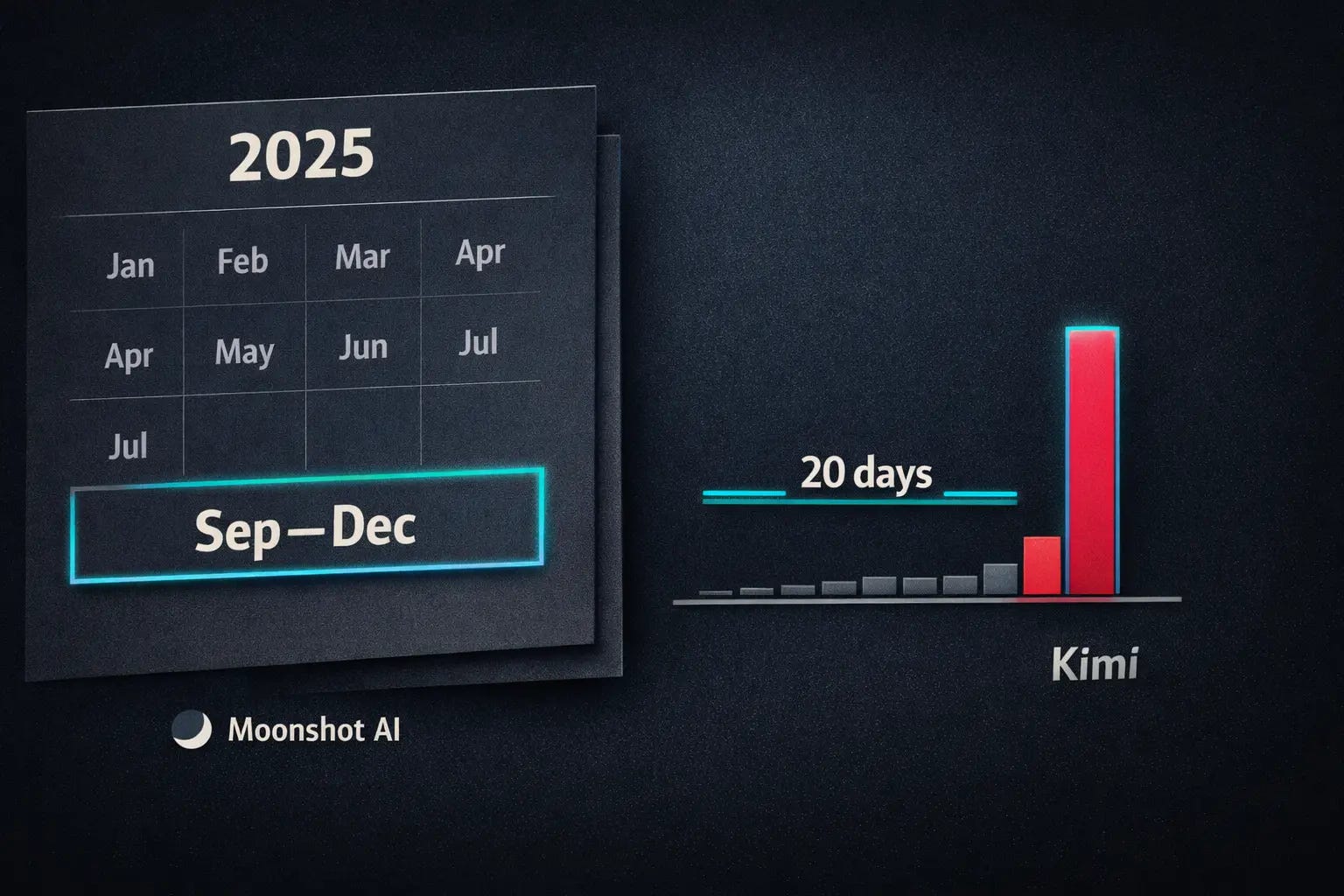
Today’s column examines Moonshot AI’s claim that Kimi K2.5 earned more revenue in 20 days than all of 2025. The growth is genuine. The harder question is what “all of 2025” really measured, and whether a $10 billion valuation can rest on an API surge that started with free trials.
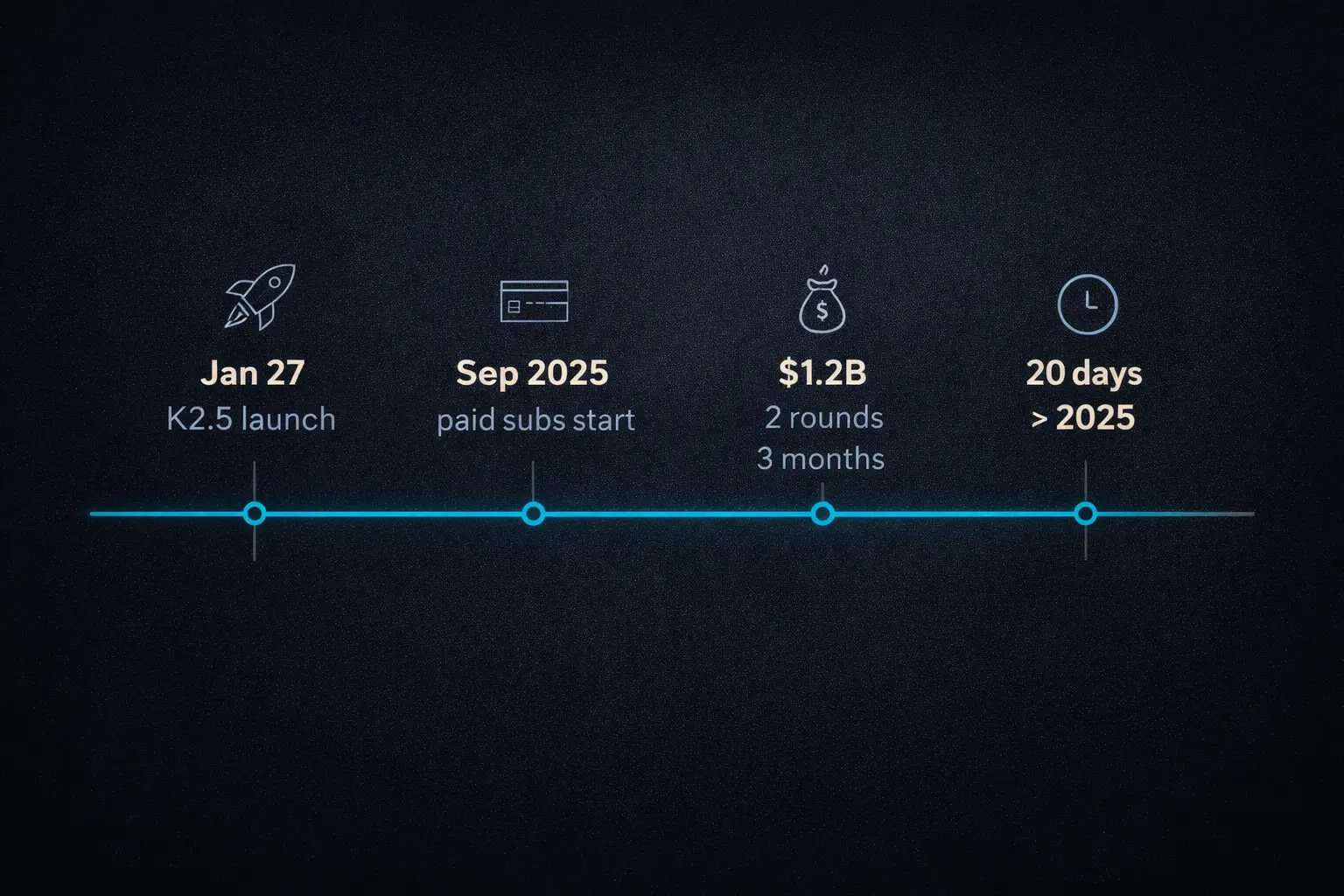
Moonshot AI has spent February stacking milestones. Two funding rounds totaling $1.2 billion closed within three months, with Alibaba and Tencent participating in both. The company’s valuation doubled from $4.3 billion to over $10 billion, making it the fastest Chinese AI startup to reach decacorn status. And then the headline that traveled fastest of all: Kimi K2.5, the company’s new flagship model released January 27, generated more revenue in its first twenty days than Moonshot earned in all of 2025.
That claim is factually correct and carefully constructed. Moonshot launched paid subscriptions in September 2025. The denominator in “twenty days versus a full year” covers roughly four months of nascent monetization from a company that spent most of 2025 dismantling its previous growth model. As I analyzed in January, Moonshot killed its marketing budget, shut down consumer products like Ohai and Noisee, and pivoted entirely to open-source developer tools. Revenue fell before it could rise. Beating that baseline is a legitimate achievement. Treating it as a commercial breakout requires a closer look at what actually produced the money.
The closer look matters at $10 billion. Moonshot’s valuation doubled in three months on the strength of a single model launch. Whether that launch marks the start of recurring revenue or the peak of a promotional cycle will shape how long the price holds.
