

Editor’s Note: FlashPoint is our premium quick-strike column on market-moving China tech events. Today: DeepSeek’s first external round reportedly closes at $7.4 billion. In April, I examined the structural pressures behind DeepSeek’s move toward outside capital. In May, I assessed what a state-backed round would signal about its place on China’s national balance sheet. The deal is done. The architecture matters more than the headline.
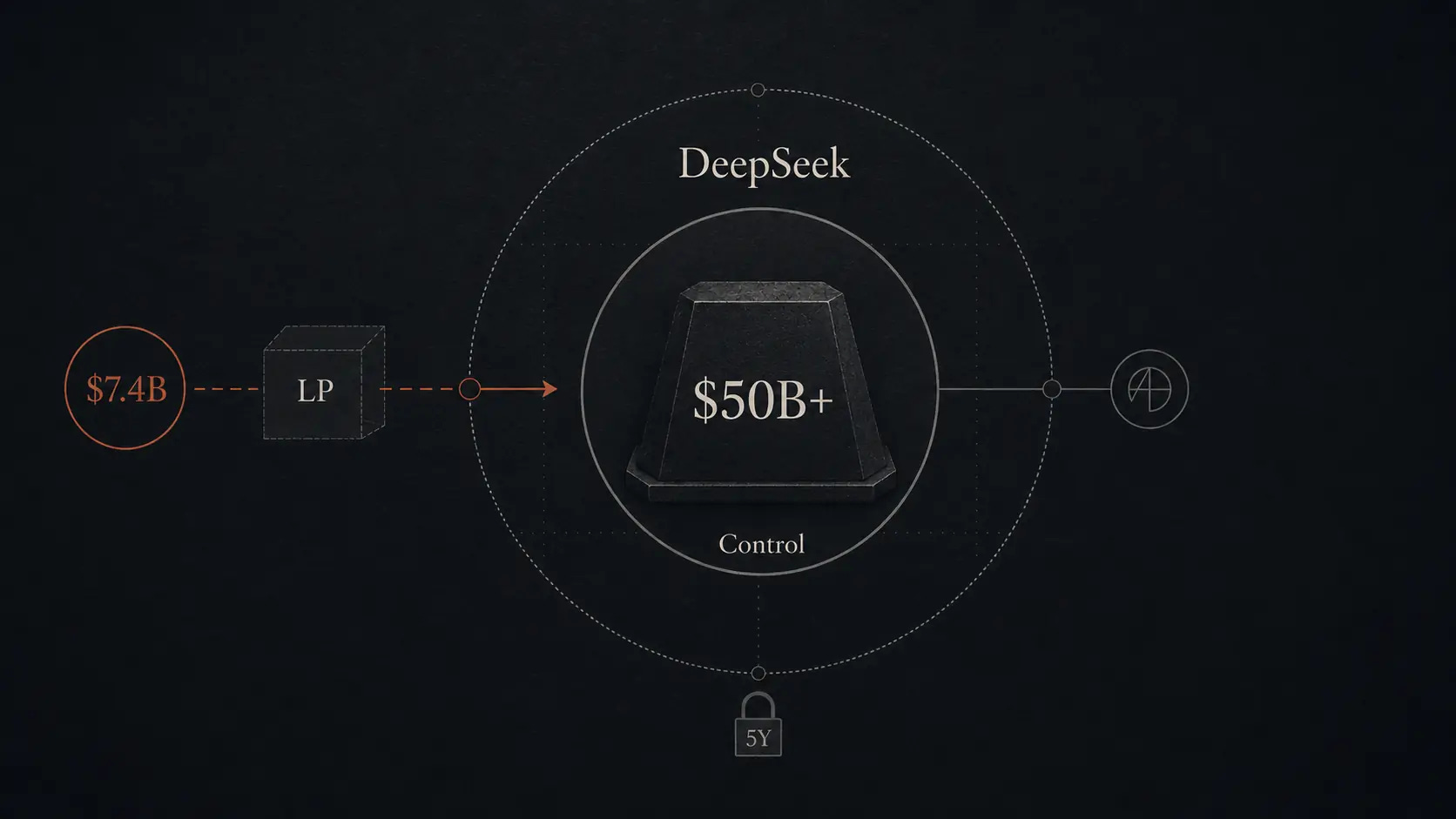
DeepSeek has reportedly raised over $7.4 billion at a valuation exceeding $50 billion, making it China’s most valuable AI startup. The figure conceals an unusual composition. Liang Wenfeng, the founder, personally contributed approximately $3 billion, the single largest commitment in the round. By one estimate, outside investors’ economic exposure amounts to roughly 9% of the company after the transaction. Subtracting Liang’s contribution, actual outside capital behind the round is closer to $4.4 billion.
The structure is equally revealing. Liang routed most outside capital through a limited partnership under his control. These investors receive economic rights but hold no shares in DeepSeek itself and carry no voting rights. They also face a 5-year lock-up. Liang’s team verified the identity of every underlying limited partner in the participating funds. In most fundraises, the term sheet reflects a negotiation. This one reads more like terms set by a founder with unusual leverage.
A founder who self-funded DeepSeek from his hedge fund’s profits since its founding wrote the largest check in a round that excludes nearly every other participant from governance. The round looks less like a company raising capital than a founder setting a price. For subscribers: what that price is designed to solve, what the investor roster reveals, and why the final state-capital structure is narrower than my May framing suggested.
