

The Customer Is Also the Landlord
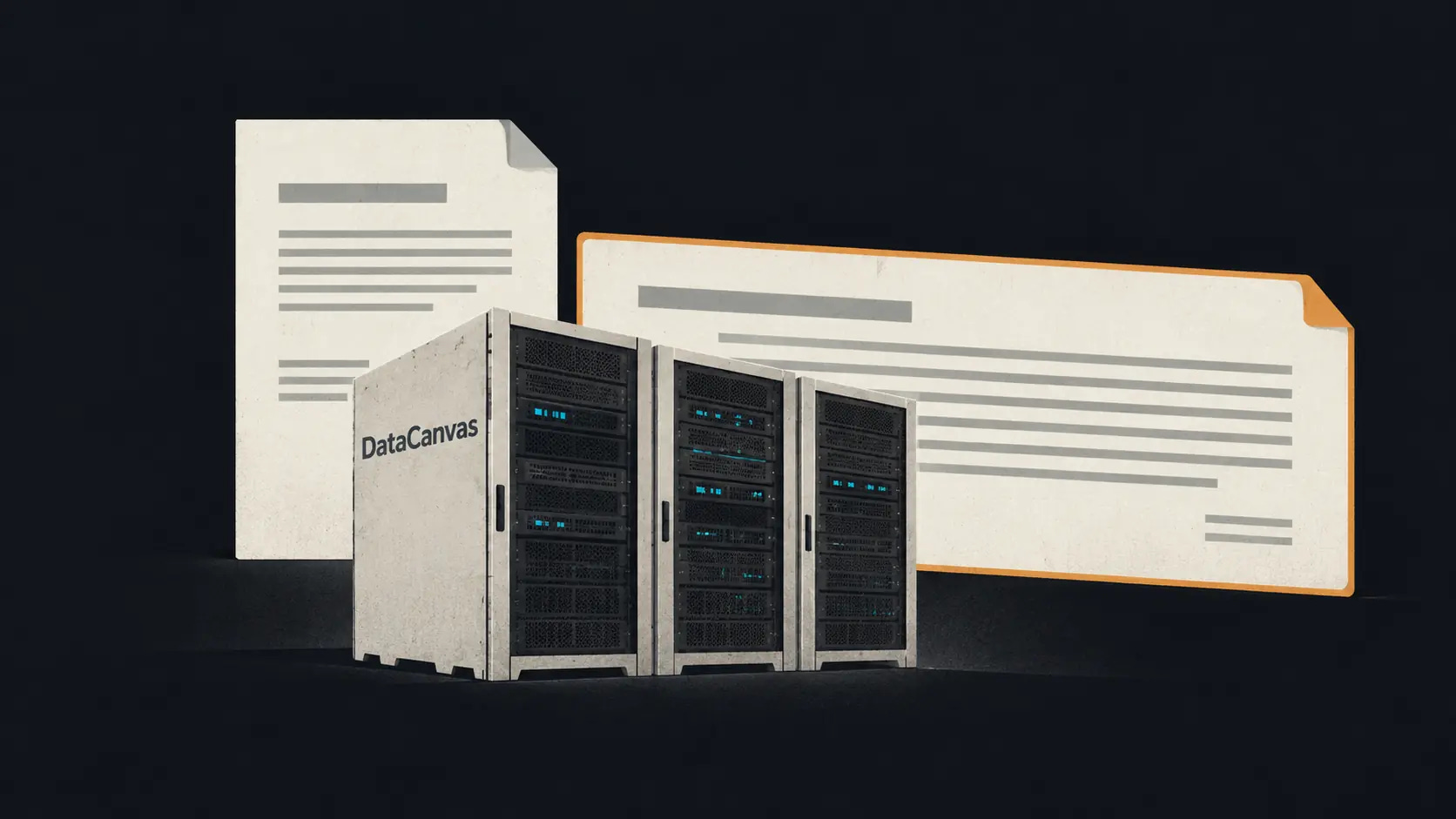
On September 29, 2026, DataCanvas (九章云极), a Beijing AI cloud company, filed for a listing in Hong Kong. In 2025, its largest customer, which the filing calls Customer I, accounted for 48.0% of revenue. DataCanvas had delivered AI computing infrastructure to it. The same filing lists Customer I as one of DataCanvas’s landlords: firms that lease it part of a computing center, servers included.
Customer I was already a leasing supplier in 2024, with Rmb 178.3m of leasing purchases, before DataCanvas recognized Rmb 527.4m of project revenue from it in 2025. The filing shows the overlap, but does not match those amounts to a single facility. Customer group J did both in one year: Rmb 230.9m of project revenue and Rmb 234.9m of leasing purchases in 2025. Together, I and J supplied 69% of 2025 revenue. The leasing figures are purchase amounts, not rent paid: cash paid on all of DataCanvas’s leases in 2024 was Rmb 24.4m.
In a July piece on who owns China’s Token Factories, I described the cleanest version. An asset owner holds the hardware and absorbs depreciation, and an operator runs it for fees. That piece found no disclosed contract confirming that split. DataCanvas’s filing describes a different arrangement. DataCanvas books the project revenue. The customer owns the delivered infrastructure and leases part of it back. For that part, DataCanvas carries the demand risk for the life of the lease, typically five years. I read this as the clean split with the demand risk moved to the operator.
Reading a project customer and a landlord as one counterparty is one example of how Hello China Tech reads China’s tech sector: primary sources first, three analyses a week, across AI, chips, robotics, and EVs. Subscribe free to get the next one in your inbox.
DataCanvas began in 2013 as an enterprise AI software firm and moved into computing infrastructure in 2023. Revenue grew from Rmb 106m in 2023 to Rmb 1.1bn in 2025. The filing describes the loop. DataCanvas delivers AI computing infrastructure to a customer. Its customers include local government bodies and state firms. It then leases a designated part of the site back and runs it as cloud capacity. In the filing’s words (my translation), this secures computing power “without funding the construction of the facilities.” DataCanvas says the sales and leases are negotiated case by case, do not depend on each other, and involve no bundled or back-to-back deals.
A Glut Looking for a Tenant
In July 2025, Reuters reported a glut of computing centers backed by local governments. Four sources put utilization at about 20% to 30%. A project manager said builders expected government bodies and state firms to buy.
An owner with a half-empty center needs a tenant. A cloud operator willing to sign a five-year lease appears to be that tenant. The filing does not show whether the sites DataCanvas leases sat idle before.
By 2026, prices were rising. The filing cites CIC, a consultancy DataCanvas hired. It estimates that average monthly cloud fees per AI-accelerated server rose by about 100% to more than 150% from 2025 to the first half of 2026. The two figures measure different things: center utilization in 2025, and server cloud prices into mid-2026. In a tight market, a long lease looks cheap. A lease can also outlast the prices that made it look cheap. The landlord has a claim to fixed rent, as long as the tenant can pay. The tenant holds the empty racks if demand slips.
The lease terms show who keeps paying when demand weakens, who shares the upside, and whether project profits turn into lasting cloud returns.