

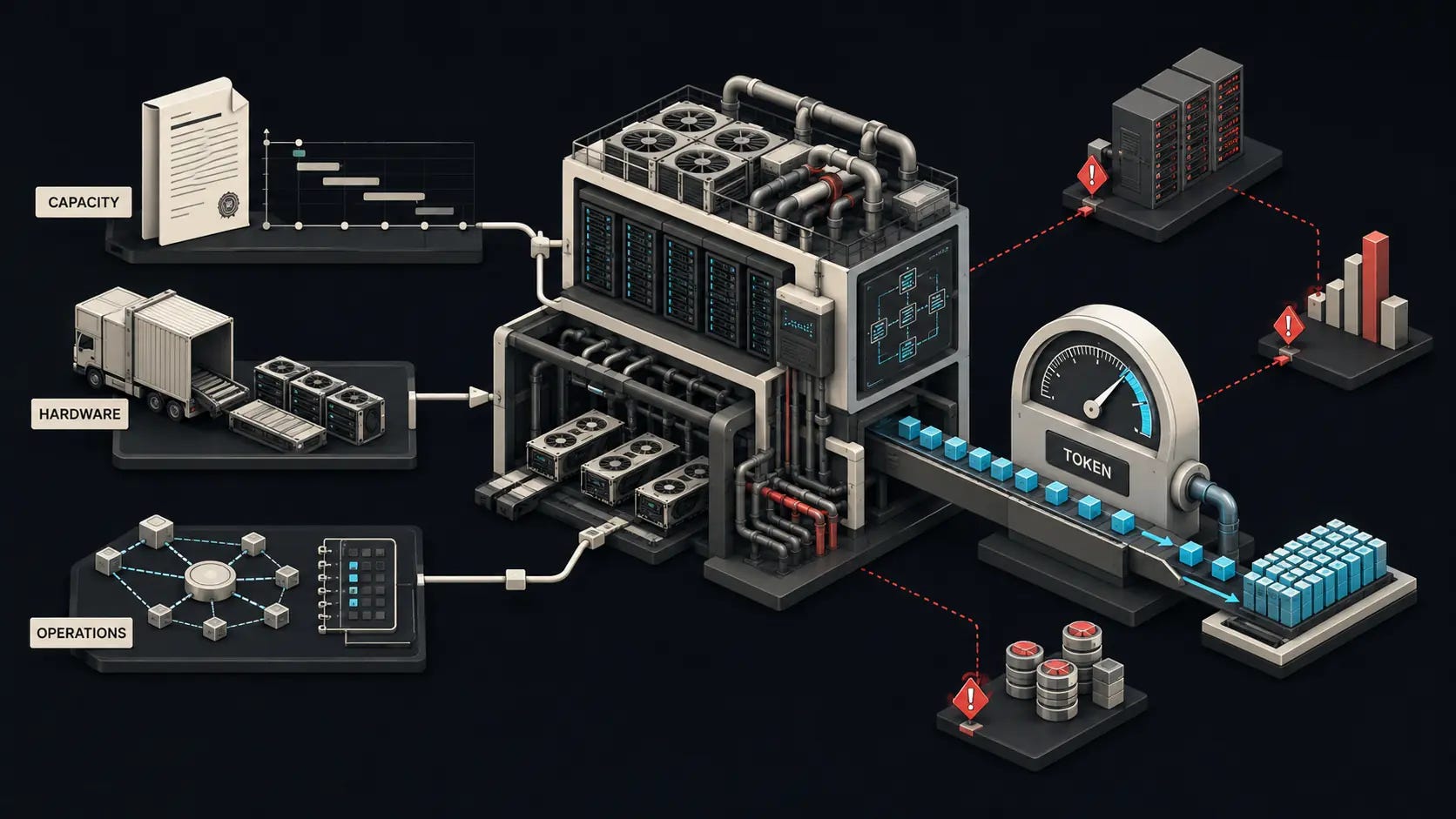
This is the third in a series examining the economics of China’s token supply chain. The first article tested how much of China’s 140-trillion daily token consumption represents real commercial demand. The second used SiliconFlow’s IPO filing to show what it costs to sell tokens for a living. This article asks what happens when the retail economics do not work: whether a different arrangement of hardware ownership and operations can change the outcome. Each article stands on its own, but they share a common question: where, if anywhere, durable value accrues in China’s inference supply chain.
One Label, Three Businesses
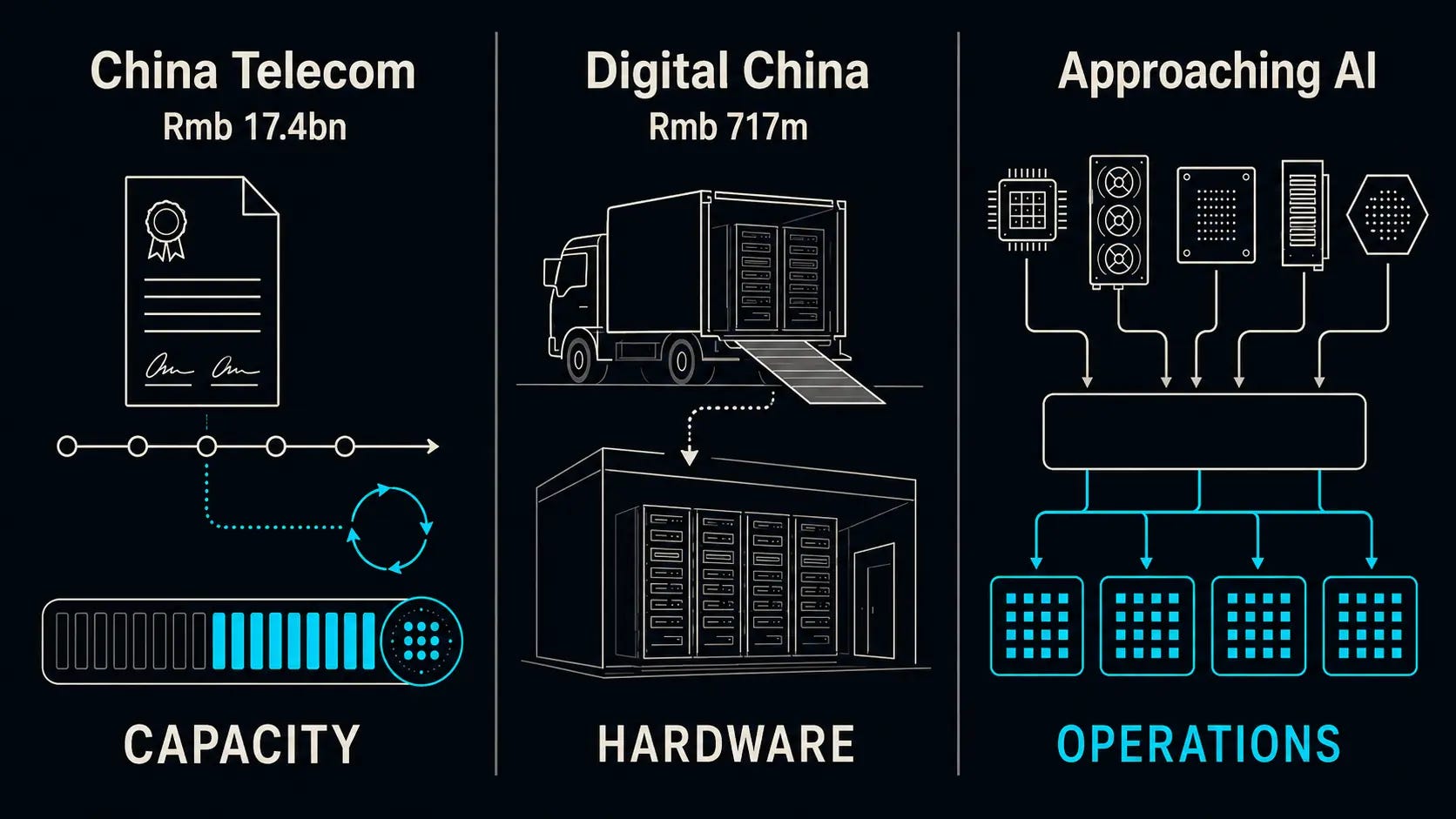
In April 2026, China Telecom’s Ningxia unit launched bidding on what it called “Token generation capacity services.” The five-year framework covers 11 packages and has an estimated ceiling of Rmb 17.4bn including VAT. Six bidders were named as winning candidates for the first package. What they would be contracted to deliver is not hardware or cloud instances but a sustained ability to generate tokens to agreed performance standards.
Digital China (神州数码), a major Chinese IT distributor, submitted a Rmb 717m bid for a separate procurement commissioned by a Hangzhou-based company and labeled “Domestic AI Computing Token Factory.” The bid covered super-node server systems and supporting equipment. Token Factory in name. Hardware delivery in substance.
A third arrangement looks different from both. Approaching AI (趋境科技), an inference optimization startup founded in late 2023 by a team with a background in high-performance computing at Tsinghua University, reportedly raised more than Rmb 1bn over six months. According to media reports, a fund linked to Henan Investment Group, a provincial state-owned holding company, participated in the financing and is involved in planning a Token Factory designed to generate trillions of tokens per day. Approaching AI’s role is not to own the chips but to run the inference layer, converting raw compute into token output that meets service-level agreements.
Three cases, three different commercial arrangements: a capacity framework, a hardware bid and a managed operating model. China Mobile extends the Token vocabulary further with a proposed “one Token account per person” consumer billing system. The company does not call this a Token Factory, but the language shows how rapidly token is migrating from a technical unit inside AI systems to a procurement and project language across China’s infrastructure economy. The factory metaphor becomes real only when token capacity can be contracted, financed, and operated independently of the underlying chips. Whether that threshold has been crossed is what the evidence can begin to test.
SiliconFlow, one of China’s largest independent token suppliers by throughput, filed for a Hong Kong IPO in June with a public cloud gross margin of negative 119%. In SiliconFlow’s case, selling inference output at market prices while renting compute at market costs produced volume without profit. The question is whether a different arrangement of asset ownership and risk could change the arithmetic.
Capacity, Not Inventory
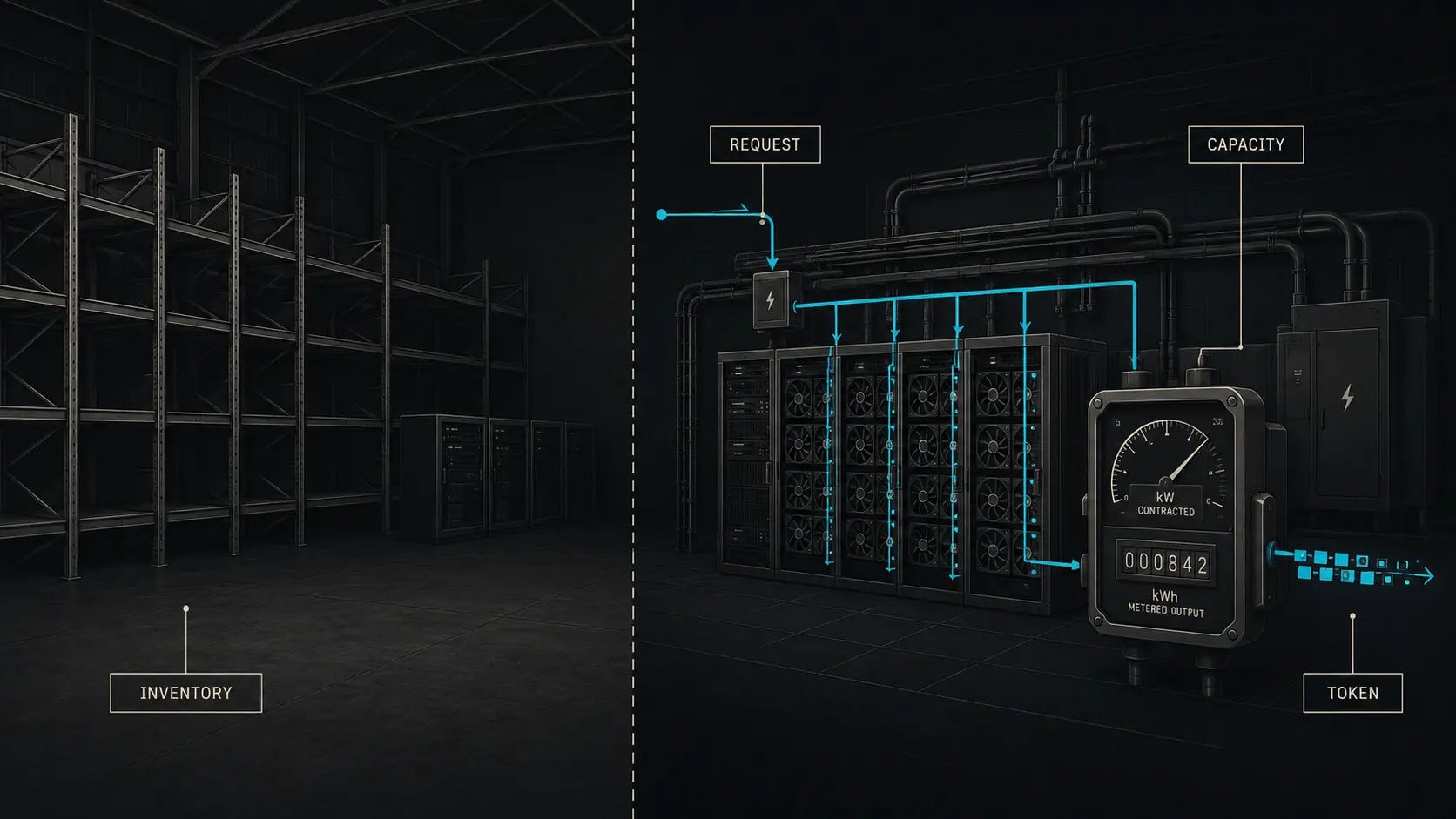
Tokens cannot be manufactured in advance and stored. They are generated only when a user sends a request. A Token Factory does not produce a storable good. It maintains the capacity to generate output on demand, bound by performance commitments on latency, throughput, and reliability. In 2026, the China Academy of Information and Communications Technology launched a formal Token Service Evaluation System covering service quality, performance, observability, SLA compliance and metering.
The closer industrial analogy is power capacity, not manufacturing. NVIDIA uses a similar concept in its “AI Factory” framework, where output is measured in token throughput. But NVIDIA’s definition covers training through inference. China’s version focuses almost entirely on inference and introduces a question NVIDIA’s framework does not address: who owns the physical assets, who operates the software, and who bears the cost when capacity sits idle.
The label is spreading faster than the contracts beneath it. What follows tests whether Token Factories have changed the economics of inference, or merely renamed them.