

The River With No Banks
Yuan Jinhui likes to compare AI training demand to a swimming pool: fixed volume, known dimensions. Inference demand, he says, is a river with no boundaries.
Yuan spent his first startup building OneFlow, a training framework for deep learning. When he founded SiliconFlow in August 2023, he moved to the other side of the equation. A token-supply platform is not a model lab or an application company. It is the middleware layer that turns rented compute and third-party models into metered AI output.
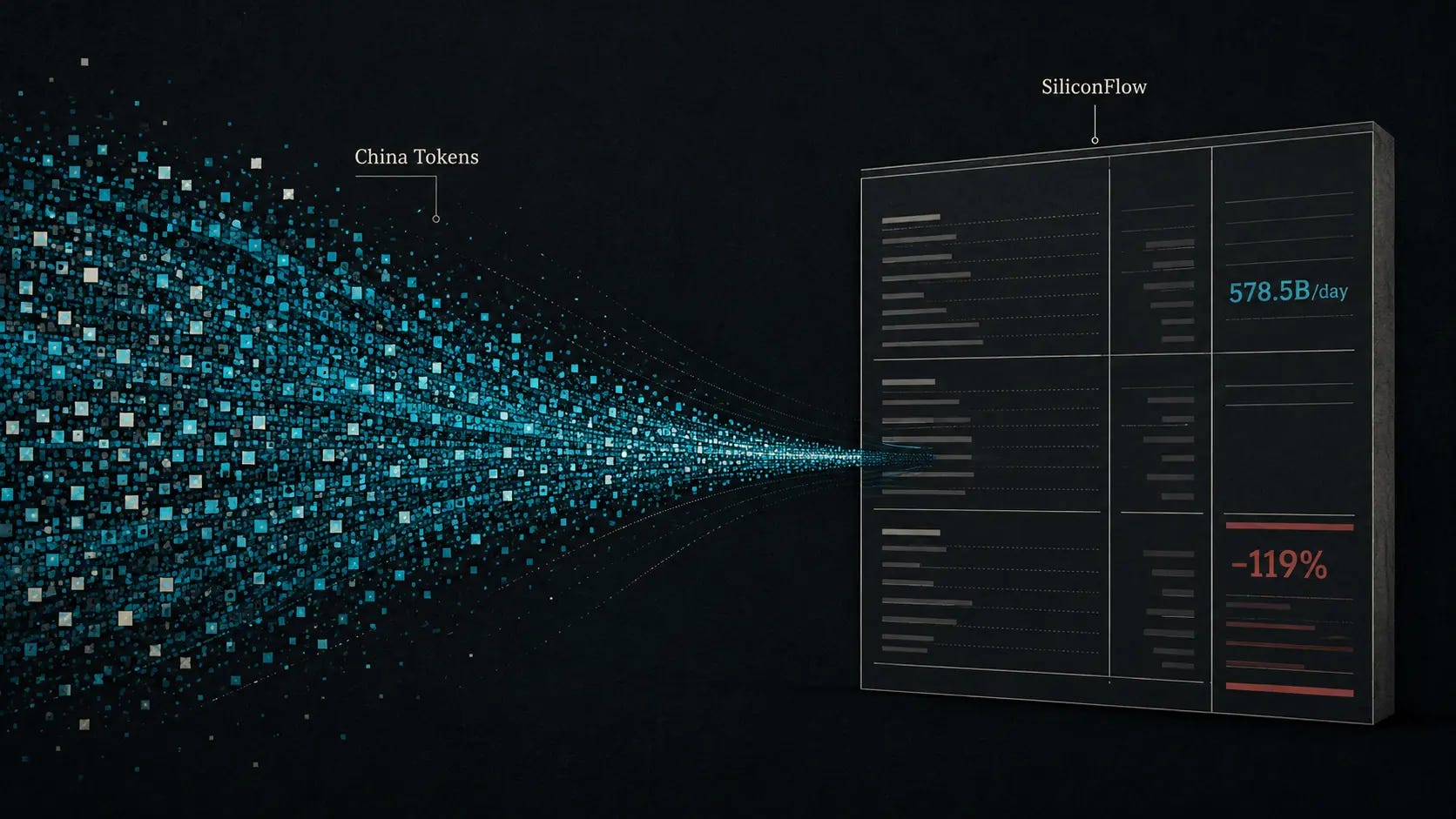
Thirty-four months later, SiliconFlow has become China’s largest independent token supply platform. As of April 2026, it processed an average of 578.5 billion tokens per day across more than 170 models, serving more than 10 million registered users and over 13,000 enterprise customers. The top three token suppliers by throughput, Volcengine (ByteDance’s cloud arm), Alibaba Cloud, and Baidu AI Cloud, are all hyperscaler divisions. SiliconFlow holds 1.5% of the market, trailing the third-place player by ten percentage points. On June 30, the company filed for a Hong Kong listing under Chapter 18C, the exchange’s framework for specialist technology companies.
The filing matters beyond SiliconFlow. It offers one of the clearest audited looks yet at the economics of a pure-play token supplier. Major cloud providers sell tokens, but their inference economics sit buried inside larger businesses. SiliconFlow’s prospectus isolates the layer.
The river Yuan described is real. Daily token throughput grew twelvefold in sixteen months. Revenue rose 653% to Rmb 55.3m. But the prospectus also reveals what the river costs to sustain, and those costs complicate the growth story considerably.
The Prospectus X-Ray
SiliconFlow runs two businesses with opposite economics.
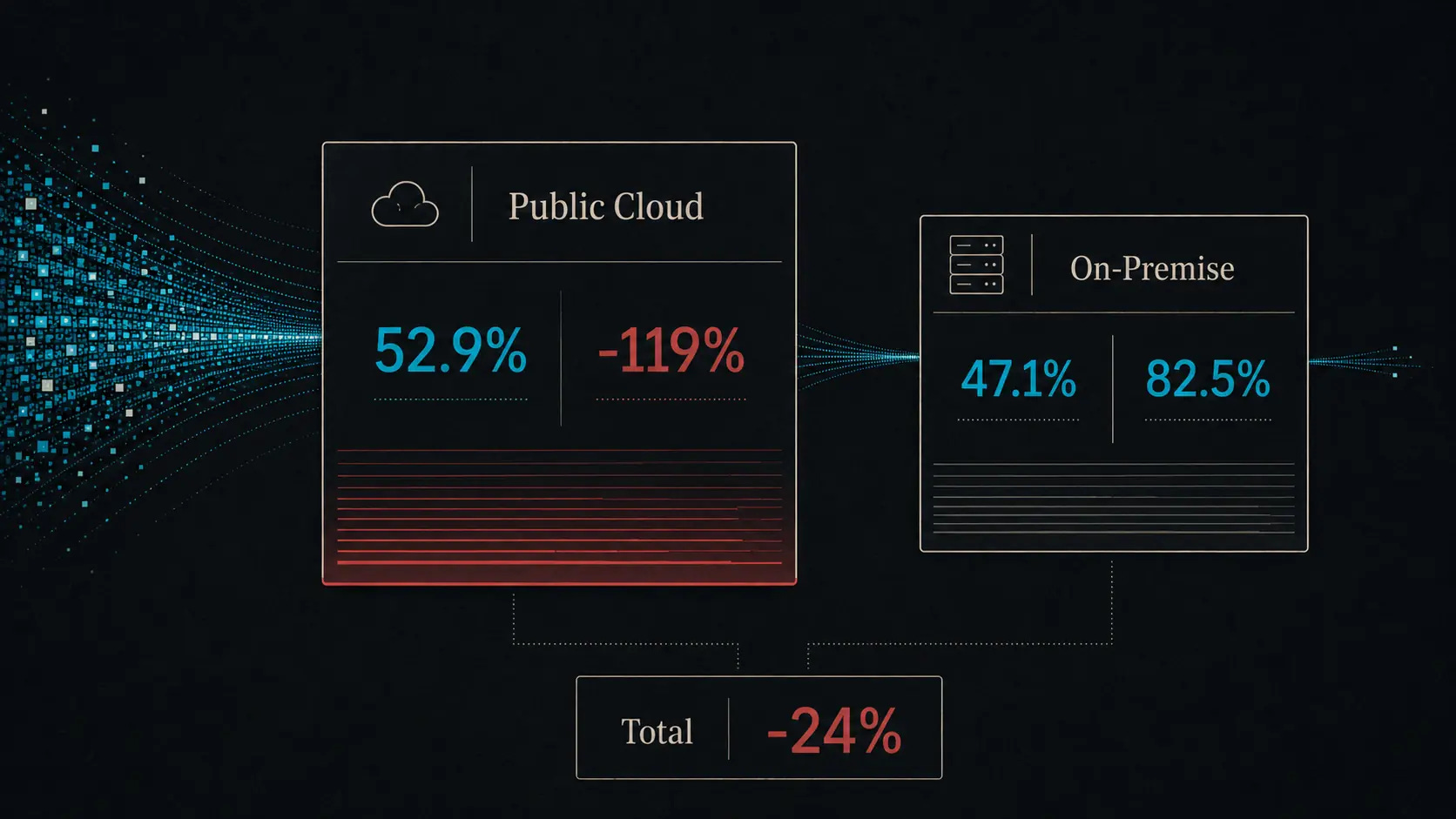
Its public cloud service, including serverless token APIs and dedicated compute instances, generated 52.9% of 2025 revenue. This is the growth engine and the core of the “Token Factory” narrative. Its gross margin was negative 119%, an improvement from negative 271.6% in 2024 when the service had just launched, though the gap to breakeven remains wide. For every renminbi of revenue, SiliconFlow spent Rmb 2.19 in direct costs, with compute rental alone consuming 86.9% of cost of goods sold. Within public cloud, serverless token services and dedicated compute instances each contributed roughly half of revenue.
SiliconFlow occupies a pure intermediary position in this market, renting compute and packaging third-party models rather than owning either input. And it sells into a price war: prices for mainstream models have fallen more than 90% since 2023. In May 2026, DeepSeek, the Hangzhou-based AI lab, made a permanent 75% cut to its V4-Pro API price. Xiaomi and Tencent Cloud followed with maximum reductions of 99% and 97.5%, respectively.
The company’s other line, on-premise deployment of inference software inside enterprise data centers, earned an 82.5% gross margin. But this business is project-based and difficult to scale. Customer count fell from 28 to 20 in 2025, even as average revenue per customer rose nearly sixfold.
The aggregate picture: gross margin swung from positive 39.4% in 2024 to negative 24% in 2025. The shift was largely a revenue-mix effect. Public cloud barely existed in 2024. As it became the majority of revenue, blended margins turned negative, even though public cloud’s own unit economics improved year over year. Net loss reached Rmb 345.5m; adjusted for share-based compensation, the figure was Rmb 187m, still more than three times revenue. More than 64% of the company’s Rmb 83.7m in selling and marketing expense went to promotional compute credits, essentially giving tokens away to acquire developers. The strategy accompanied rapid volume growth in serverless token services: paying accounts rose from 2,455 to 716,000 in a single year. But the arithmetic suggests thin commercial density. Serverless token revenue of Rmb 14.3m divided by the 716,000 year-end paying accounts implies average spending of roughly Rmb 20 per customer.
The prospectus offers a rare answer to a question usually hidden inside cloud divisions: what does it cost to be an independent token supplier when your cloud vendors, chip suppliers, and direct competitors can be the same companies? The more revealing question is what these numbers look like beside the American companies building the same infrastructure layer, and why the gap goes deeper than scale.