


Pony AI, a Guangzhou-based robotaxi developer listed in New York and Hong Kong, cites a contracted deployment of more than 2,000 robotaxis with Uber in Europe. WeRide, also based in Guangzhou, says it holds binding contracts for about 3,000 worldwide. Uber, a main overseas channel for both, expects more than 2,000 fully driverless cars on its platform by the end of 2027, roughly half outside the United States, across all its partners.
This month's results were about reach. Apollo Go, the robotaxi unit of Chinese search and cloud company Baidu, reached 30 cities worldwide by October. Pony AI began Europe's first driverless test rides with invited passengers in Zagreb. WeRide's overseas revenue rose 171.5% to Rmb 146.9m ($21.9m), 45.7% of its sales.
I read the overseas push as a way for developers such as Pony AI and WeRide to improve per-car economics while relying on platforms to reach foreign riders. In several overseas markets, local partners fund and maintain the cars while global or regional apps handle bookings. In Dubai, Uber already brings riders to both WeRide and Baidu inside one app. On Uber's app, at least, Uber's own targets set the near-term pace.
Hello China Tech reads China's AI, chip, robotics and EV sectors from primary sources that English coverage rarely reaches. Subscribe free to get each new analysis as it publishes.
Home Miles, Foreign Margins
WeRide's third-quarter revenue mix shows why foreign deployments matter to its income statement. Quarterly robotaxi revenue rose 204.0% from a year earlier to exceed Rmb 100m (more than $14.9m), with overseas markets generating over 90% of that segment total. At the end of October, WeRide reported more than 2,300 robotaxis globally, including about 600 in the Middle East alongside operations in Singapore and Zurich. Group gross margin rose 10.1 percentage points year on year to 43.0%. Management attributed the gain to L2++ driver-assistance licensing and overseas robotaxi service fees, where WeRide records its net share as revenue.
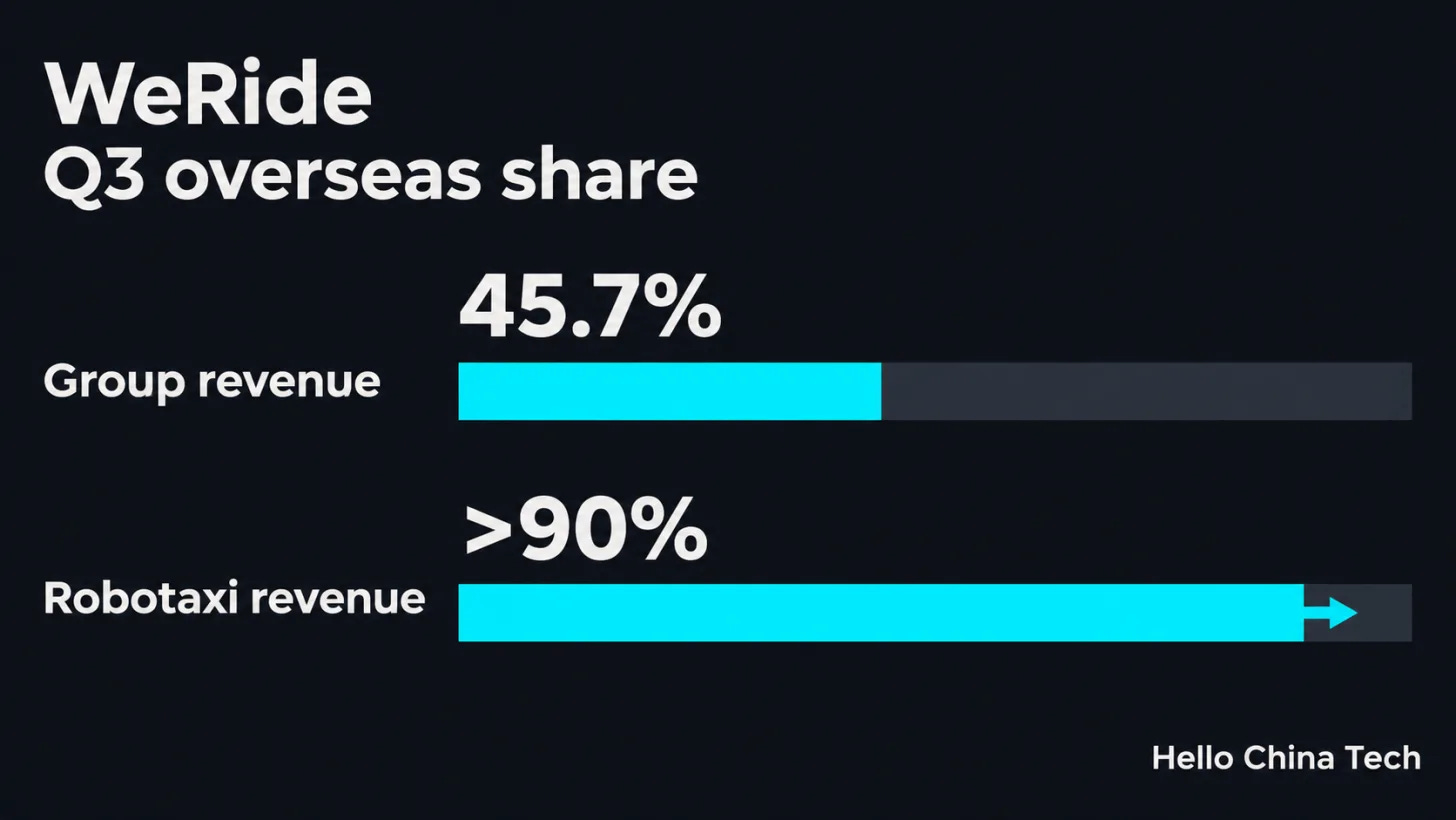
Domestic operations carry heavier asset costs for a much smaller share of segment sales. WeRide said its Guangzhou operation earned a per-car profit for the full quarter after vehicle depreciation and operating costs. That fleet averaged 21 orders per car per day, yet mainland China produced less than 10% of WeRide's third-quarter robotaxi revenue.
The domestic fares explain the pull. In February, Pony AI's seventh-generation robotaxis in Shenzhen averaged 23 orders and Rmb 338 of net revenue per car per day after discounts, the company said. That works out to less than Rmb 15 a ride. On my reading, breaking even per car at those fares leaves little to fund third-quarter research spending of $60.1m at Pony AI and Rmb 465.3m ($69.4m) at WeRide.
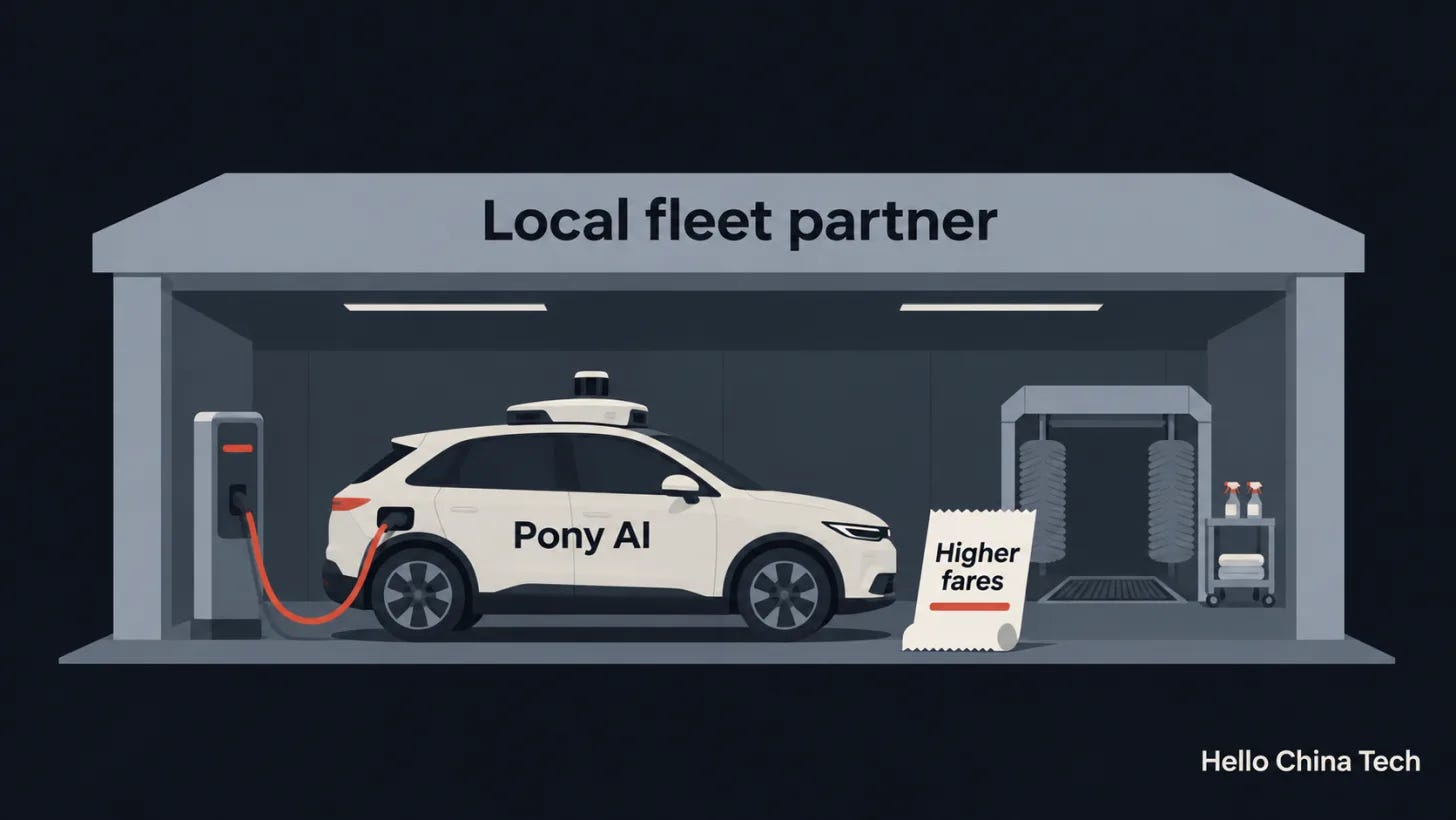
On Pony AI's third-quarter call, chief financial officer Leo Wang said per-vehicle margins run higher abroad than in China. Pony AI targets higher-fare foreign cities where local partners buy the cars and cover depot, charging, cleaning and maintenance costs. Heavy research spending has weighed on both Pony AI and WeRide since their Hong Kong listings in November 2025. Both companies reported third-quarter group operating losses, at $68.7m and Rmb 332.9m.
Below the paywall: a four-company ledger of supplier plans and Uber's deployment targets, a reading of Q3 contract and working-capital disclosures, and a city-by-city comparison with Waymo.
What follows is the evidence on how upfront vehicle sales, working-capital demands and multi-supplier apps shape Chinese robotaxi economics abroad ahead of Waymo's rollout. Only need this article? Buy the full article as a PDF for $5. No subscription needed.