

Since June 2025 I have written about China’s robot companies one filing, one funding round and one demo at a time. Read one by one, those pieces describe a sector that looks both overheated and real. This report puts them together and asks the question that sits under both readings: who is actually paying?
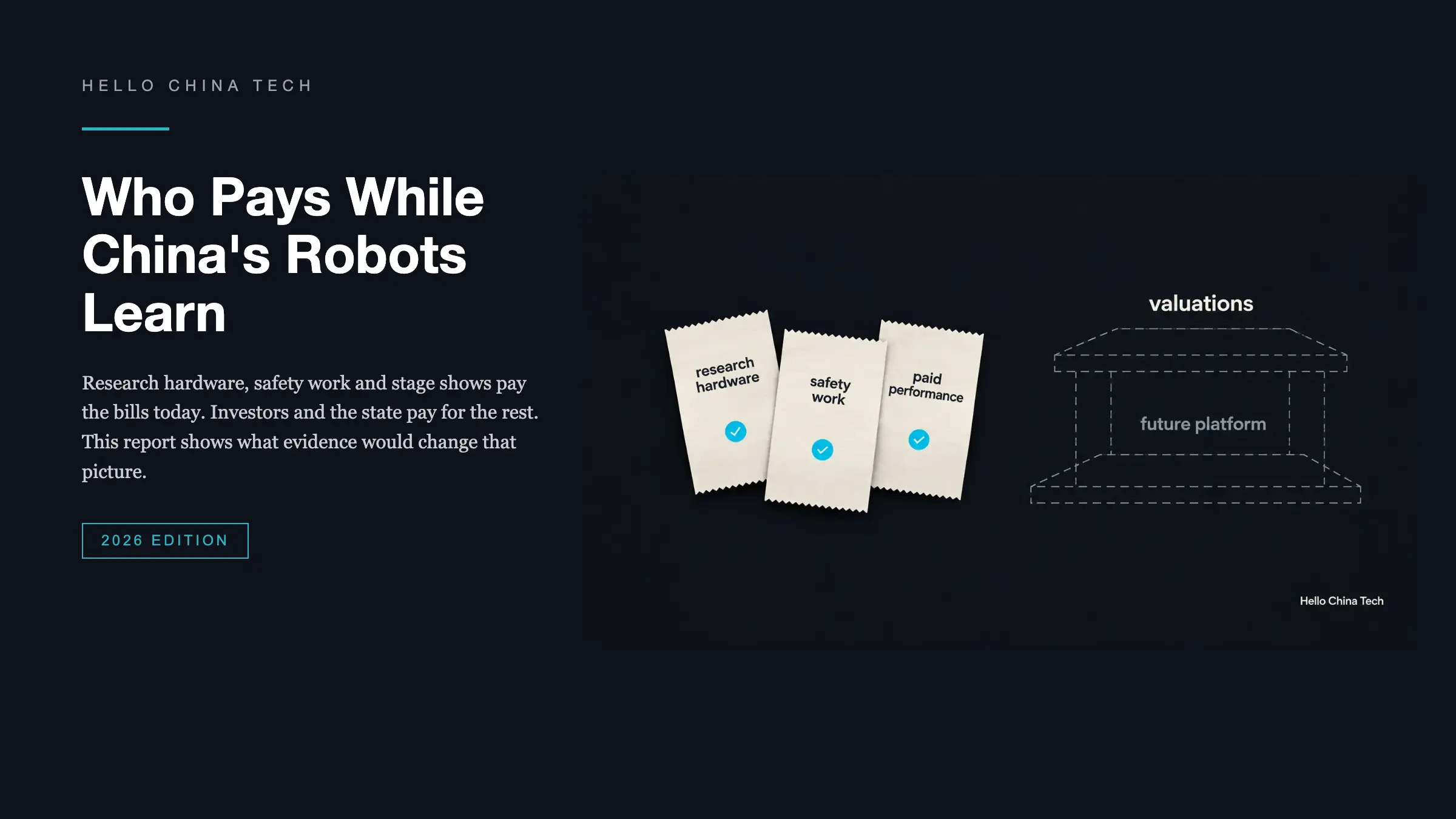
The answer is my core argument. China’s embodied AI industry earns its revenue from businesses that do not need general intelligence: mainly research hardware, safety work and paid performance. Its valuations price the one business that does. Private investors, public markets and the state are paying for the wait. There are two waits: one for robots to earn repeat revenue from productive work, and one for general-purpose capability. The first can end well before the second.
Five findings from the report:
Research buyers carry the clearest disclosed revenue. Research and education buyers produced 73.6% of Unitree’s humanoid revenue in the first nine months of 2025. Industry applications produced 9%, and less than a third of that was manufacturing, inspection or logistics work.
The businesses that make money need the least intelligence. DEEP Robotics, a Hangzhou maker of industrial quadruped robots, earns most of its revenue from robots sent into dangerous sites. Even that business runs on the budget cycle of state-owned buyers.
The state now says it will share the risk.China’s 2026 Government Work Report calls for mechanisms to share the risks of future industries, embodied AI among them. A June 2026 ministerial notice encourages leasing and payment linked to use or utility for state-owned users. Contracts will show how much risk actually moves.
The wait is getting longer. Unitree’s founder, Wang Xingxing, has moved the earliest year implied by his own estimate for a robotics “ChatGPT moment” out by about two years.
The end of the first wait will show first in who pays. Watch productive buyers’ share of revenue, repeat orders and cash collection. I expect it to show there before it shows in funding totals or order announcements.
The report also includes a Scorecard. It grades eleven of my earlier calls on this sector against public documents, including forecasts I got wrong and framings I have withdrawn. For each one I write down the assumption that failed. The biggest miss, my 2026 shipment forecast, turned out to be the clearest evidence for this report’s argument.
A Watchlist of twelve checkpoints follows, starting with Unitree’s third-quarter report on October 29.
Read the free sample (Executive Summary and one chapter)
Paid subscribers pay $49 for this report instead of $99. Founding members get it at no cost. If you want the next one as it develops, subscribe below.
All reports, past and coming, are listed on the Reports page.