

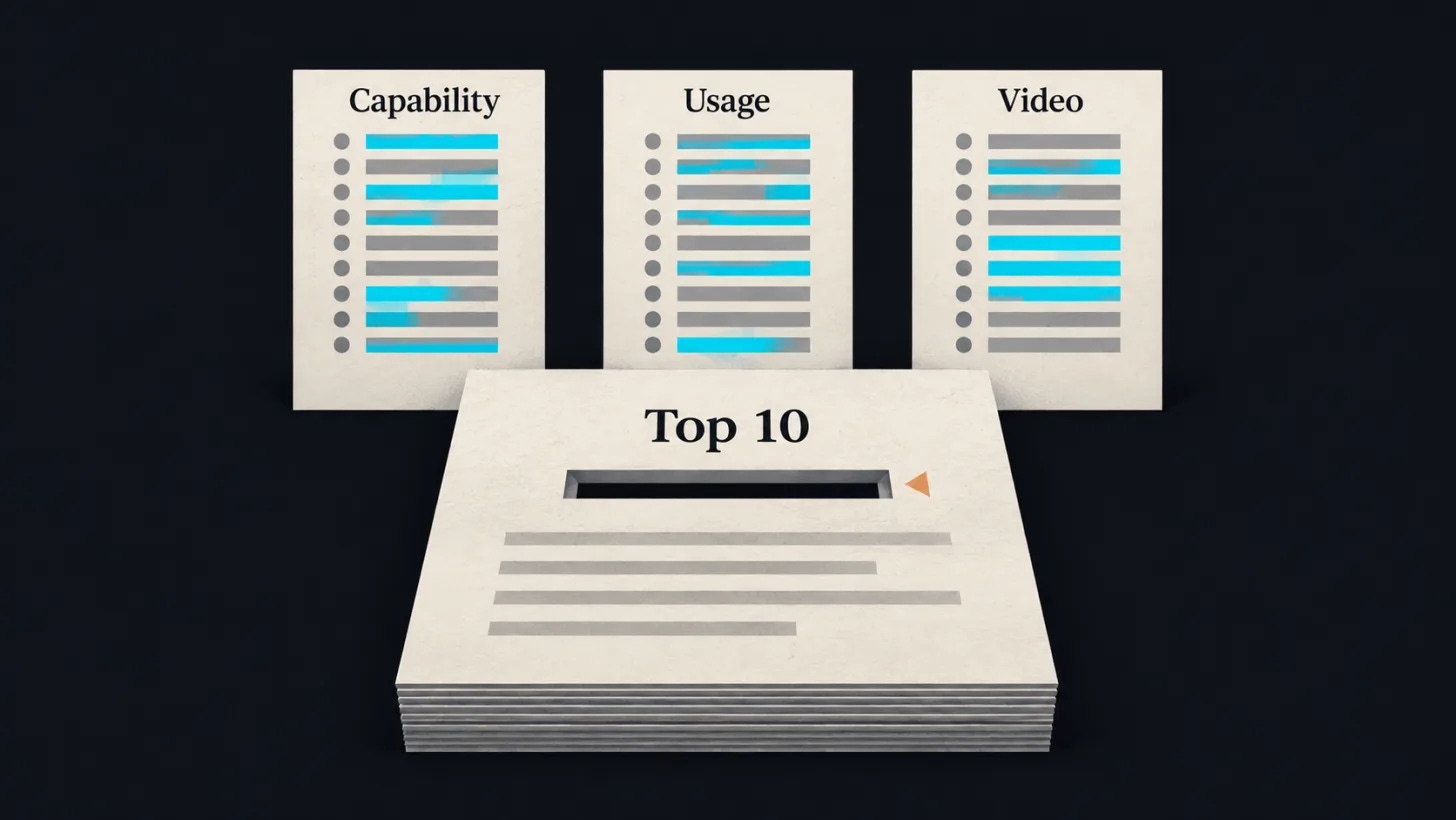
On October 16, China's Ministry of Commerce and Ministry of Science and Technology published Announcement No. 48. It proposes adding 40 technologies to the Catalogue of Technologies Prohibited or Restricted from Export, one of China's three main export-control lists and the one that covers technology transfer. Twenty-three of the 40 are AI technologies. Public comments close on November 15. Until the final list takes effect, companies must register before they export any listed technology.
Reuters reported that models, agents and computing clusters are on the list. Its report does not give the thresholds in Attachment 1, which sets them out. For large models, the restricted entry covers weights, checkpoints, source code, architecture, and training and inference techniques. Its second item reaches that core technology if a model meets any one of three tests. Its first item covers models trained on China's "important data" and then used to provide services, and it lists exclusions. A prohibited entry uses the same wording for "core data." Both are categories under Chinese data-security law. This article focuses on the three tests.
The first test is training compute of at least 10²⁶ floating-point operations. The second is at least 2 trillion parameters. The third is "globally leading capability." A footnote defines that phrase. It means a top-10 global rank, at the time of the export, in public assessments by mainstream evaluators or large industry platforms. The assessments can cover overall performance, specialized capability, global usage volume, safety or training efficiency.
The footnote does not say which ranking counts.
I read this as the line that decides how far the rule reaches below the largest models. The parameter test already covers models above 2 trillion parameters. The third test depends on rankings at the time of export. On the capability boards I checked, no Chinese model is in the top 10. On OpenRouter's usage board, six are. These counts show how far apart the boards are. They do not settle how many models the draft would restrict. Each later version would need its own assessment.
If reading an export rule through the leaderboard it depends on is new to you, this is a preview of what Hello China Tech does every week: reading China's AI, chip, robotics, and EV sectors from primary sources most English coverage never touches. Subscribe free to get every new analysis as it publishes.
The compute and parameter tests
The compute test matches an American one. The same number, 10²⁶ operations, was the threshold in ECCN 4E091, the model-weights control in the AI Diffusion Rule the US Commerce Department published in January 2025. The US rule also excluded weights that had already been published, as Beijing's draft does. Washington announced it would rescind that rule on May 12, 2025. Beijing's draft sets the same compute threshold.
I found no public record of a Chinese model above it. Epoch AI, a research group that tracks training runs, estimates Kimi K3, from Moonshot AI, at 2 × 10²⁵ floating-point operations. That is a fifth of the line.
The parameter test has already been crossed. Kimi K3 has 2.8 trillion parameters. Alibaba's Qwen3.8 has 2.4 trillion. Both labs published the weights. The draft excludes technology that has entered the public domain through open release or academic publication. It does not define that term. Kimi K3's weights are released under Moonshot's own licence, and whether a licensed release counts is open. If unpublished checkpoints or training methods meet the entry's conditions, their export would remain subject to the proposed controls.
At least one large model meets the parameter test without public weights. Baidu's ERNIE 5.0 has 2.4 trillion parameters. I found no published weights for it.
The ministry's question-and-answer note sets out what is not an export. Once the list takes effect, using a restricted model to offer API access, app and web use, SaaS or lightweight on-device deployment is not a large-model technology export. Data-export rules remain separate. The cyberspace regulator says overseas access to data stored in China can count as a data export.
That leaves the ranking test, and a different question: how far the draft reaches below the largest models.
The paid section compares three types of ranking and gives a three-part guide to the transactions the draft covers.