

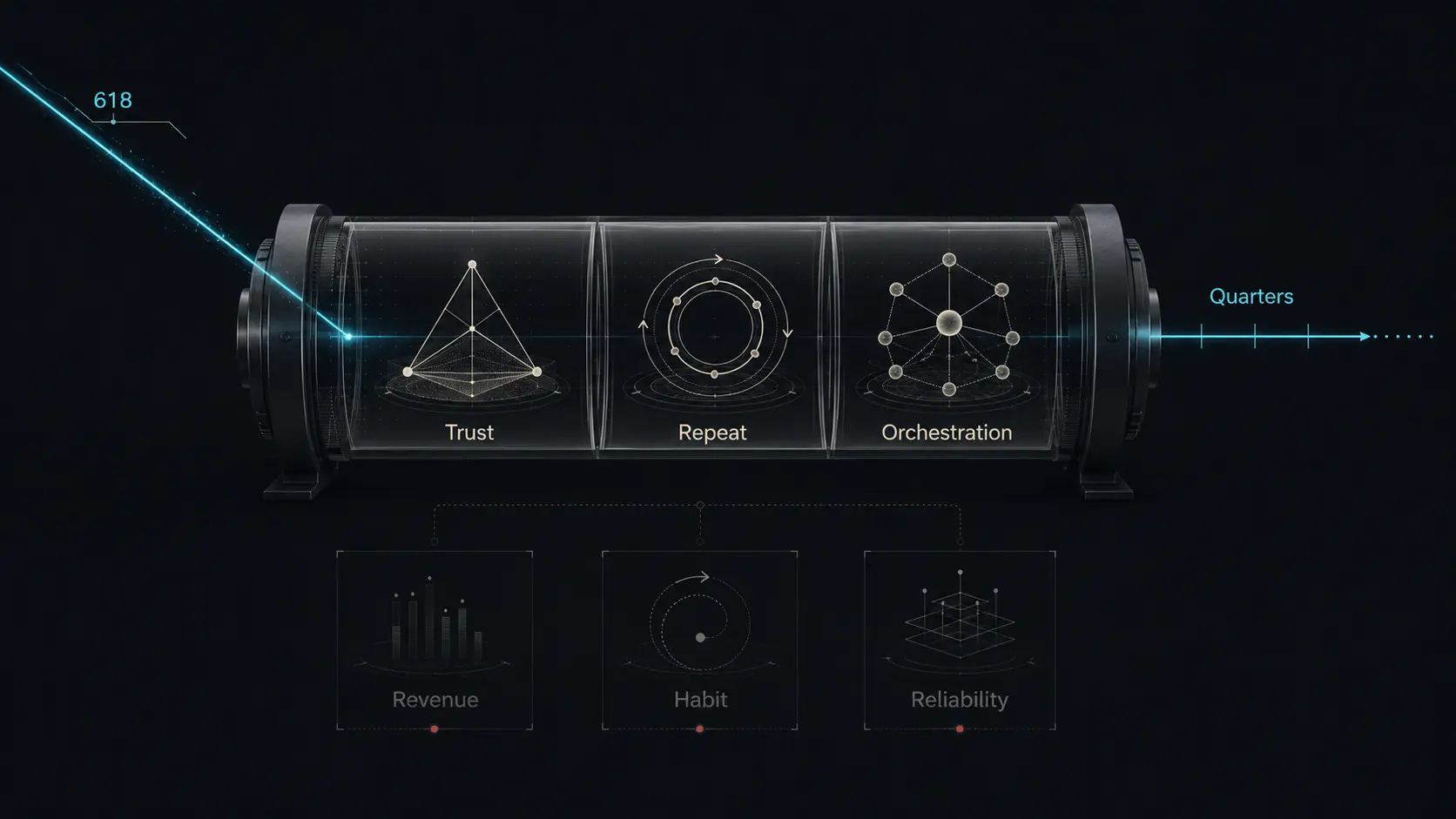
618’s New Variable
By early June 2026, China’s 618 shopping festival, the country’s largest mid-year retail event, had acquired an unfamiliar competitive structure. For the first time, 3 distinct AI commerce systems are competing for the same consumer base.
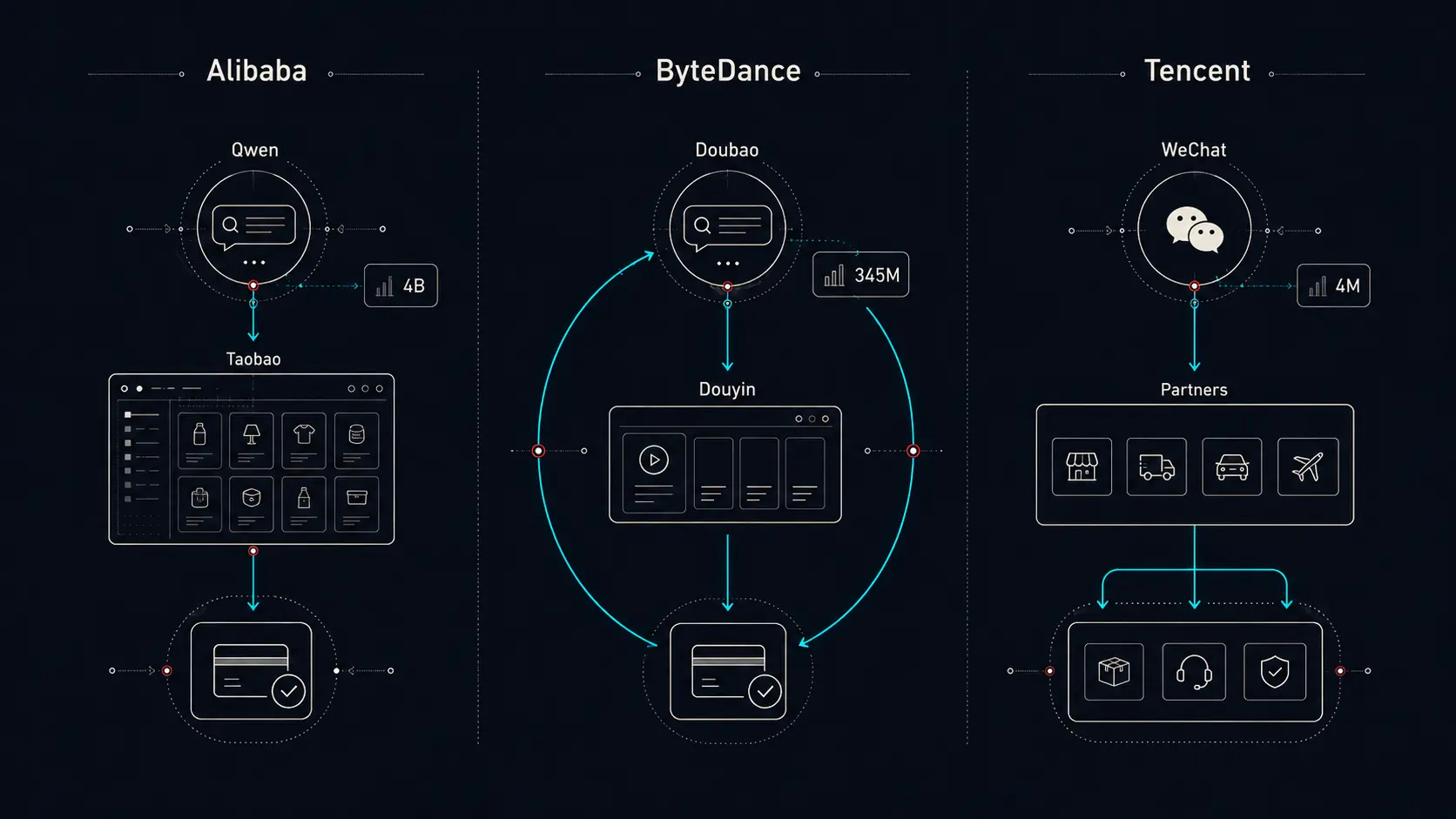
On May 11, Alibaba fully integrated Qwen, its flagship AI assistant, with Taobao, China’s dominant marketplace. Users can now search, compare, order, and pay for goods from Taobao and Tmall’s combined catalog of more than 4 billion items, completing payment via Alipay without leaving the Qwen flow. ByteDance took a more gradual path: Doubao, its AI chatbot with 345 million monthly active users as of March, first connected to Douyin’s e-commerce platform in late 2025 and progressively added in-app payment, product comparison, and a dedicated “Help Me Choose” shopping entry point through May 2026. Then on June 8 and 9, Tencent opened WeChat’s AI ecosystem to outside developers. JD.com (China’s second-largest e-commerce platform), Meituan (the dominant food delivery and local services provider), ride-hailing leader Didi, and travel platform Ctrip were among the first to connect. JD.com linked through an Agent-to-Agent arrangement; the broader program turns Mini Program services into AI-callable capabilities. The integrations are developer-side and in testing; consumers cannot use them yet.
Each company chose a different structure. Alibaba built a direct bridge between its AI layer and its commerce platform. ByteDance sealed its AI inside its own retail ecosystem. Tencent is not trying to own the product catalog or fulfillment stack; it is building WeChat into the orchestration layer above partners that already hold those capabilities. These choices reflect 3 distinct theories about where value will accumulate when AI captures consumer intent before it reaches a search box, a content feed, or a standalone shopping app.
What the Search Box Built, and What Replaces It
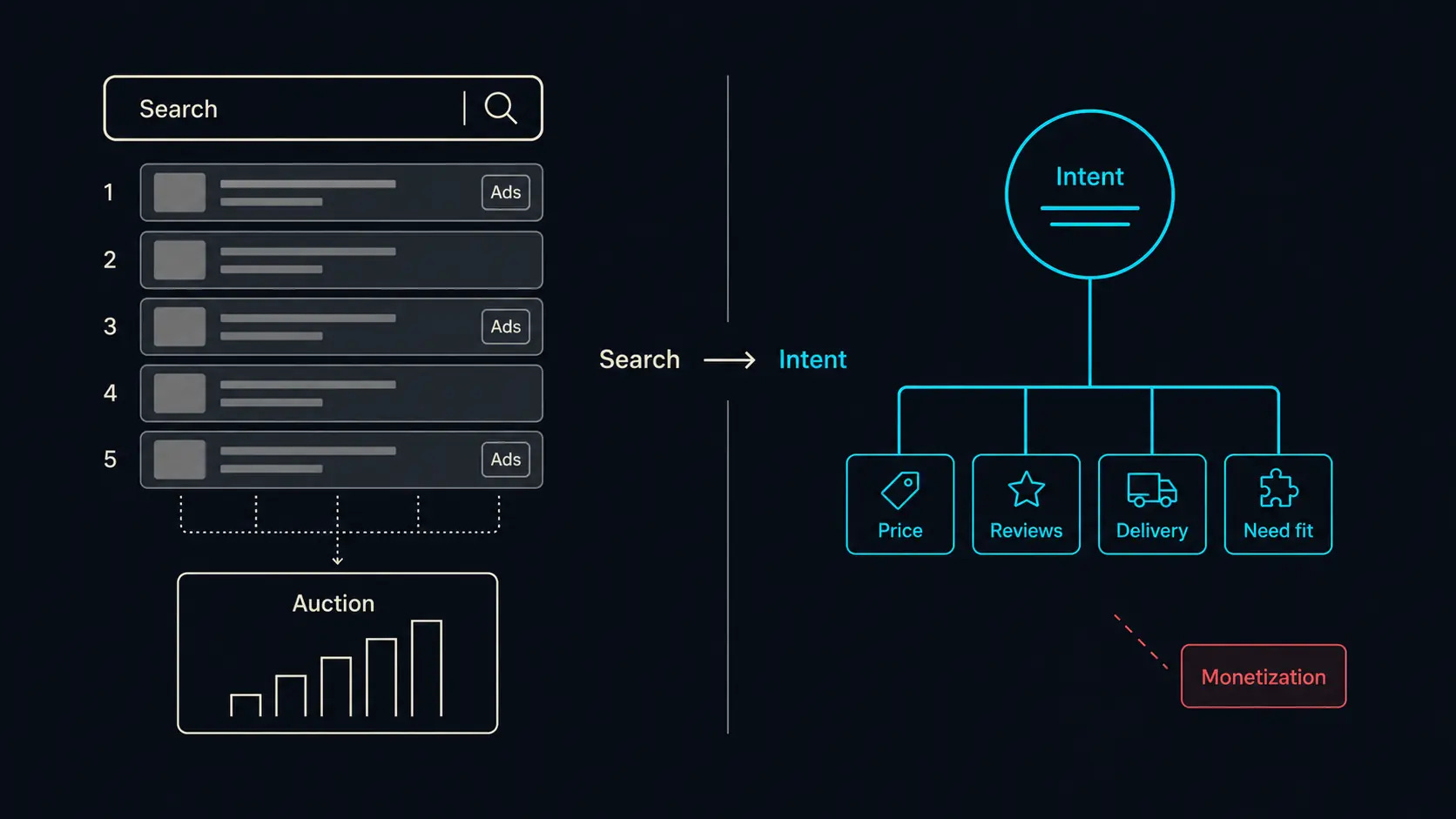
For 2 decades, merchants have bid for placement in Chinese e-commerce search results. At the Taobao and Tmall Group, Alibaba’s core China commerce unit, keyword advertising is the backbone of customer management revenue. Chinese industry commentary has estimated that it supports roughly 70% of the group’s profit base.
AI dialogue largely bypasses this system. When a user asks an AI assistant for a specific product, the assistant matches intent to attributes directly, bypassing sponsored listings. The auction layer recedes from the user’s experience. All 3 companies recognize the shift. Their responses diverge.
Alibaba is willing to cannibalize part of its own ad model before an outside AI interface does it first. ByteDance chose to channel AI shopping traffic into Douyin’s existing commerce engine. Tencent chose to become the orchestration layer that dispatches user intent to whichever service can fulfill it, without owning inventory or building a shopping AI. I examined the collision between AI agents and Taobao’s ad economics in January, when Qwen first connected to Alibaba’s consumer stack. The tension was still theoretical then. 5 months later, Alibaba has answered it with a concrete product decision, at least at the interface level: according to Chinese reports, it removed commercial ranking from the search logic Qwen uses to access Taobao’s catalog.
Alibaba is now running 2 parallel distribution systems for the same inventory. One is optimized for user trust. The other sustains the advertising cash flow. The question 618 begins to surface is how long that dual arrangement can hold, and what happens when real transaction volume exposes each model’s weak points.
Below, I examine each architecture: Alibaba’s de-commercialized trust layer, ByteDance’s closed Douyin-commerce loop, and Tencent’s WeChat orchestration model. The question is not whether AI can recommend products. It is whether any of these systems can turn intent into revenue without destroying user trust.
