


Editor’s note: This article extends Hello China Tech’s coverage of China’s EV supply chain. In September 2025, I found that CATL earned almost as much in net profit as China’s three most profitable listed carmakers combined. In July this year, I traced how CATL funds part of its cash cycle with credit from its own suppliers. Those pieces followed the company collecting. This one follows BYD, the carmaker paying, and where that cost shows up in its accounts.
On August 28, BYD published its half-year results. English coverage settled on two lines within hours. Overseas revenue passed half of the total for the first time. Quarterly profit rose for the first time in five quarters.
Both hold up. Revenue for the six months fell 7.1% to Rmb 344.8bn. Net profit attributable to shareholders fell 20.5% to Rmb 12.3bn. Overseas revenue reached Rmb 181.3bn, or 52.6% of the total, while domestic revenue fell 30.7% to Rmb 163.5bn. Second-quarter net profit rose 29.7% from a year earlier.
Three other lines in the same document drew no English coverage in the week after the release. R&D charged to the income statement fell 21.3%. Its three payables lines, a broad proxy for operating credit, slipped from 52.6% to 50.3% of total liabilities. And note 4, which splits revenue and cost by region and by business, shows BYD’s overseas automobile-related business earning a gross margin 11.4 points above the domestic one.
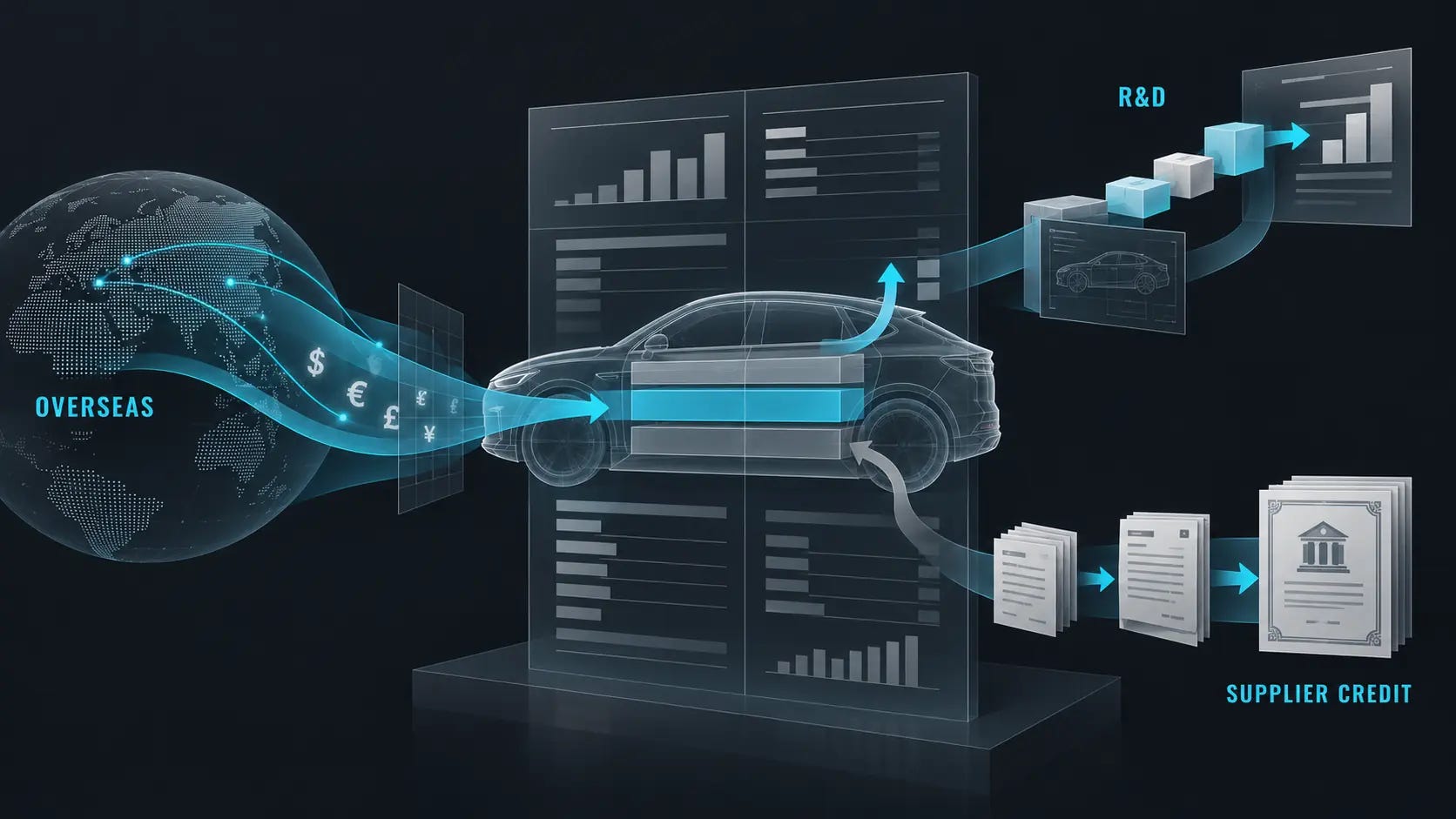
Read together, those lines point to a shift inside the accounts rather than an export story. The pressures behind BYD’s price war did not ease. They changed where and when they appear. Overseas auto-related sales are offsetting lost domestic gross profit. Supplier credit is moving from trade payables and Dilian towards bills and formal debt. More R&D is being capitalised, cutting the expense booked today. One is operating, one is financing, one is accounting timing. Together they change how the pressure is absorbed and where it lands in the accounts.
Three Lines Behind the Rebound
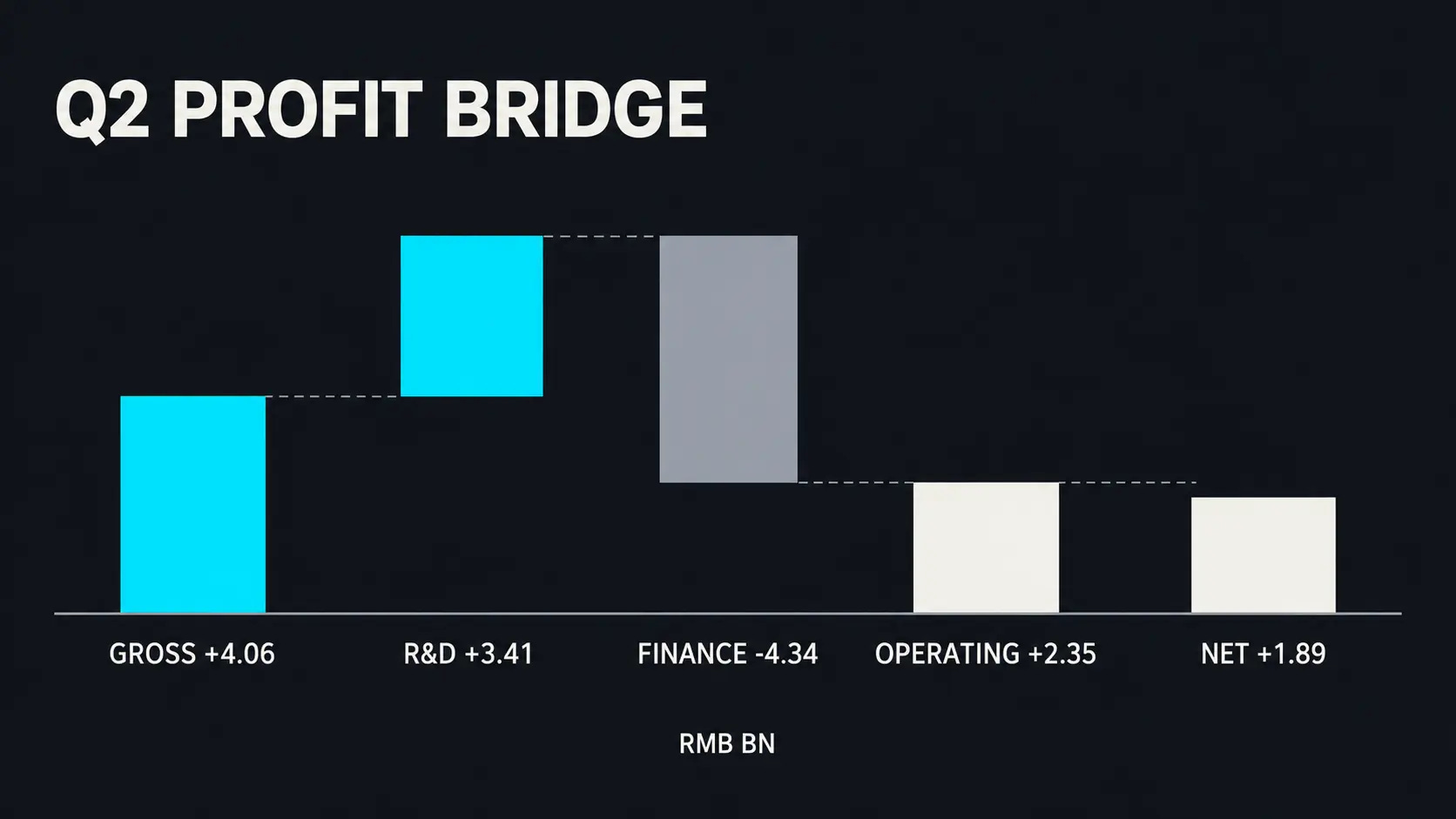
Subtracting the first quarter from the half-year isolates the second. Gross profit rose Rmb 4.06bn against the same quarter of 2025. R&D expense fell Rmb 3.41bn. Finance costs moved the other way, rising Rmb 4.34bn. Operating profit finished Rmb 2.35bn higher, and net profit attributable to shareholders Rmb 1.89bn higher.
The cut in R&D expense alone is larger than the entire increase in net profit. Hold expensed R&D at last year’s level, with every other line unchanged, and second-quarter operating profit would have fallen rather than risen.
The rebound is not hollow. That gross profit gain came as revenue fell, and the half-year gross margin improved to 18.85% from 18.01%. Strip out the R&D and finance-cost changes and operating profit still gained about Rmb 3.27bn, though that residual also carries grants, investment income and impairments.
Three lines shaped the quarter. Gross profit was the only one tied to sales and production. The other two came from expense recognition and finance costs. Management’s commentary covers the fall. It cites “the decrease in the new energy vehicle business and foreign exchange losses from changes in foreign exchange rates.” It explains the higher gross margin too, crediting growth in the overseas vehicle business. On the R&D line it says nothing.
For paid subscribers: BYD’s nine-year R&D capitalisation pattern, and where supplier credit went after the 60-day payment campaign. Also why a 28.4% gross margin in BYD’s overseas automobile-related segment still stops short of net profit.
If separating a quarterly profit rebound into the operating part and the accounting part is new to you, this is a preview of what Hello China Tech does three times a week: reading China’s AI, chip, robotics, and EV sectors from primary sources most English coverage never touches. Subscribe free to get every new analysis as it publishes.