

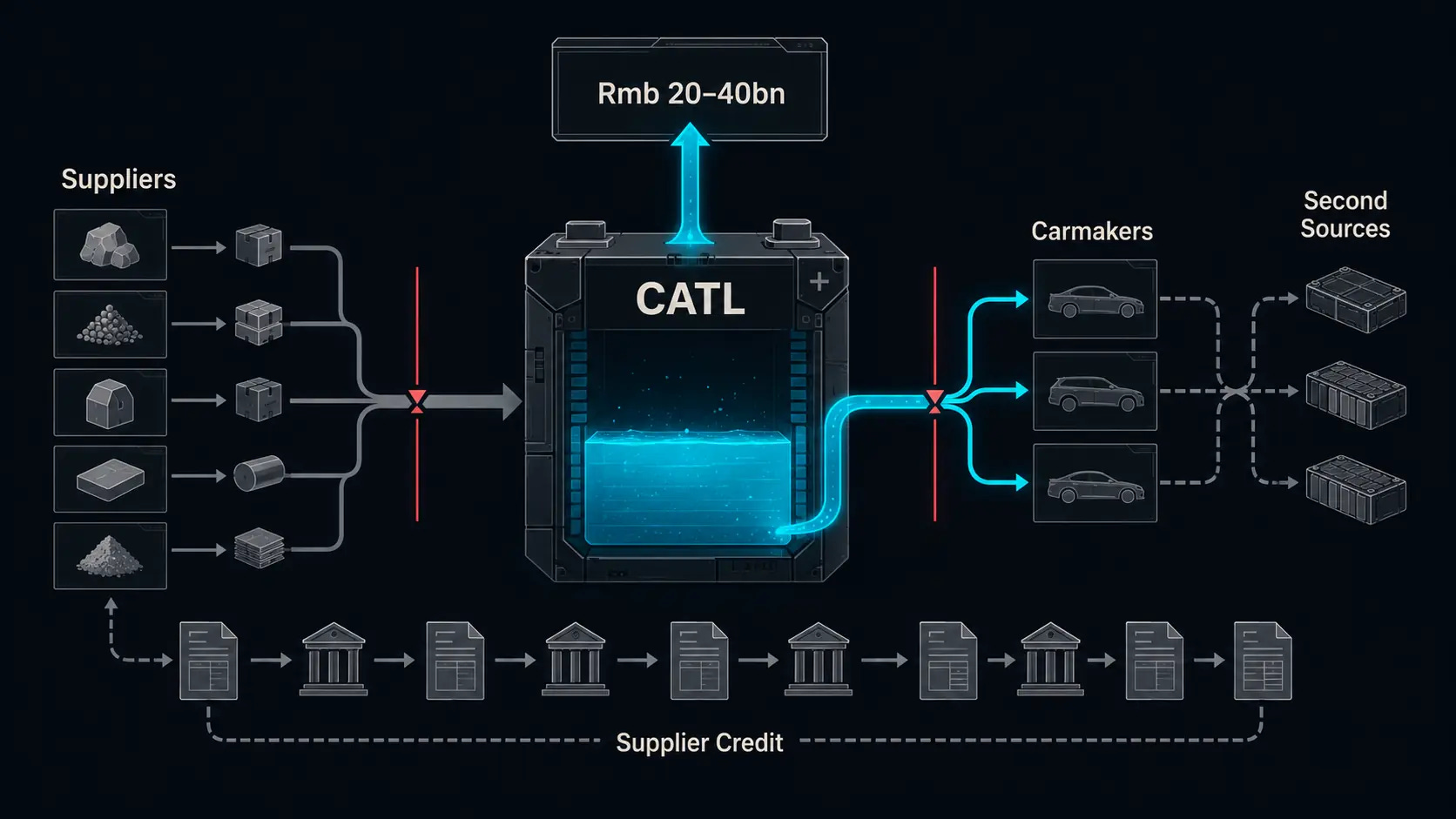
Editor’s note: This article extends Hello China Tech’s coverage of CATL. In April, I examined how CATL’s Q1 profit growth outpaced cash generationby 20 to 1 as global commitments accelerated. In September 2025, I found that CATL earned more in net profit than China’s three most profitable listed automakers combined. Today: what CATL’s record buyback reveals about its growing use of supplier credit, who bears the cost, and what would break the model.
On July 24, CATL, the Chinese battery group that accounts for roughly 40% of global EV battery installations, released three announcements in a single evening. A half-year report: revenue Rmb 276.9bn, up 54.8%; net profit Rmb 43.3bn, up 42%. An interim dividend of Rmb 6.5bn. And a share buyback of Rmb 20bn to Rmb 40bn (roughly $2.9bn to $5.9bn), the repurchased shares to be cancelled.
The buyback is the largest single repurchase in the history of China’s A-share market, surpassing the Rmb 15bn record held by Gree Electric, the Chinese air-conditioner maker, since 2021. Management set the ceiling price at Rmb 573, roughly 50% above the July 24 close of Rmb 383, after the stock had fallen nearly 20% from its May peak. On the earnings call, they said the stock was “clearly undervalued.”
The numbers support the posture. The recovery was accompanied by margin pressure: group gross margin slipped 1.09 percentage points to 23.93%. But the volume and share gains were substantial. Its share of battery installations in China’s passenger-vehicle market rose to 46.7%, up 5.6 percentage points year on year, reversing a period of erosion as carmakers cultivated alternative suppliers. Energy storage revenue rose 87.5% to Rmb 53.3bn, now about a fifth of total revenue; by shipment volume, management says storage has reached roughly a quarter of output. Overseas gross margins reached 29.97%, nearly 9 points above the domestic 21.16%. Capacity utilization ran at 94.86%, with another 764 GWh under construction and management expecting full utilization through year-end.
In September 2025, I compared CATL’s earnings with those of China’s listed carmakers and found the battery supplier earning more than the three most profitable automakers combined. That comparison, based on 2025 first-half data, remains useful context. But this half-year report reveals an upgrade: CATL’s extraction of value from the supply chain appears to have extended upstream to material suppliers, who now fund a larger share of its working capital through expanded payables and supplier-financing arrangements.
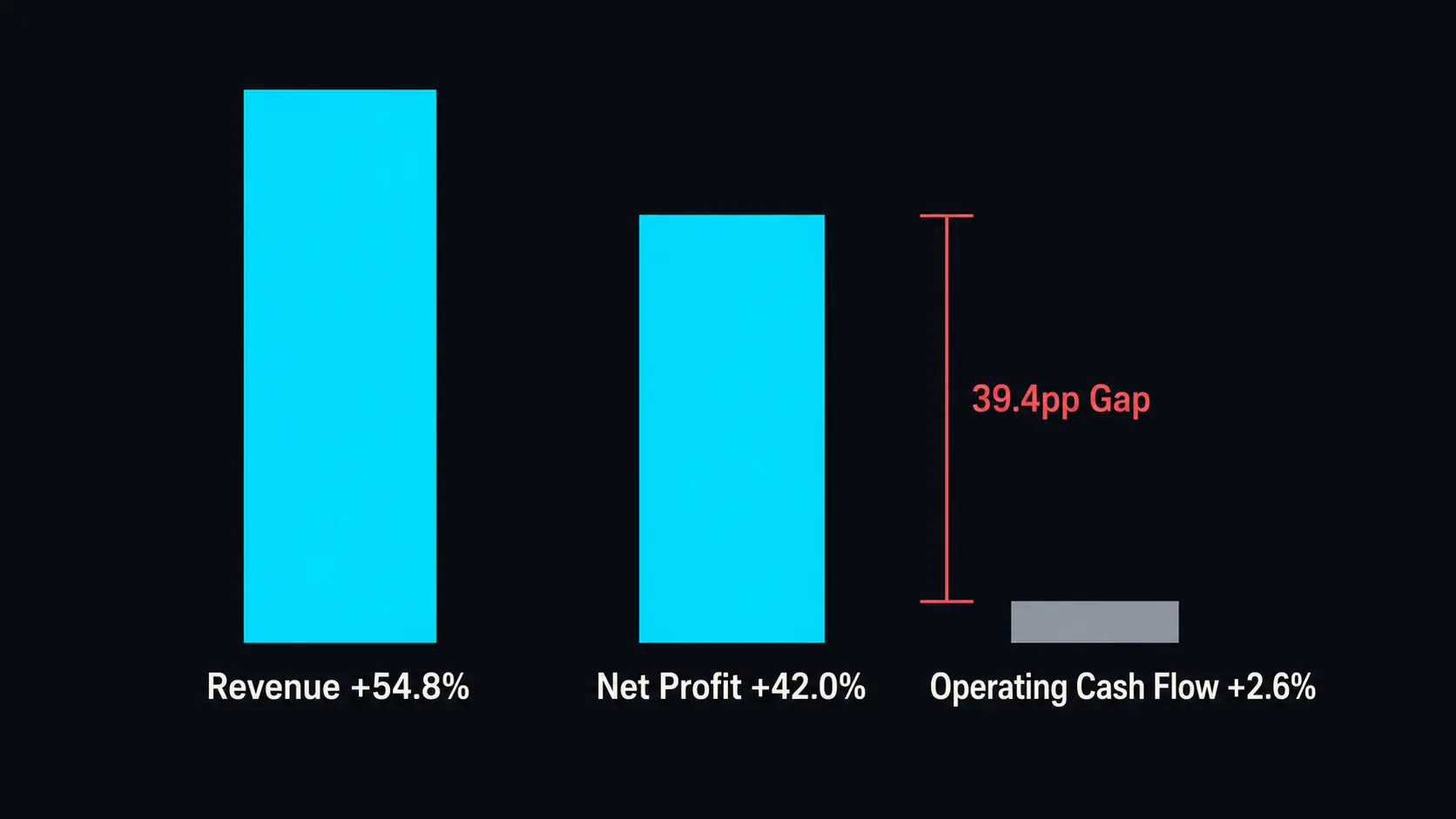
The pressure first appears in a persistent gap. Operating cash flow rose just 2.6% to Rmb 60.2bn, trailing profit growth by nearly 40 percentage points. In April, I flagged the Q1 gap, where profit grew 48.5% and cash flow just 2.5%, as a sign of capital commitments outpacing cash generation. The cumulative H1 figures, which include Q1, show the pattern holding.
The question beneath the record buyback: is the share recovery proof that resistance from both ends of the chain has failed, or does the buyback mark the peak of the extraction cycle? The answer lies in three tests: the working-capital structure, the economics of second sourcing, and CATL’s ability to pass through new policy costs.
For paid subscribers: what CATL’s balance sheet reveals about the shift in supplier financing, why second sourcing compresses future pricing power more than current shipments, and which figures in the full-year results will test whether CATL’s supply-chain leverage is holding.
If CATL’s growing use of supplier credit to finance its cash cycle is new to you, this is a preview of what Hello China Tech does: reading China’s EV, chip, and AI sectors from primary sources most English coverage never touches. Subscribe free to get every new analysis as it publishes.