

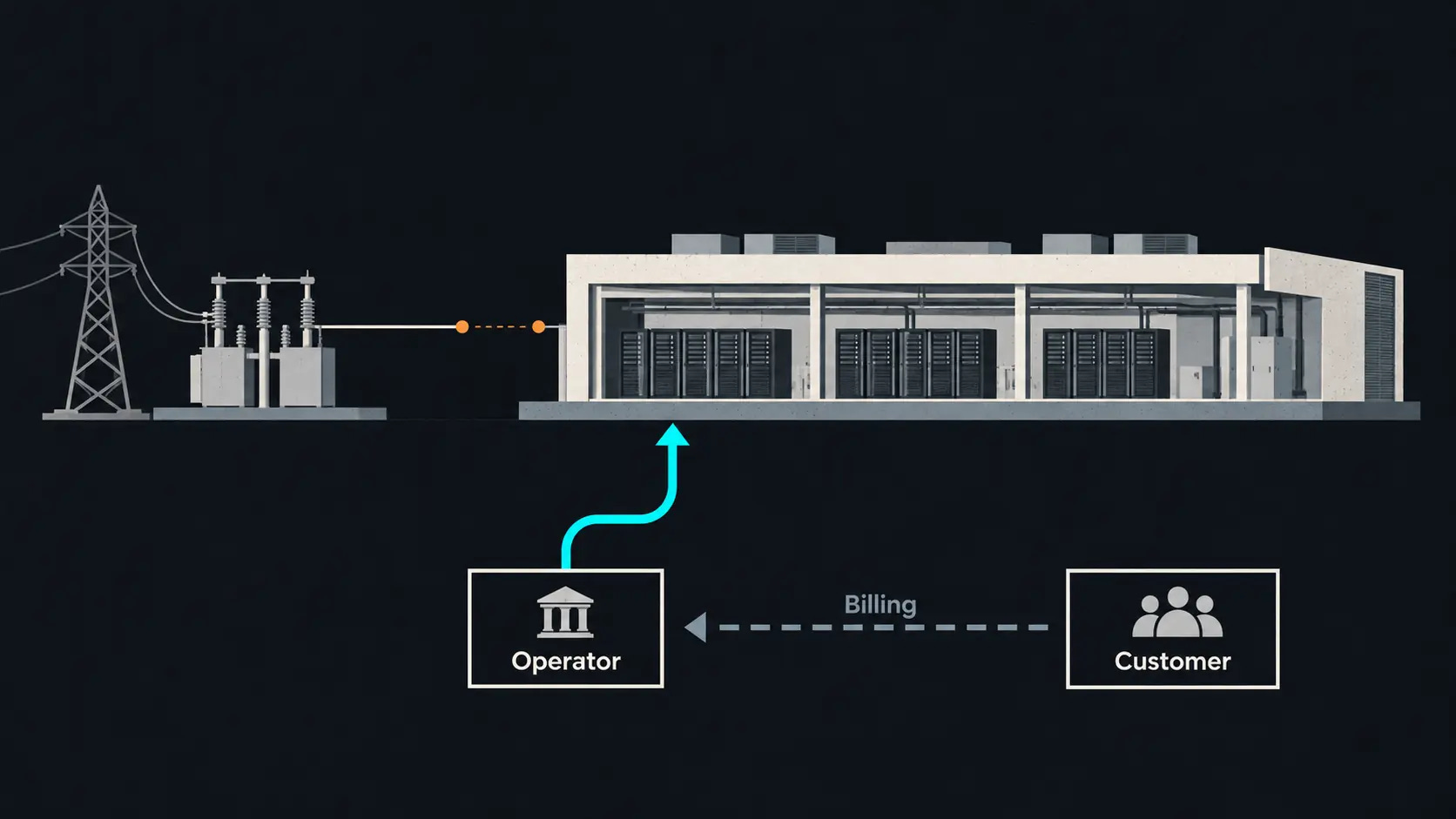
The Financial Times reported on October 8 that about 15 gigawatts (GW) of data center capacity had been committed in Ulanqab, a city in Inner Mongolia about 350 kilometers northwest of Beijing. It cited an unnamed executive at a leading operator in the region. Goldman Sachs counted 12.5GW of operating and planned capacity in June, up from 3.3GW in July 2025, according to summaries of its report. The two estimates come from different sources and dates.
The FT framed the limit as chips. It quoted a Jefferies analyst: “The question is whether the data centres can get enough chips to put into the buildings.” X.PIN, a China tech newsletter, argued in September that the grid matters more. Neither piece asks who pays while a finished building waits for its power line.
One operator shows what that wait looks like. On August 18, VNET, one of China’s largest data center operators, told investors it plans to deliver 585 megawatts (MW) of new capacity over the next 12 months. Most of it will come from its Ulanqab campus.
On September 3, Xinhua Finance, the financial news service of China’s state news agency, published remarks by the campus’s chief engineer. The first phase was running, he said, and the second was under construction. “We look forward to the Dongying 500kV project being completed and put into use soon.”
Dongying is a 500kV substation and line project. As of that report, it was still being built.
Data centers in Ulanqab used 3.27 billion kilowatt-hours (kWh) in the first half of 2026, up 89.5% from a year earlier, according to the city’s economic planning agency. That is an average load of about 750MW. It does not measure connected capacity.
These figures do not show how much capacity is waiting for power. Grid notices show that supply infrastructure is still being built. I read the risk in Ulanqab as a cost operators carry before billing starts: GDS’s disclosures show the operator invests before service begins and usually collects no fee until then.
If reading a data center build-out by the date tenants start paying is new to you, this is a preview of what Hello China Tech does every week: reading China’s AI, chip, robotics, and EV sectors from primary sources most English coverage never touches. Subscribe free to get every new analysis as it publishes.
Cheap Power, Slow Connection
Data centers in Ulanqab pay about Rmb 0.358 per kWh, the FT reported. Alibaba Cloud has cited Rmb 0.32 to 0.35. In Beijing, industrial power costs about Rmb 0.80. Inner Mongolia had 117GW of wind capacity by June and roughly 130GW of mostly coal-fired plants, the FT reported. David Fishman of The Lantau Group, an energy consultancy, told the FT the region likely had the “largest electricity local oversupply” of any administrative region in the world.
A large data center needs a substation that steps high-voltage power down for its halls, plus lines to its gate. A cloud industry insider told a Chinese business news site that a conventional data center hall takes about 12 months to build. If new substations and other power works are needed, the same person said, that work can take three to five years.
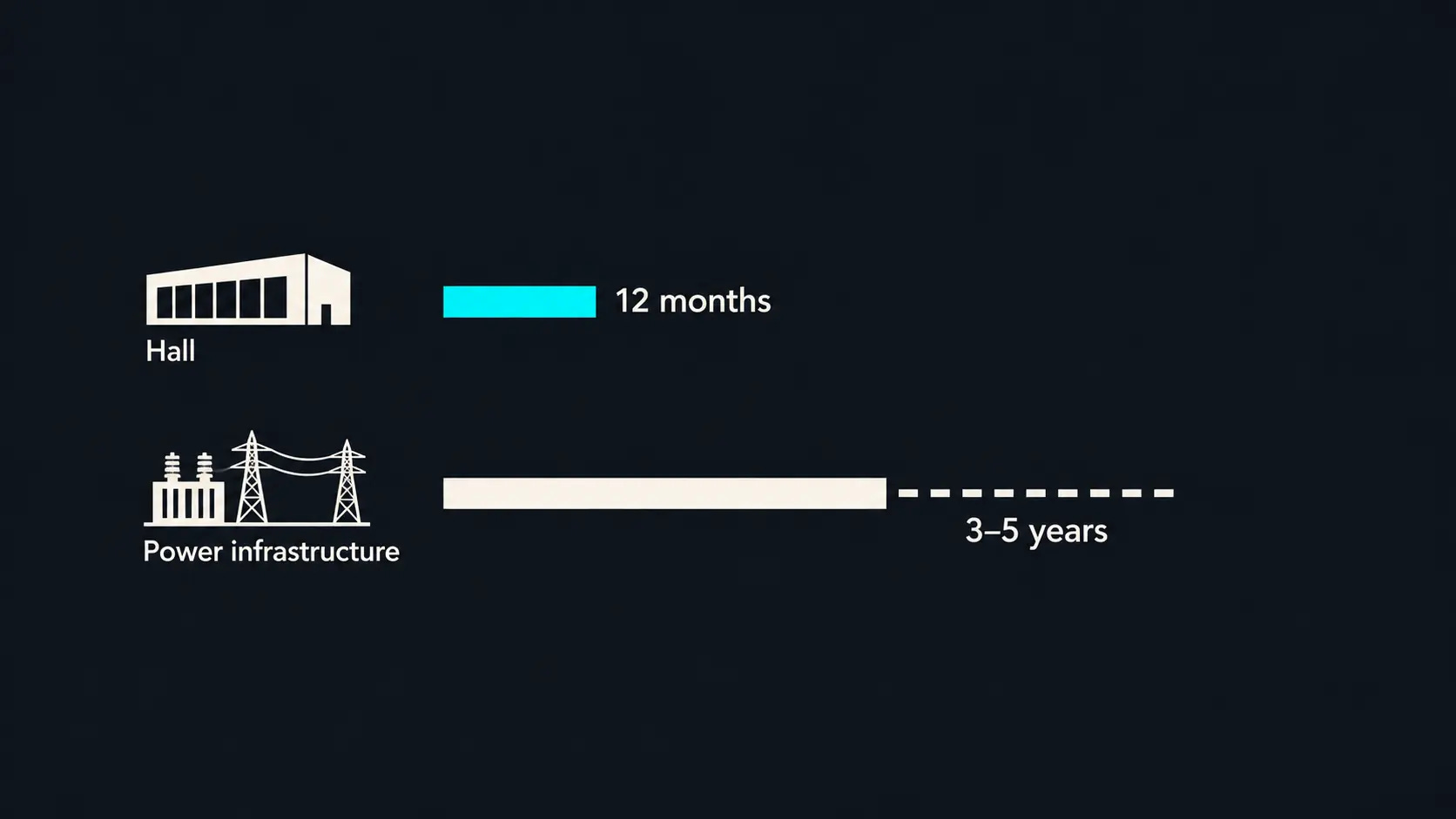
Cheap power does not mean a fast connection. A substation is a project with land, permits, transformers and line routes. Grid works follow their own schedule.
Ulanqab now runs on two clocks: the dates operators promised customers, and the dates the grid can deliver. Who pays when they do not match depends on when billing starts.