

Last fall, I described Tencent’s approach as building a separate vessel, Yuanbao, and forcing its ecosystem to tow it, rather than retrofitting WeChat itself. That argument leaned on capital spending, distribution tactics, and the structural risks of touching a national-scale communications layer. Yuanbao Pai turns the same thesis into a visible product experiment. It shows what Tencent is willing to test at the edge, and what it still refuses to risk at the center.
On February 1, Tencent’s AI assistant app, Yuanbao, announced public beta access for a new group feature called “Yuanbao Pai.” To create a “Pai,” users must update the app to version 2.56.0 or above and enter an invite code. Users without a code can still join via a shared link or a “Pai number,” but creation is gated.
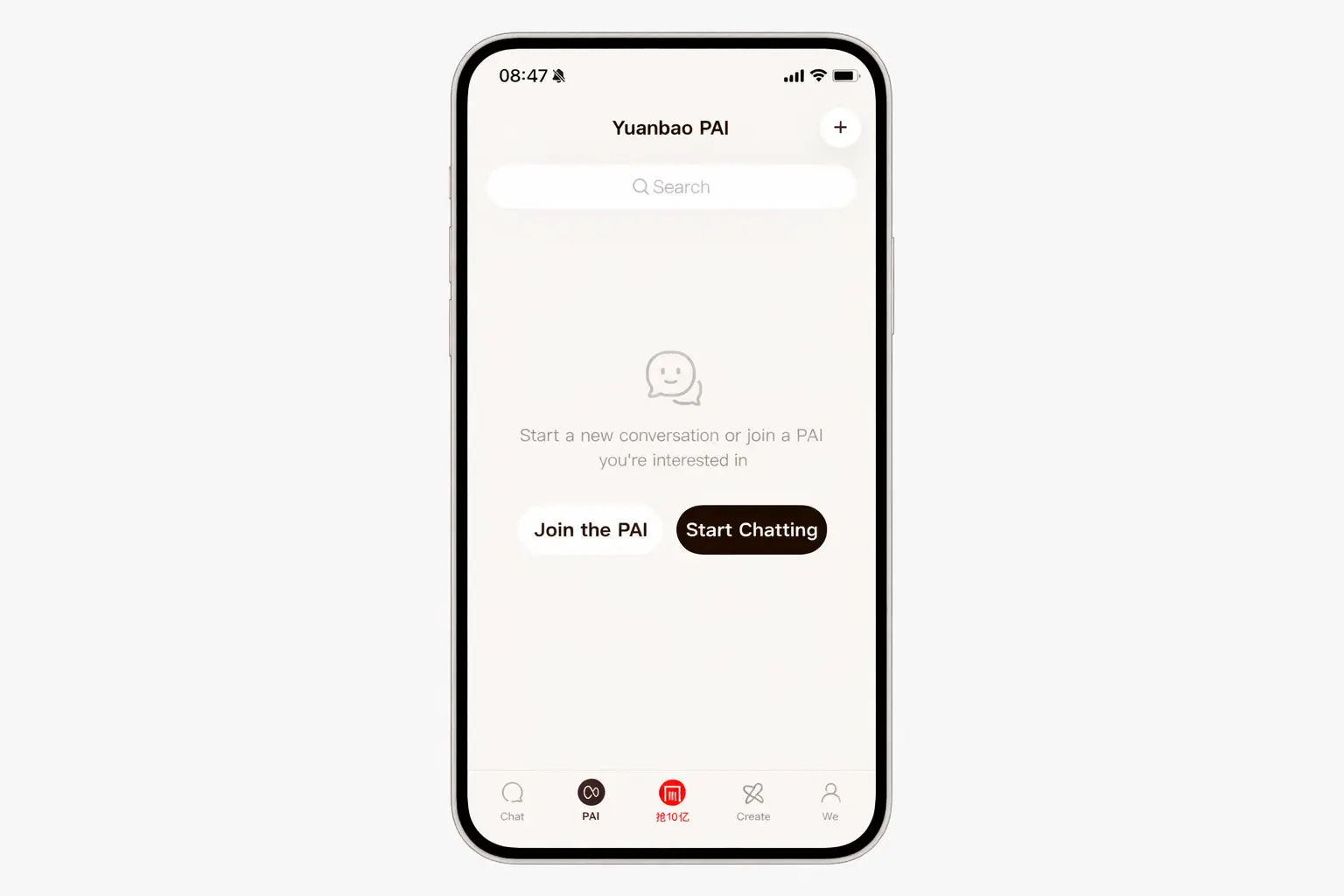
This is a strangely cautious rollout for a company that owns China’s default social infrastructure. The caution becomes easier to read once you treat Yuanbao Pai as a controlled experiment at a safe distance from WeChat.
Three contradictions that reveal the strategy
If you read the product design carefully, three contradictions show up at the same time.
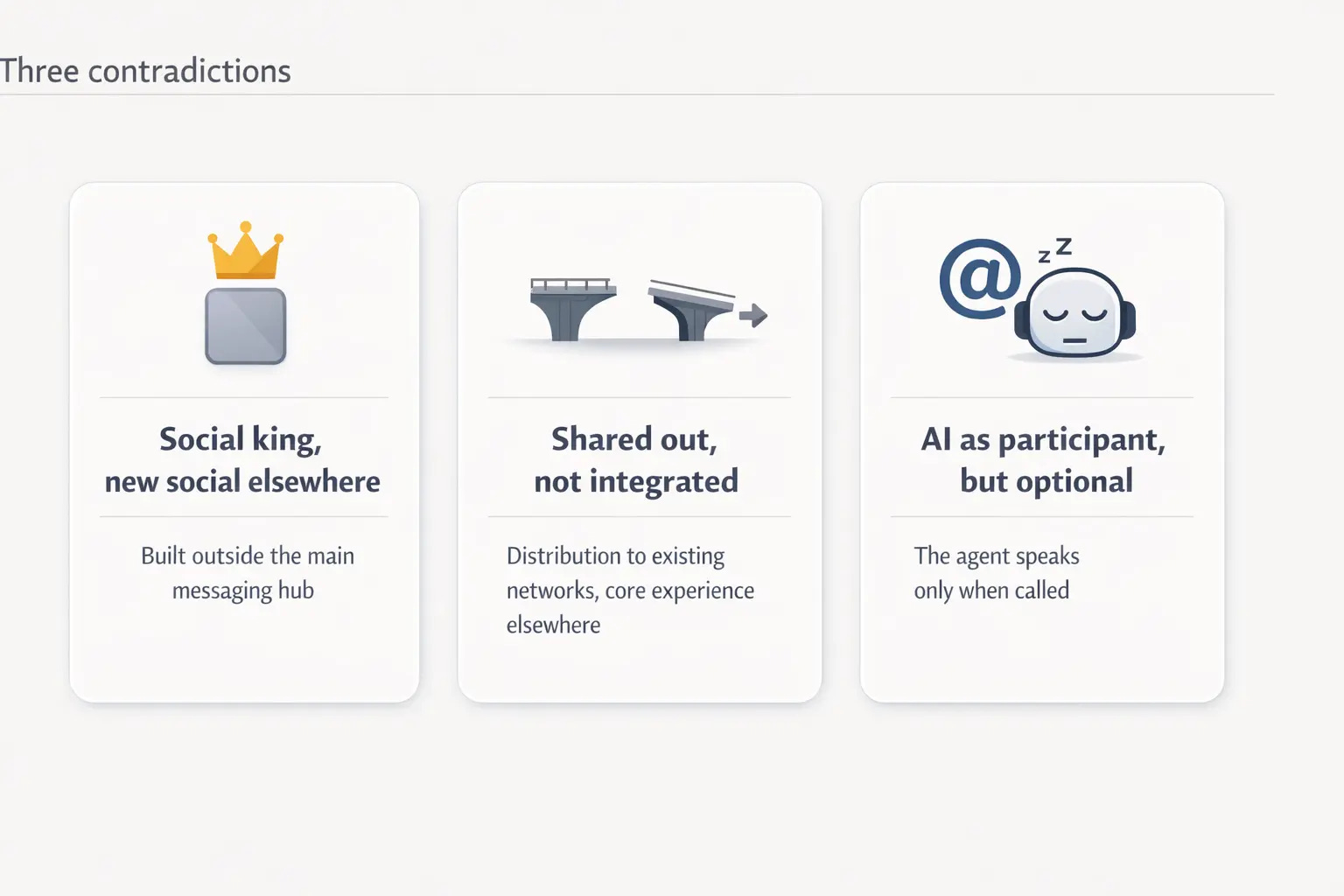
First, the king of social is building new social elsewhere. Tencent already owns WeChat and QQ, covering almost every mainstream messaging scenario in China. The lowest-friction path would have been to embed an AI group experience directly into WeChat group chats. Instead, Tencent chose to stage the experiment inside Yuanbao, a separate container with far weaker defaults and far more room to iterate.
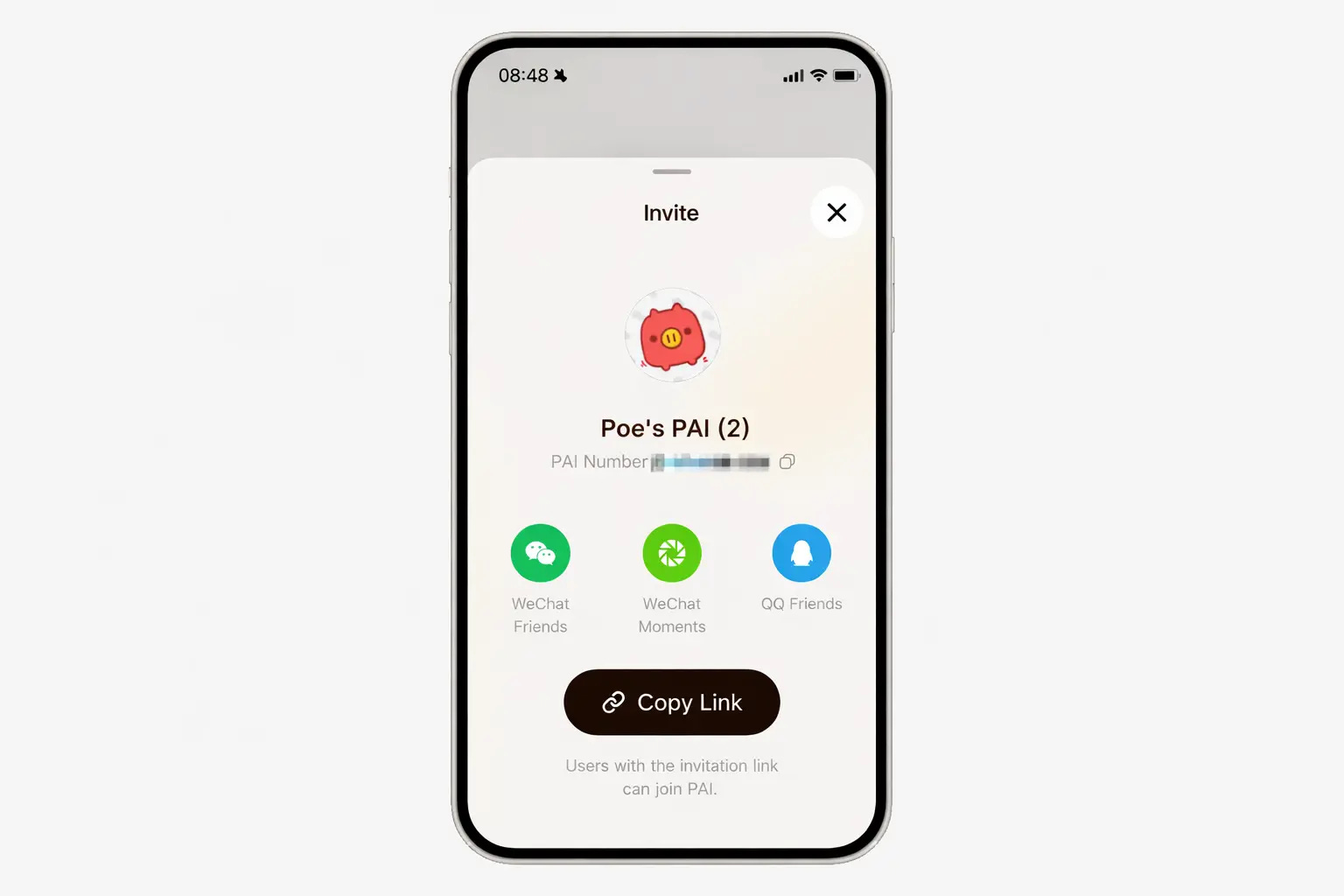
Second, it claims “integration” while keeping the integration shallow. Multiple reports describe Yuanbao Pai as “connecting” to WeChat and QQ, but the concrete behavior is closer to distribution than deep integration. Users can share a Pai link or Pai number into WeChat, including Moments, and invite friends to join. The core experience still happens outside WeChat.
Third, Tencent positions AI as a social participant, yet the AI is opt-in and largely passive. In Yuanbao Pai, the main interaction pattern is “@ Yuanbao.” Users can choose to not mention it, and it stays quiet. Early reports describe the AI doing practical group work, like summarizing chat, setting up habit check-ins for fitness or reading, and acting as a “supervisor” role inside the group.
This is meaningfully different from products like Character.AI where the agent is designed to actively pull the conversation forward.
Taken together, these contradictions point to a single conclusion. Tencent is probing, not betting.
The moat paradox: WeChat is too big to experiment with
The surface explanation is straightforward. Build a new feature in a smaller product, validate it, then migrate it into the core platform.
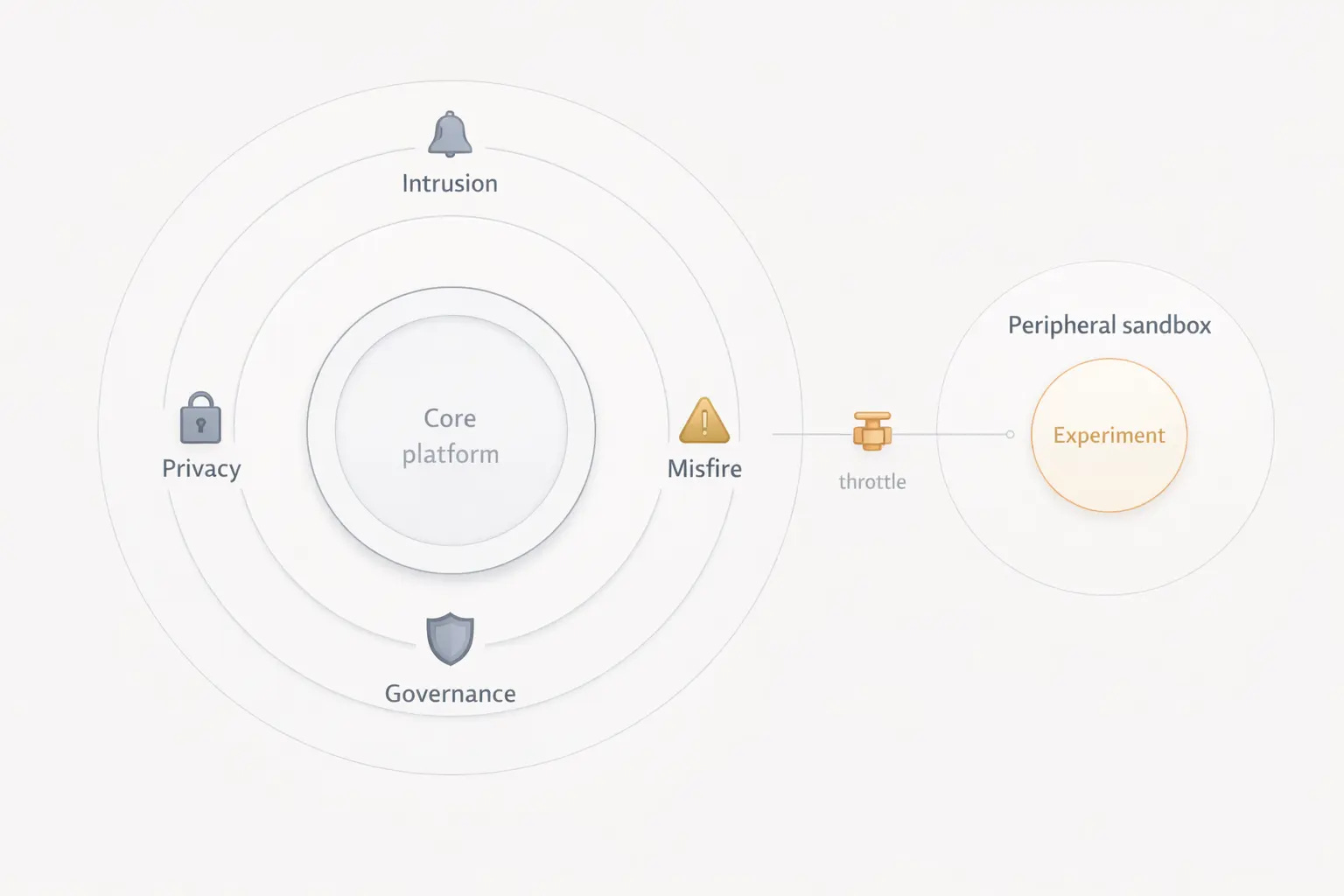
The deeper reason is structural. WeChat is a moat that is so deep that Tencent cannot casually add new moving parts into it. When a product becomes a country’s default communication layer, every change becomes a high-risk procedure. The upside is uncertain. The downside is very legible.
