


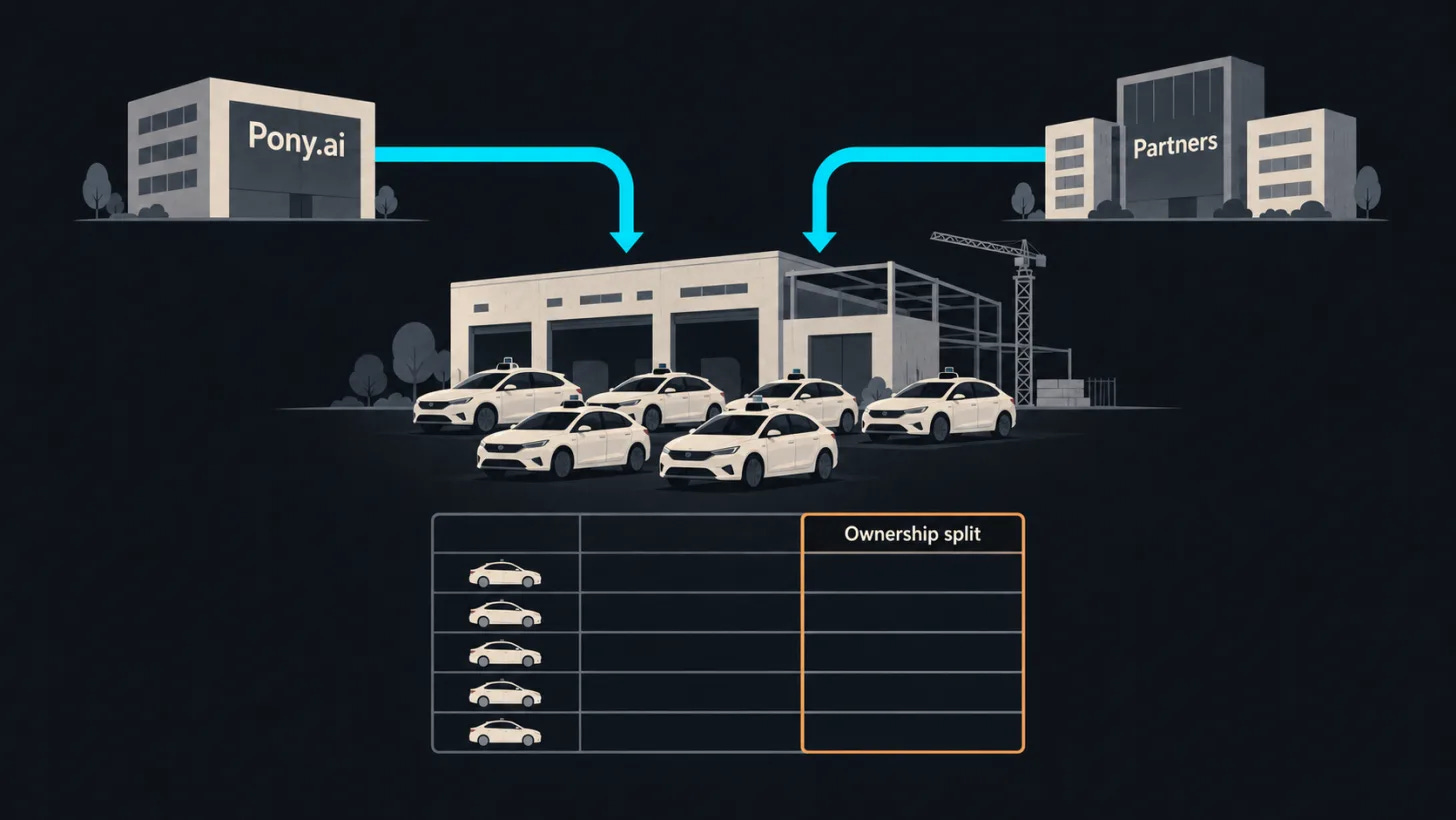
On October 8, Waymo and Pony.ai both announced growth. Waymo, Alphabet’s self-driving unit, closed a $5bn term loan. It was the company’s first debt, eight months after a $16bn equity round at a $126bn valuation. The same day, Pony.ai, a Guangzhou-based robotaxi company listed in New York and Hong Kong, said it would start testing its seventh-generation cars in London with Uber. Its European plan with Uber covers more than 2,000 vehicles in five cities. Waymo announced new financing. Pony’s London announcement did not say how the fleet would be funded.
The two announcements invite a two-model reading. In one, Waymo pays for an expensive fleet itself. In the other, Pony and WeRide grow with cars that partners pay for. Pony says its joint deployment model grows the fleet “in a capital-efficient manner.” WeRide, another Guangzhou-based autonomous-driving company, put “asset-light” in its results headline. Gasgoo, a Chinese automotive trade publication, describes the Zagreb arrangement as a model now being repeated in Britain.
I do not accept what that reading implies for Pony. Its partners do fund some cars, and its own capital spending is also rising. I read the figures as evidence that Pony still needs substantial capital as partner-funded deployment grows. Its filings report one fleet figure and do not separate company-owned cars from partner-owned ones. The difference on October 8 was in how the two companies raise money for growth. Waymo has begun to borrow. Pony spends its existing cash, including the proceeds of its Hong Kong listing.
Reading a robotaxi fleet by who paid for each car is one example of how Hello China Tech reads China's tech sector: primary sources first, new analyses every week, across AI, chips, robotics, and EVs. Subscribe free to get the next one in your inbox.
Pony Still Spends Its Own Capital
Pony’s 2025 annual report to the US Securities and Exchange Commission has one sentence that states the ownership position most plainly, and it qualifies that sentence elsewhere. “While we currently serve passengers entirely with our self-owned robotaxi fleets,” it says, “we expect the future robotaxi fleets to be largely owned by a growing network of third-party fleet companies.” The sentence describes ownership at the time of the report and a plan for future fleets.
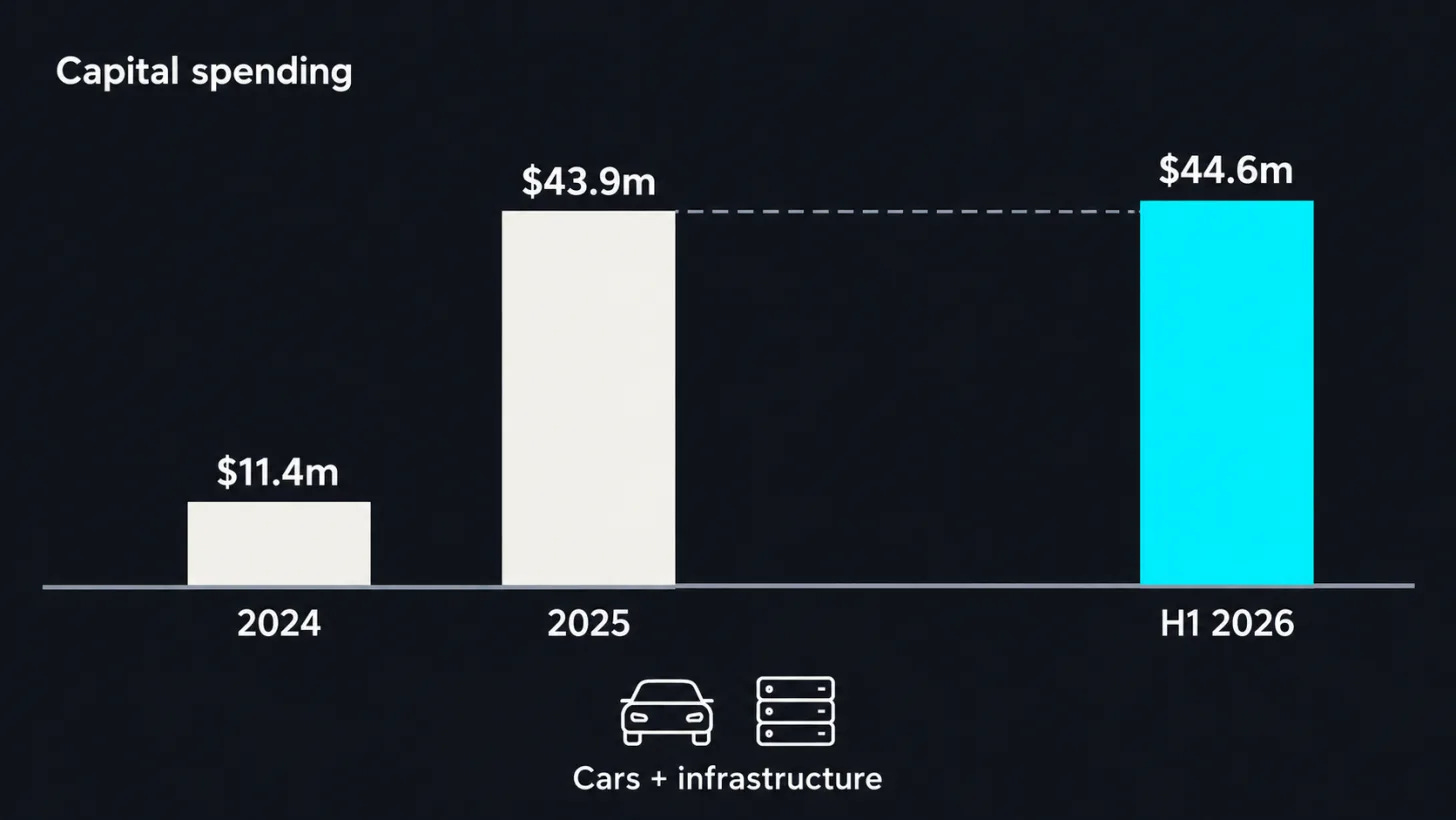
Pony’s own capital spending rose with the fleet. The fleet grew from 270 cars at the end of 2024, according to its Hong Kong annual report, to 1,975 by June 30, 2026. Capital spending rose from $11.4m in 2024 to $43.9m in 2025. Spending in the first half of 2026, $44.6m, already exceeded the full-year 2025 total. The company ties it to its seventh-generation fleet and to data centres and servers, and does not disclose how much went to cars. Net property, equipment and software rose from $60.5m at December 31, 2025 to $98.5m at June 30, 2026.
Pony records the rides it provides as principal revenue. Its OnTime agreement uses a different model, with Pony earning technology licensing revenue. Pony also holds all 24 categories of robotaxi permit available in Beijing, Shanghai, Guangzhou and Shenzhen, from road testing to fully driverless paid service.
Chinese rules leave room for several splits. Guangzhou’s self-driving regulation, in force since February 2025, lets a company run commercial service if it holds a road-transport licence “or cooperates with” a firm that does. A 2023 transport ministry guideline allows consortiums of transport companies and carmakers. Both let a partner hold the car or the transport licence. In Pony’s case, it holds robotaxi permits in all four cities, and its own capital spending is still rising.
GAC, the Guangzhou state-owned carmaker, calls the arrangement a “golden triangle” of carmaker, driving-system company and platform. The platform corner is OnTime Mobility, a ride-hailing app controlled by GAC and 5.35% owned by Pony. Its 2026 interim report folds robotaxi revenue into an “other” line that also includes marketing services: Rmb 1.17m in the first half, against total revenue of Rmb 4.04bn. Its whole stock of property, plant and equipment was Rmb 51.6m, about $7.6m at the June 30 exchange rate. Robotaxi remains a small part of OnTime’s reported revenue. OnTime has nevertheless agreed to bear fleet capital spending under its new deal with Pony.
The paid section includes a five-company comparison on three questions: who owns the cars, who holds the permit and who pays. It also includes a guide to the disclosures that track fleet funding.
