

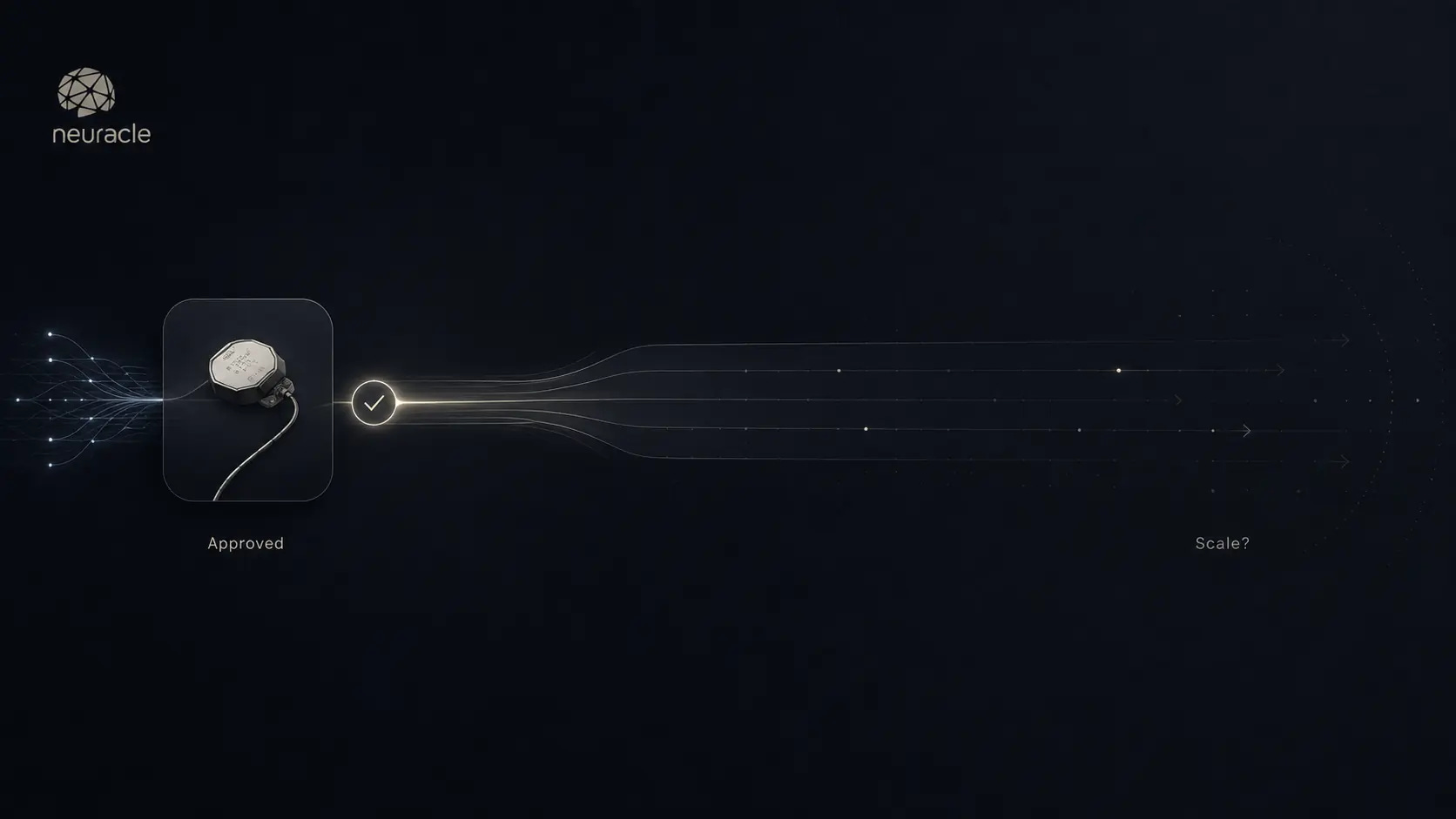
On March 13, 2026, China’s National Medical Products Administration approved the NEO-ONE SCI, a brain-computer interface made by Neuracle Technology (博睿康), a Shanghai-based company founded in 2011 by two Tsinghua University biomedical engineering PhDs. The device reads neural signals through electrodes placed outside the dura mater without penetrating brain tissue, helping quadriplegic patients regain hand grasp function via a pneumatic glove. It is the first invasive brain-computer interface to receive regulatory clearance for commercial medical use anywhere in the world.
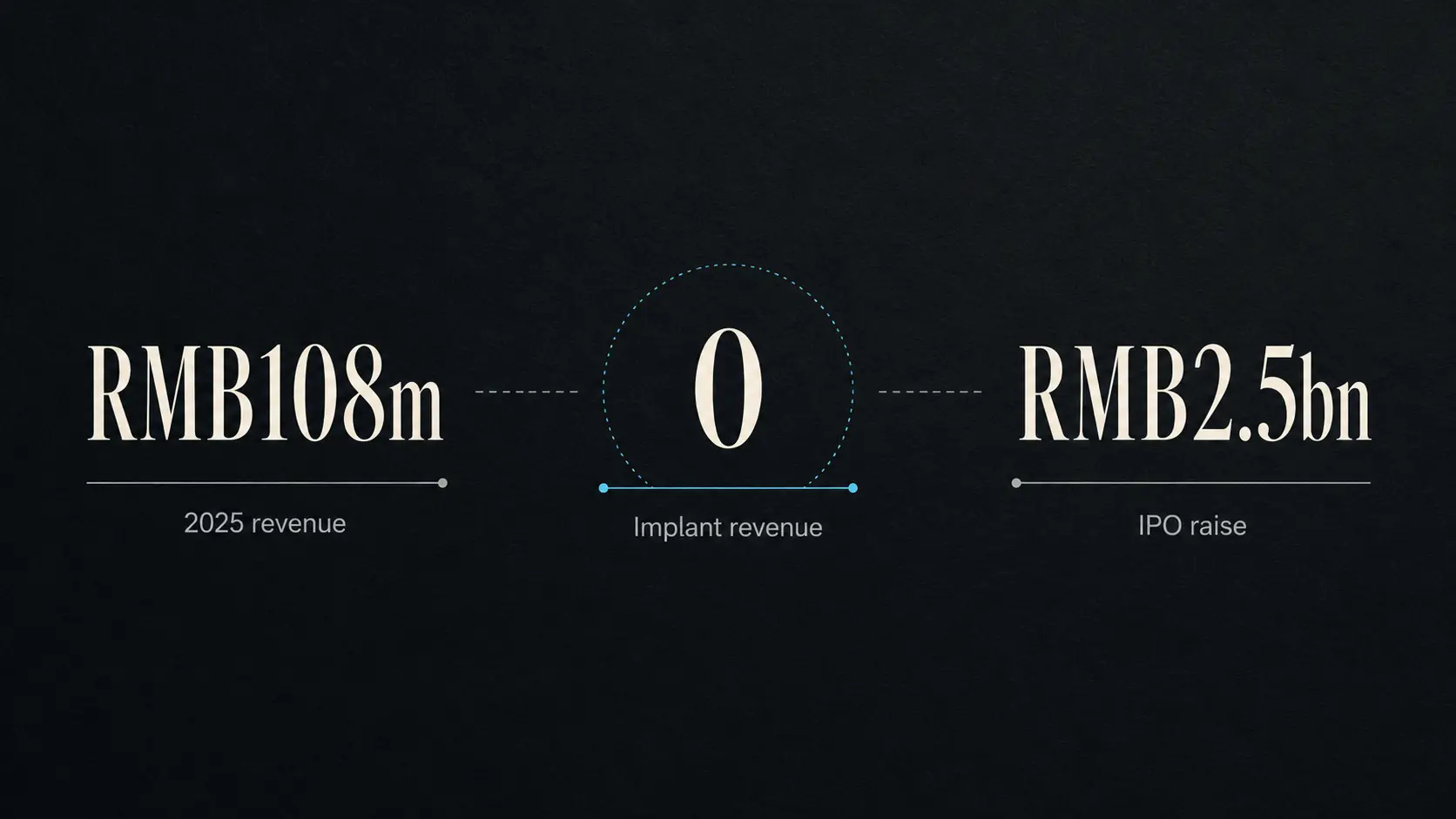
Three months later, on June 11, Neuracle filed for an initial public offering on the Shanghai Stock Exchange’s STAR Market, China’s Nasdaq-style board for hard-technology companies, seeking to raise Rmb 2.5bn($345m). Of that, Rmb 1.54bn is earmarked for BCI research, Rmb 410m for manufacturing capacity, and Rmb 550m for working capital. The prospectus, underwritten by CITIC Securities, offers one of the most detailed public financial disclosures yet from a brain-computer interface company.
The filing marks a shift in China’s BCI story from policy ambition to capital-market scrutiny. And the numbers beneath the milestone tell a more complicated story.
A single data point captures the tension. Neuracle’s 2025 revenue reached Rmb 108m, a 64% year-on-year increase. All of it came from non-invasive products, primarily electroencephalogram machines sold to hospitals and research institutions. The invasive brain implant that made global headlines generated zero revenue during the reporting period. This gap between technological milestone and commercial reality defines both the investment case and the near-term trajectory of China’s brain implant industry.
Twelve Days from Approval to Payment Infrastructure
The speed of what followed the approval deserves close attention.
Two days after the NMPA cleared the NEO-ONE SCI, China’s National Healthcare Security Administration initiated contact with Neuracle. By March 22, the agency assigned the product a medical insurance code. On March 23, Shanghai’s municipal insurance authority added the device to its consumables catalog. On March 24, the product completed procurement listing, making it available for hospital purchase.
Fewer than 12 days from regulatory clearance to insurance coding and procurement listing. The sequence was not improvised. China’s NHSA had laid the groundwork a full year earlier, establishing pricing categories for invasive BCI procedures in March 2025, before any product existed to fill them. Provincial governments followed. Beijing classified invasive BCI procedures as Class A insurance at 4 designated hospitals. Zhejiang added coverage. Hubei published the country’s first BCI pricing standard. The infrastructure waited for the product, not the other way around.
For comparison: Neuralink has implanted more than 20 patients as of early 2026, all under research protocols. No Neuralink device has received FDA market clearance. Investor documents reported by Bloomberg point to commercial approval around 2029 at the earliest. China did not merely approve a brain implant faster. It pre-built the insurance and procurement infrastructure.
The contrast points to a structural difference in how the two countries approach frontier medical devices. Whether that speed leaves enough time for the clinical confidence that frontier medical devices typically require is the question investors will weigh. The prospectus risk disclosures point to the same tension: uncertain clinical adoption, uneven provincial reimbursement, and limited pricing benchmarks.
Neuracle’s 12-day sprint from approval to procurement listing is a case study in institutional speed. But the prospectus numbers tell a more sobering story: zero revenue from the product that made headlines, a Rmb 2.5bn fundraise equal to more than 23 years of current annual revenue, and only 32 implanted patients by the end of 2025. The financial details below explain what investors are actually buying.