

When Meituan reported Q1 2026 results on June 1, the headline figure dominated coverage: adjusted net loss narrowed to Rmb 5 billion from Rmb 15.1 billion the previous quarter. After a year in which the delivery war produced a Rmb 62 billion swing from profit to loss, coverage and early trading focused on stabilization: the adjusted net loss narrowed sharply from Q4, and the subsidy war appeared to be easing.
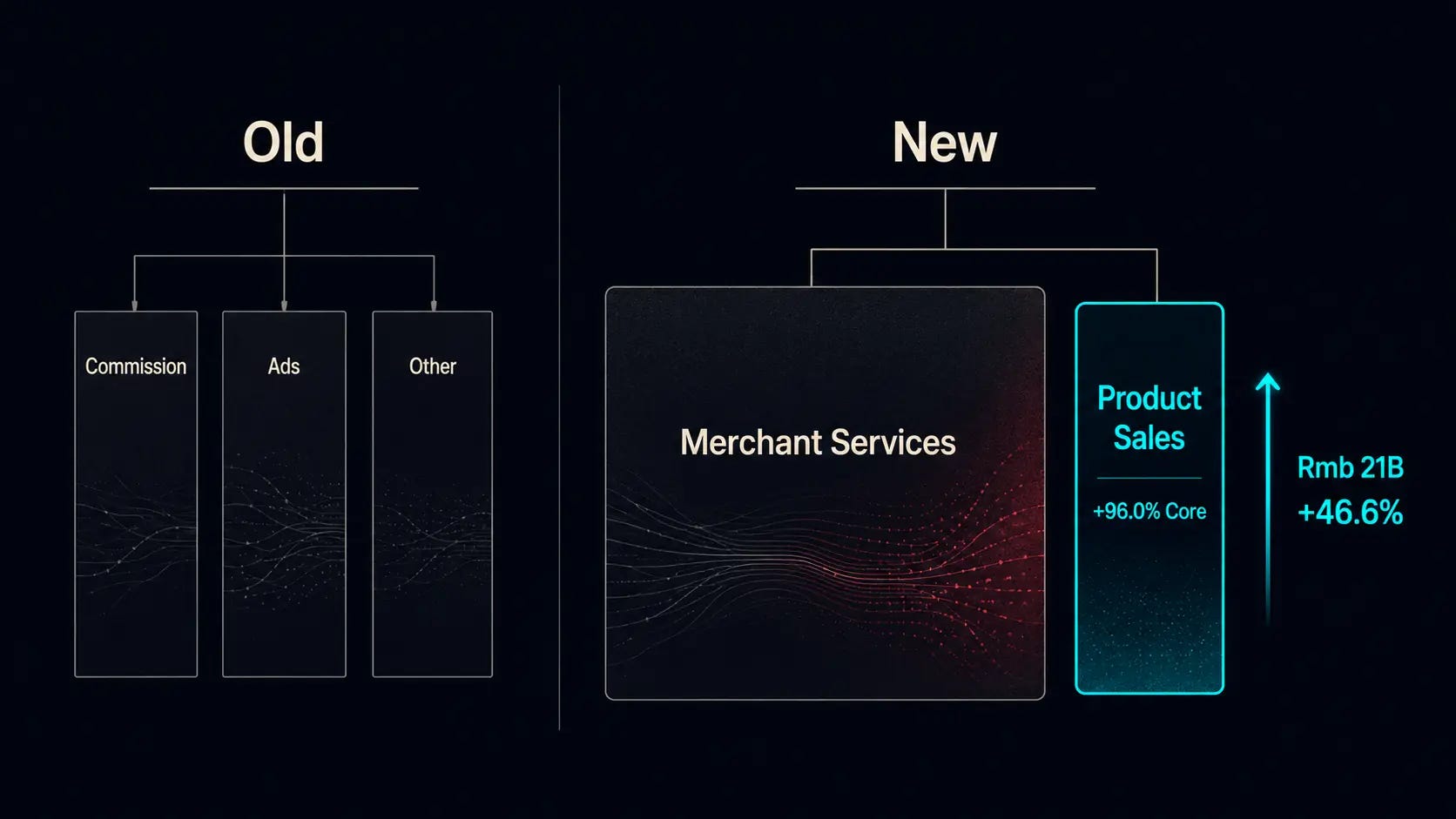
The more consequential signal was buried deeper in the filing. Starting this quarter, Meituan restructured how it reports revenue. The company merged commission income and advertising income into a single “merchant services” line. Simultaneously, it carved out “product sales” as a standalone category for the first time, separately disclosing revenue from Xiaoxiang Supermarket, Kuailv, and other self-operated retail categories such as medicine and alcohol, where both revenue and inventory cost are recorded on a gross basis.
Under the previous structure, investors could roughly isolate Meituan’s in-store and delivery business performance by comparing commission revenue growth against advertising revenue growth. The new merged category weakens that signal. The separate product-sales line makes a different signal visible: product sales reached Rmb 21 billion in Q1, up 46.6% year over year. Within core local commerce, product sales nearly doubled, rising 96.0%. Revenue disclosure changes of this kind often carry strategic intent. Self-operated retail becomes easier to track. Pressure in in-store services becomes harder to isolate. That gross-basis treatment makes the business look less like a marketplace and more like a retailer carrying its own economics.
The headline financials reinforce that reading. Total revenue rose 5.6% to Rmb 91 billion. Core local commerce, which includes food delivery, in-store services, and instant retail (Meituan Instashopping), grew just 0.1% to Rmb 64.1 billion. Meituan said core local GTV still benefited from higher annual purchase frequency and cross-selling, but revenue growth was held back by elevated incentives deducted from revenue. New initiatives, encompassing Xiaoxiang Supermarket (Meituan’s self-operated grocery platform) and overseas delivery brand Keeta, grew 21.3% to Rmb 27 billion. Operating loss narrowed to Rmb 6.5 billion from Rmb 16.1 billion in Q4 2025, helped by lower spending on promotion, advertising, and user incentives. Selling and marketing expenses fell to Rmb 23 billion from Rmb 31.7 billion.
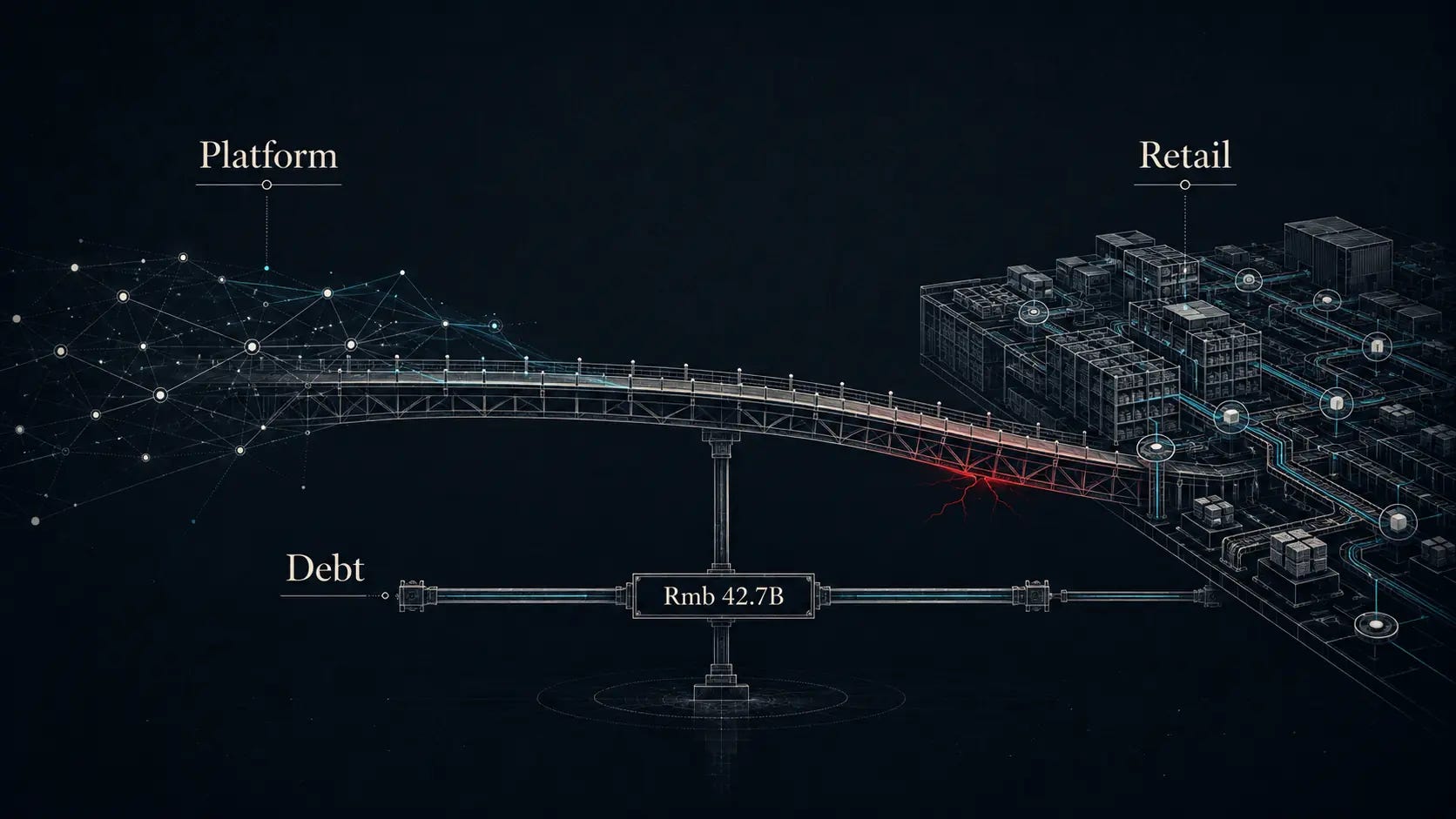
Meituan’s Q1 results suggest a company using a narrow window of competitive relief to accelerate a fundamental shift: from an asset-light marketplace that earns commissions, toward a heavier operating model that controls procurement, manages inventory, and owns fulfillment. Product sales are becoming more visible. In-store pressure is becoming harder to isolate. The balance sheet already shows the financing pressure behind that shift: non-current borrowings more than doubled in a single quarter, rising to Rmb 42.7 billion from Rmb 18.8 billion at year-end 2025. Meituan is not just narrowing losses. It is borrowing to build.
The ceasefire is real. So is the borrowing. The question is whether Meituan can complete its shift before borrowing costs, renewed subsidies, or in-store competition narrow the window.
