

Editor’s Note: FlashPoint is our premium quick-strike column on market-moving China tech events. Today: Chinese tech companies are rationing employee AI token budgets just as American companies are putting internal AI use under financial control. In March, I examined how China began treating token consumption as an official economic signal as daily usage crossed 140 trillion. In April, I analyzed the collision between subscription pricing and agent workloads. The pressure has moved from platforms to employers.
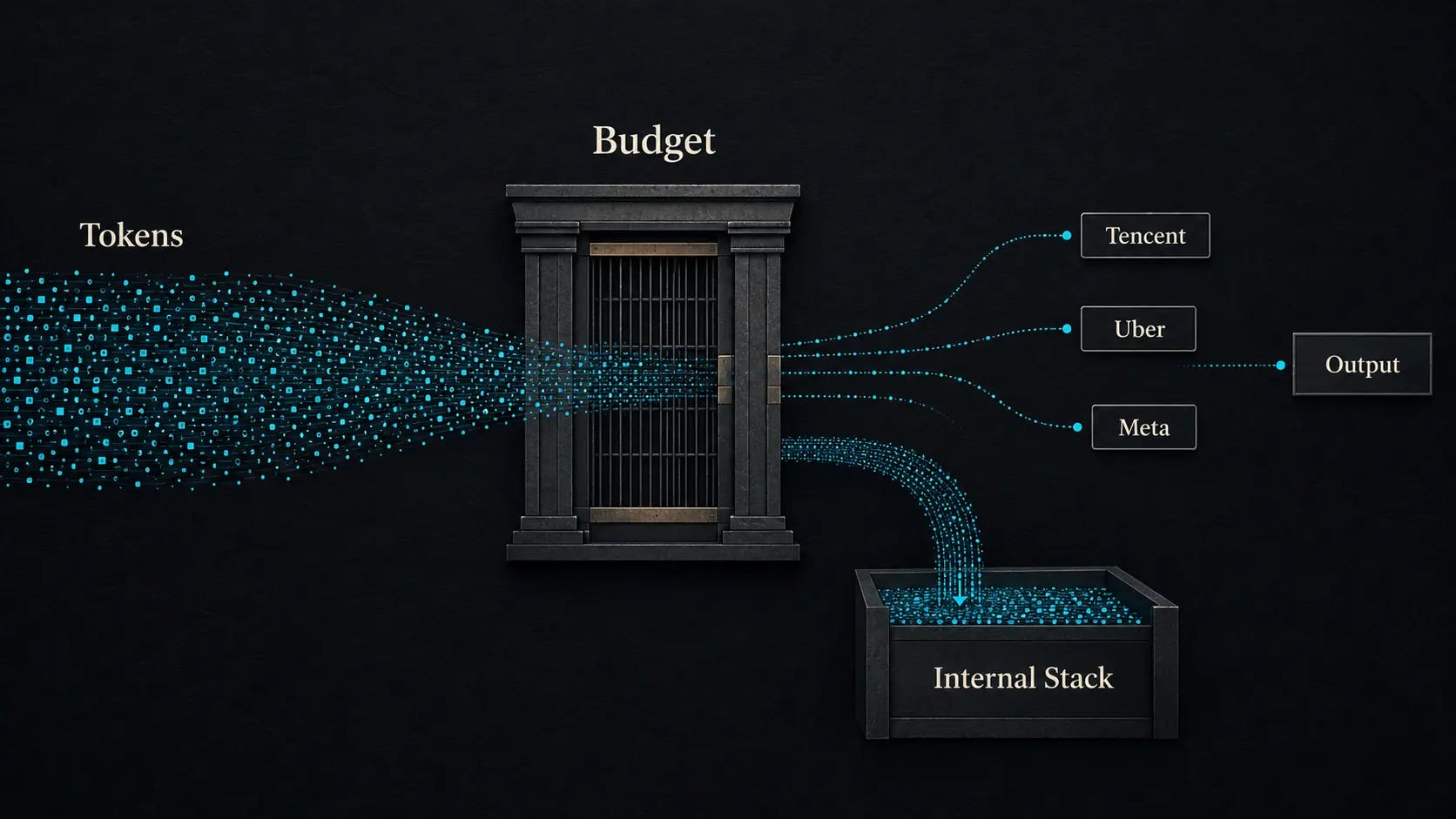
In March, Chinese media reported that Tencent, one of China’s largest tech companies, had allocated roughly Rmb 220,000 per employee per year in AI token credits. The package covered Cursor, Claude, and Tencent Cloud’s CodeBuddy. Some business units reportedly tracked departmental consumption and ranked teams by volume.
By June, the system had changed. One Tencent employee said his monthly quota had dropped from about $2,000, roughly Rmb 13,500, to Rmb 1,400, and exhausted it in two days. Team leads now reportedly receive a shared quota pool and subdivide it among members. Reported monthly allowances range from Rmb 7,000 for Tencent’s Hunyuan large-model team to Rmb 1,000 for an outsourced worker in Tencent’s entertainment business. Tencent’s internal AI-tool token budget is still reported to be tens of times larger than in the previous budgeting period. Individual allocations in multiple business units dropped sharply. Employees can request more; at least one was refused on budget grounds. Tencent stated internally that it opposes usage rankings and will not treat consumption alone as a measure of output.
The same budget logic is appearing outside China, though in different forms. Uber set a $1,500 monthly cap per employee per AI coding tool after its CTO said in April that the company had already burned through its 2026 budget for AI coding tools. Amazon retired an informal employee-made AI token leaderboard called KiroRank after it appeared to encourage usage for usage’s sake. Meta’s CTO wrote in an April memo that “token usage alone is not a measure of impact of any kind.” These are different policies, but they point to the same shift: internal AI use has moved from adoption theater to budget governance. What makes the Tencent case valuable is the operational detail now visible in China: who receives allocation, who loses access, and who pays out of pocket.
