


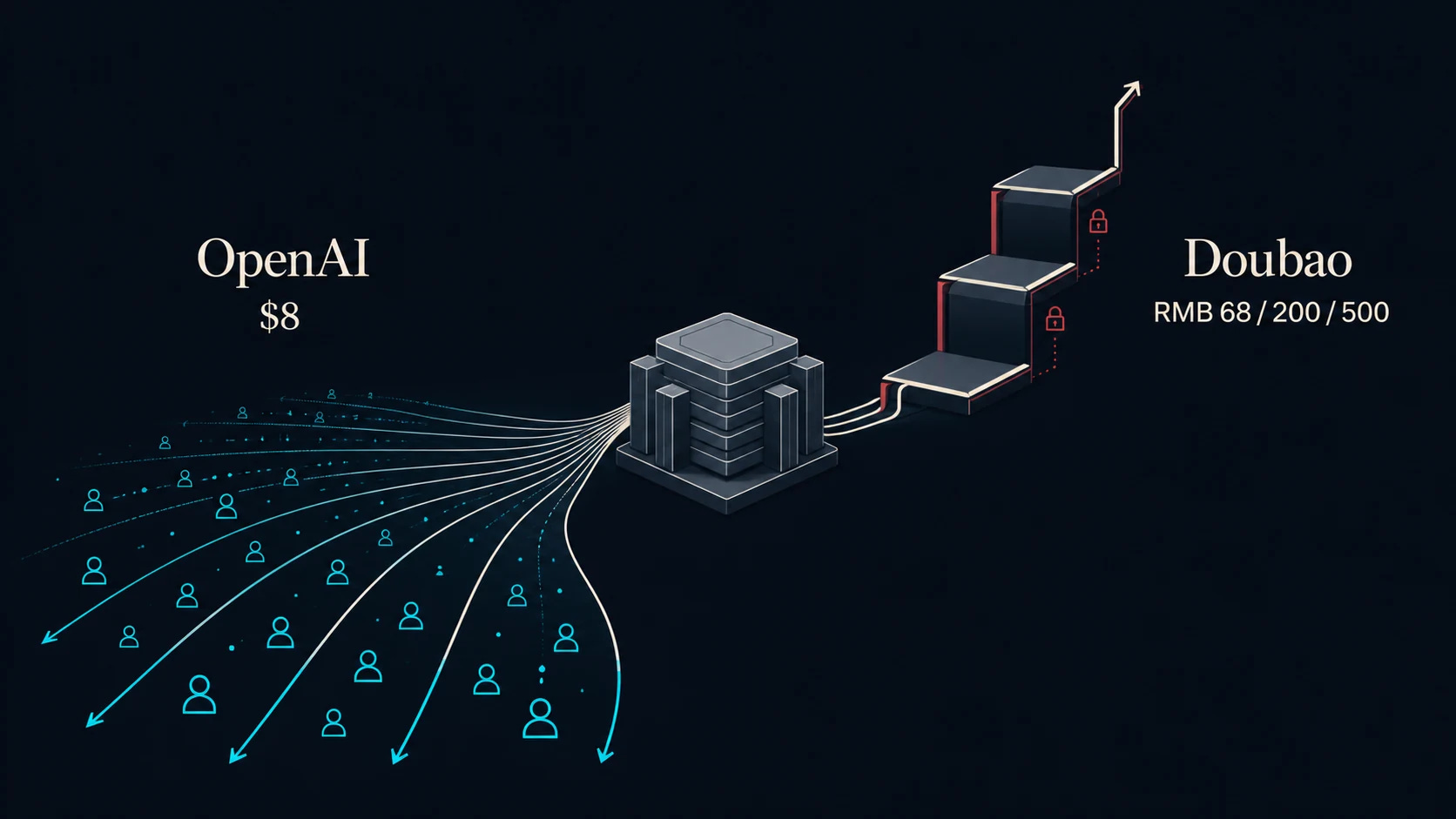
In January 2026, OpenAI began rolling out ChatGPT Go worldwide. The $8 per month tier, first tested in India in August 2025, expanded access at a lower price point while OpenAI prepared to test advertising in the free and Go tiers. According to projections reported by The Information, OpenAI reportedly expects Go to reach 112 million subscribers, even as its $20 per month Plus base contracts from 44 million to 9 million. The direction is clear: downmarket.
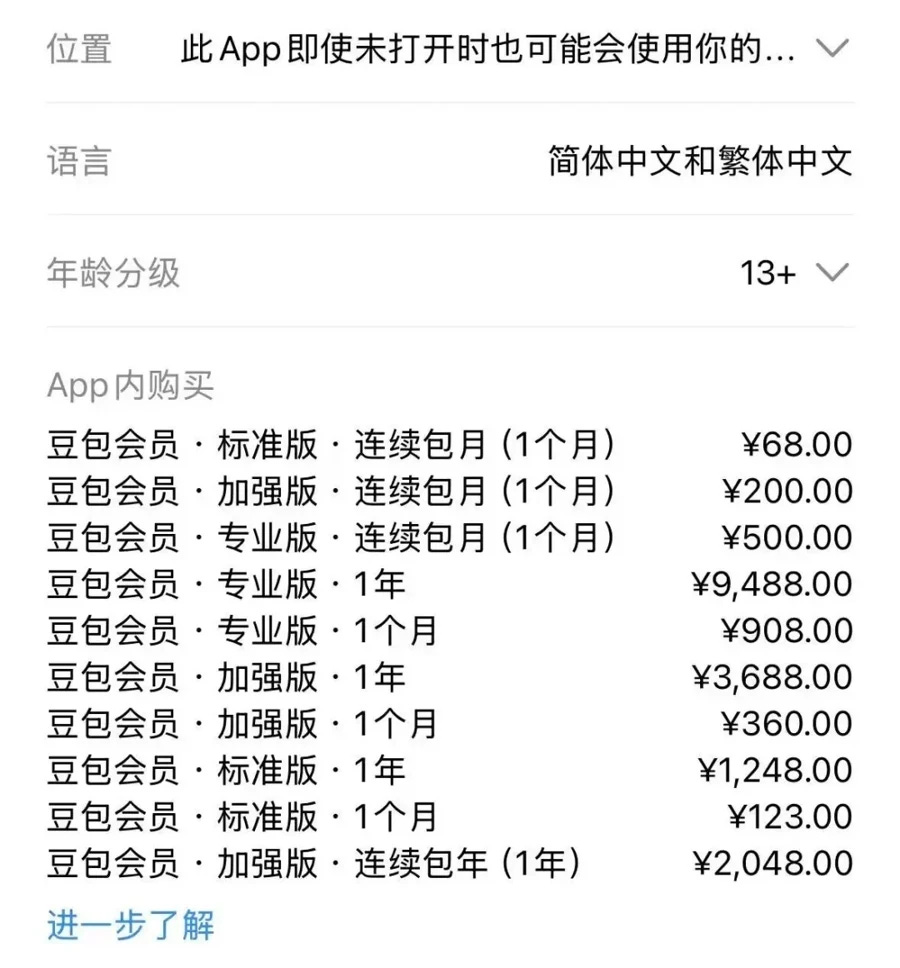
Four months later, on May 4, ByteDance’s Doubao moved the other way. After nearly two years of free operation, China’s largest AI-native consumer app updated its App Store listing with a subscription-service notice, disclosing tested tiers at RMB 68, RMB 200, and RMB 500 per month. The direction is equally clear: upmarket.
ByteDance stressed that free Doubao will remain. The company described the paid tiers as value-added services still under testing, with full details to come through official channels at formal launch. The target is not basic chat. Reported paid features center on compute-heavy productivity tasks: PPT generation, data analysis, and video production. Daily conversation, copywriting, and information lookup remain free.
Both companies face the same structural pressure: inference costs that scale with usage, and free tiers that bleed cash at volume. Their opposite responses reflect different market maturities, different user psychology, and different assumptions about where the money sits.
The thesis: the world’s two largest AI consumer markets are running parallel, opposing experiments on the same question. The results will shape whether consumer AI monetizes through subscriptions, advertising, ecosystem commerce, or some hybrid that has not yet stabilized.
Why Doubao Is China’s Pricing Referendum
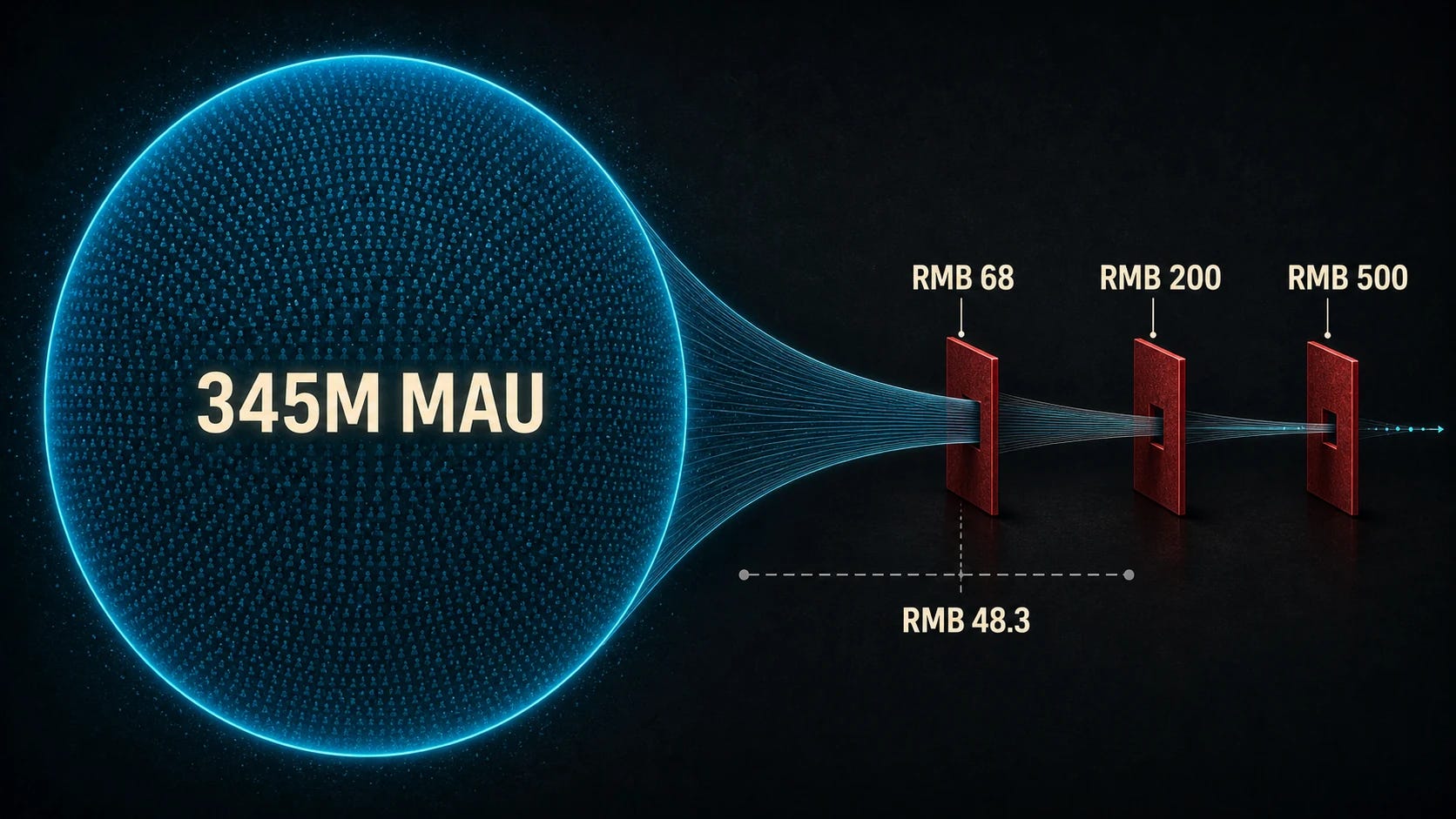
Doubao holds 345 million monthly active users as of March 2026, more than the second and third-place Chinese AI apps combined. During the 2026 Lunar New Year, its daily active users reportedly peaked near 145 million. Its daily token consumption reached 120 trillion, a 1,000x increase from its May 2024 launch. Few other consumer AI products operate at comparable token throughput. ChatGPT and Gemini are the most visible.
This scale makes Doubao’s pricing decision an industry referendum rather than a single company’s business choice. China’s other major AI apps have been watching. Baidu’s Ernie Bot went fully free in April 2025 after more than a year of paid membership experiments, a reminder that Chinese consumer AI subscriptions had not yet become a settled model. Alibaba’s Qwen and Tencent’s Yuanbao still compete on free access and subsidies. If Doubao, with the largest user base by a wide margin, cannot convert a meaningful fraction to paid subscribers, the implication extends beyond ByteDance. It would suggest that standalone AI subscriptions face structural resistance in the Chinese consumer market.
ByteDance’s own financial position sharpens the stakes. The company’s 2025 operating profit margin came under pressure. An executive acknowledged that slowing e-commerce growth and rising AI infrastructure investment weighed on second-half margins, though he disputed earlier reports characterizing the decline as severe. Doubao’s token consumption doubled in three months between January and March 2026. ByteDance is reportedly investing at an intensity that approaches North American cloud providers, while operating under tighter chip constraints. That configuration likely makes inference economics harder, though the exact cost gap with OpenAI is not public.
The pricing itself carries a signal. Doubao’s RMB 68 entry point sits above the RMB 48.3 monthly averagethat surveyed Chinese users say they would accept for AI subscriptions, according to a Citi Innovation Lab study of 1,800 respondents in March 2026. ByteDance appears to be pricing for value rather than volume, testing whether a smaller cohort of heavy users will pay a premium rather than chasing mass conversion at a lower price.
The intensity of the Chinese public reaction is not purely about price. It reflects a long consumer memory of internet products that launched free, degraded the free experience over time, and nudged users toward paid upgrades. The immediate question among Chinese users was not whether the paid tier is worth RMB 68. It was whether the free tier will quietly deteriorate.
Doubao and OpenAI are running opposite experiments on the same question: who pays for consumer AI, how much, and what happens when subscriptions are not enough? The structural forces shaping their answers, and what the results suggest for every company seeking a sustainable AI business model, are where the real analysis begins.

