

Xiaomi used Rmb 23.03bn in operating cash in the third quarter, according to its Q3 2026 filing, published November 24. A year earlier, in the third quarter of 2025, the Chinese smartphone and electric-vehicle maker generated Rmb 5.47bn in operating cash. Transsion, a Shanghai-listed handset maker based in Shenzhen and dominant in Africa, used Rmb 4.01bn in the same quarter, against an inflow of Rmb 3.27bn a year earlier. Both Transsion figures are calculated by subtracting first-half cash flow from the nine-month totals in its third-quarter report.
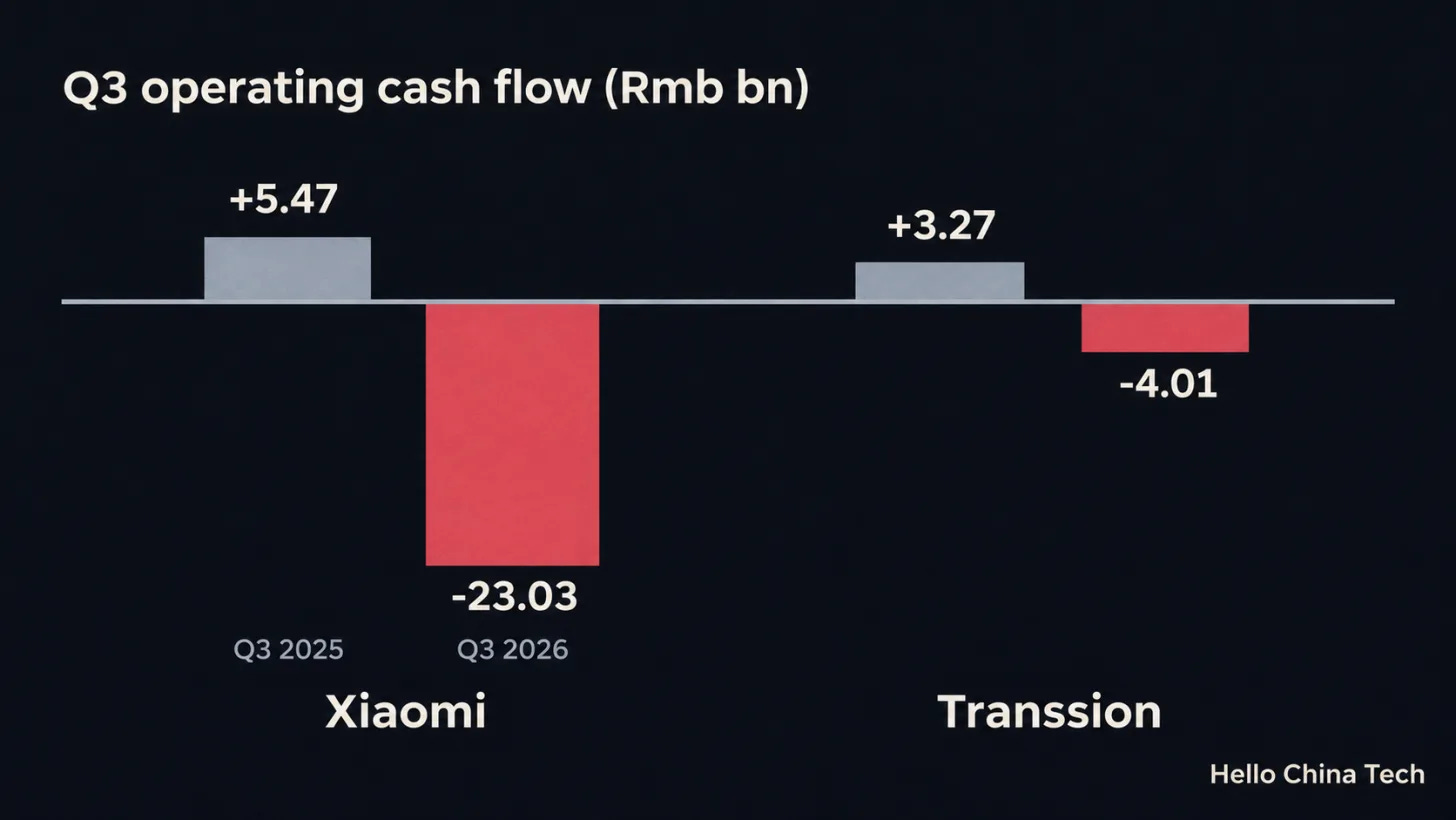
Xiaomi also generated operating cash in the third quarters of 2023 and 2024. In the second quarter of 2026, a Rmb 16.2bn increase in trade payables more than offset a Rmb 9.5bn increase in inventories in its cash flow statement. Volume did not surge in the third quarter. IDC's preliminary estimates show global smartphone shipments fell 22.0% year on year to 255.3m units, the steepest quarterly decline in its records. IDC's Nabila Popal said memory costs had risen about 350% since 2025. The third-quarter increase was in the low double digits from the second quarter.
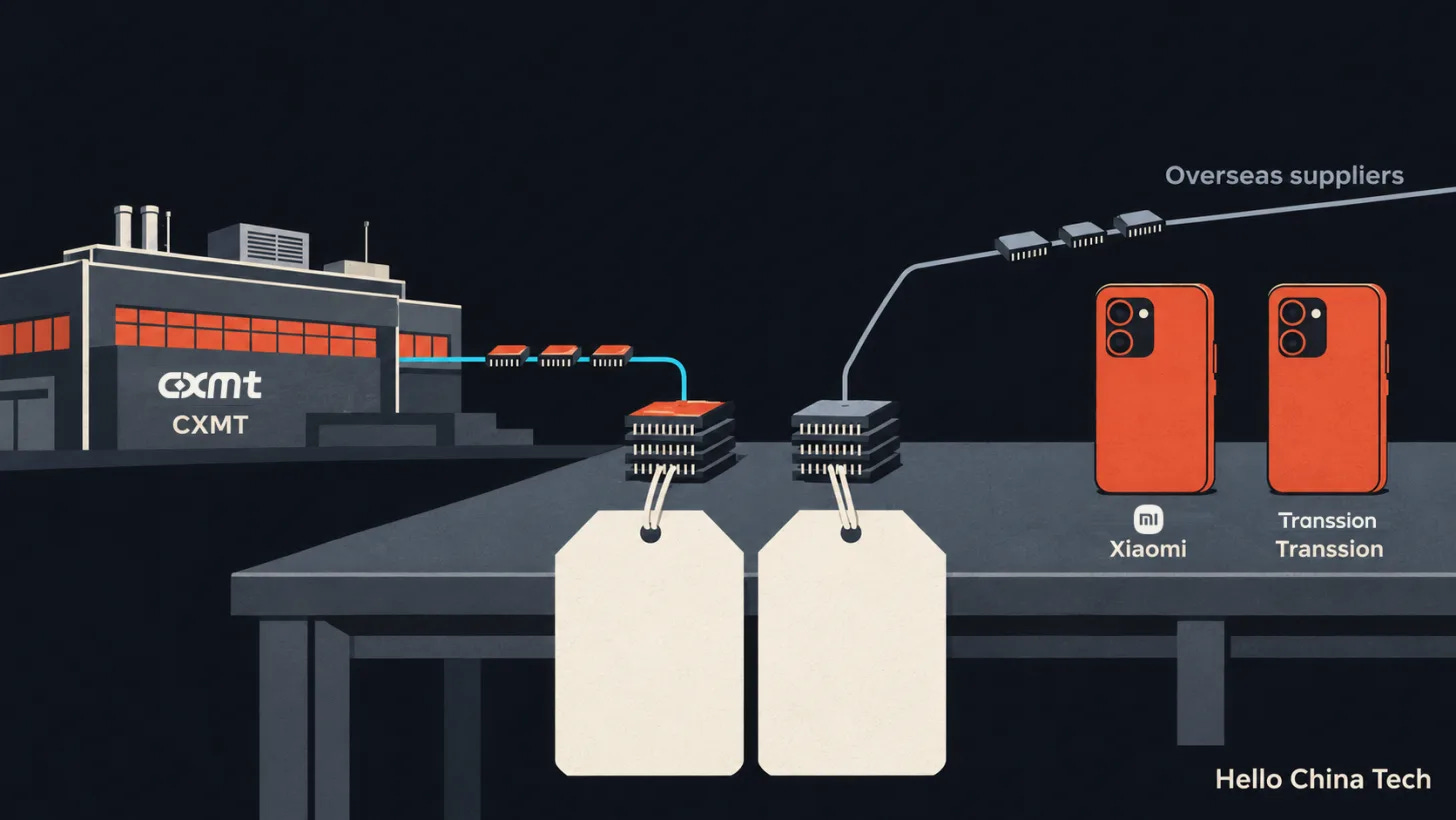
ChangXin Memory Technologies, a Chinese maker of DRAM memory chips known as CXMT, went public in July. Its IPO placement report lists affiliates of Xiaomi and Transsion as strategic investors with long-term supply cooperation agreements. CXMT earned an 89.53% gross margin in the third quarter and ended September with Rmb 7.04bn in contract liabilities, mainly customer advances. At its October 30 investor briefing, CXMT said its prices were close to those of overseas suppliers. At Semiconductor Manufacturing International Corporation, a Chinese contract chipmaker known as SMIC, smartphones fell to 14.3% of wafer revenue. My read is that the quarter separated access to domestic memory from the cost of buying it.
Hello China Tech reads China's AI, chip, robotics and EV sectors from primary sources that English coverage rarely reaches. Subscribe free to get each new analysis as it publishes.
Supply Ties and CXMT's Price Comparison
I covered the listing on Shanghai's technology-focused STAR Market at the time. In CXMT's IPO placement verification report, 18 of the 30 strategic-investor groups were large companies with existing or planned long-term ties to CXMT, or their affiliates. The Xiaomi and Transsion agreements cover long-term DRAM supply and joint product development.
By mid-year, CXMT's interim report said its LPDDR4X and LPDDR5/5X chips, low-power memory used in phones, had entered both companies' supply chains. In CXMT's third-quarter filing, revenue rose 613.18% year on year to Rmb 118.71bn on an 89.53% gross margin. The filing attributed the profit growth to higher sales volumes, higher prices and lower unit costs.
The price comparison came from CXMT's October 30 investor briefing. CXMT also said server memory prices rose faster than phone and PC memory prices in the third quarter. It said DDR's share of revenue was higher in the first nine months than in the first half as DDR5 sales grew. CXMT generated Rmb 123.60bn in operating cash in the third quarter. Cash and trading financial assets totaled Rmb 353.62bn at September 30. Net cash from financing activities was Rmb 65.44bn in the first nine months. Contract liabilities rose to 15.7 times their year-end level, from Rmb 447m to Rmb 7.04bn.
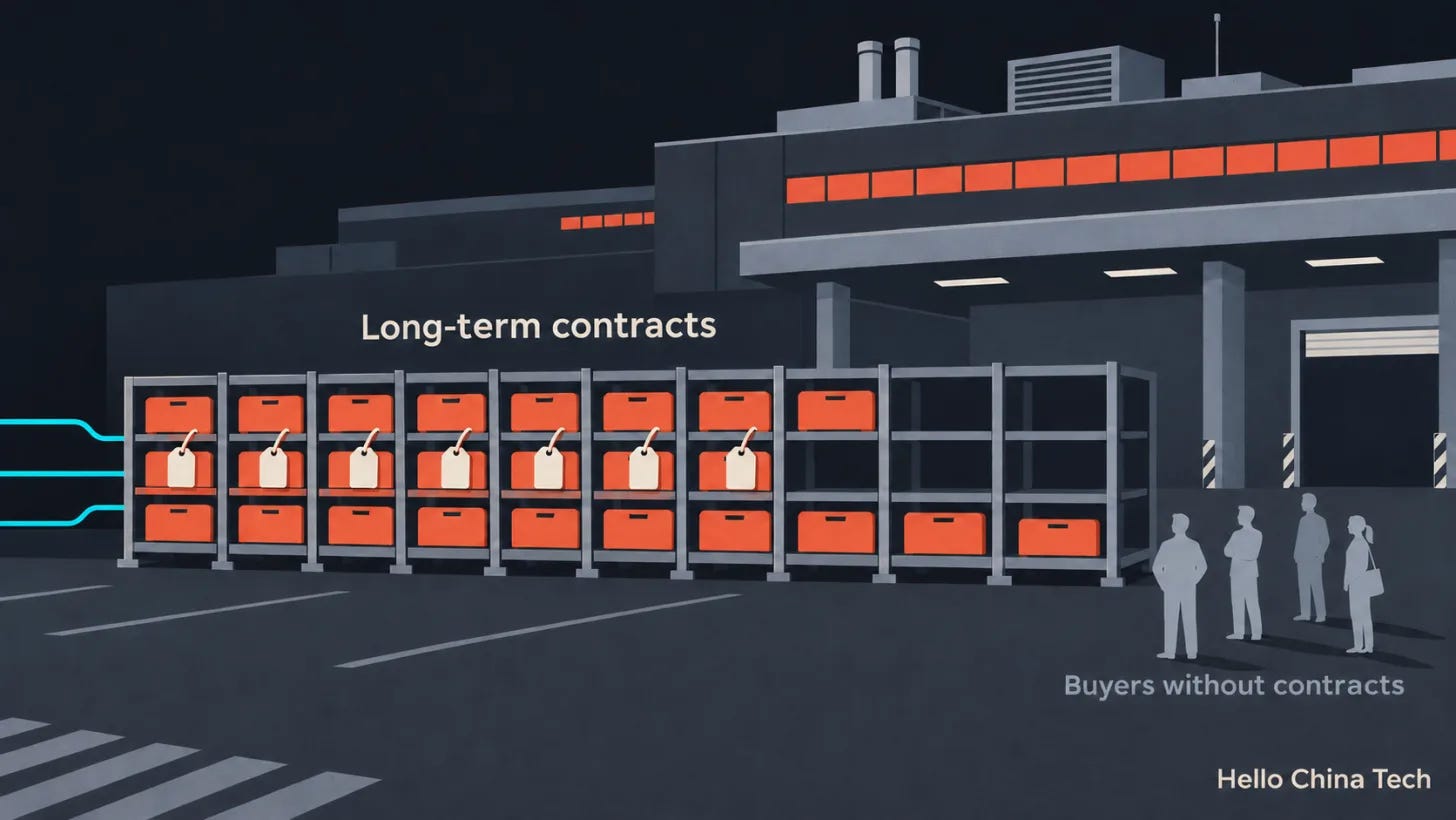
On Samsung Electronics' third-quarter call, executives said they had signed multi-year contracts with 10 major customers and were in talks with 10 more. Samsung targets 60% to 70% of its medium- to long-term capacity under such contracts. On SK Hynix's third-quarter call, the company said it had signed long-term contracts with 14 customers, including major cloud providers. These contracts typically run five years and include safeguards such as deposits. Signed volumes cover more than half of its 2027 and 2028 capacity. Its head of DRAM marketing counted signed volumes and demand under discussion together. On that basis, its DRAM and HBM output through 2029 is "effectively sold out." HBM is high-bandwidth memory used in AI systems. I read the Korean contracts as a sign that less future capacity will be available to buyers without long-term agreements.
Below the paywall: a profit attribution calculation for SMIC and CXMT, and a three-period comparison of inventories, payables and prepayments at Xiaomi and Transsion.
What follows is who keeps the profit at the co-owned fabs inside CXMT and SMIC, a balance-sheet test of how Xiaomi and Transsion funded their inventory build, and what the two results say about the value of CXMT's supply ties. Only need this article? Buy the full article as a PDF for $5. No subscription needed.