Two years ago, the Beijing Auto Show carried the theme “New Car.” This year it was “Smart Future.” The 380,000-square-meter exhibition featured 1,451 vehicles, including 181 world premieres and 71 concept cars. But the numbers that mattered were elsewhere.
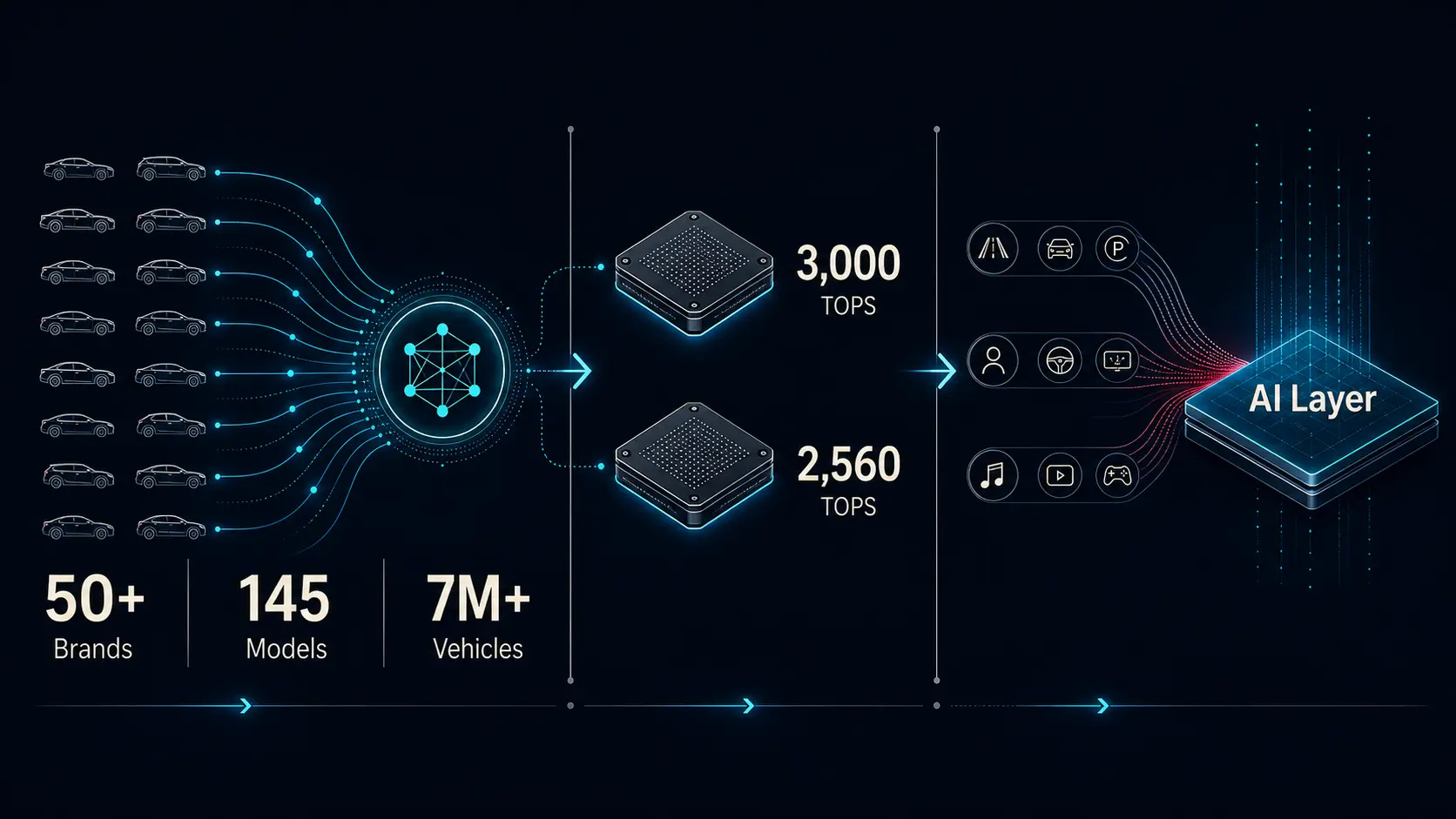
More than 50 car brands now use Doubao, the AI model built by ByteDance’s cloud unit Volcano Engine. That translates to 145 car models and over 7 million vehicles. Alibaba’s Qwen model announced integrations across the show, with partners including BYD, a local Volkswagen joint venture, Chang’an, Dongfeng, BAIC, Geely, Great Wall, and Li Auto. Some models already let drivers book hotels, order takeout, buy tickets, or track packages by speaking to the cockpit assistant.
At the same time, automakers competed on raw compute. XPeng’s GX flagship carried 4 custom Turing AI chips delivering 3,000 TOPS of local compute, priced at Rmb399,800. Li Auto’s L9 Livis debuted with 2 custom 5nm Mach 100 chips at 2,560 TOPS, priced at Rmb559,800. NIO’s ES9 featured its in-house Shenji chip at over 1,000 TOPS. Geely’s Eva Cab robotaxi prototype combined chips from Nvidia and Qualcomm, with total compute also exceeding 3,000 TOPS.
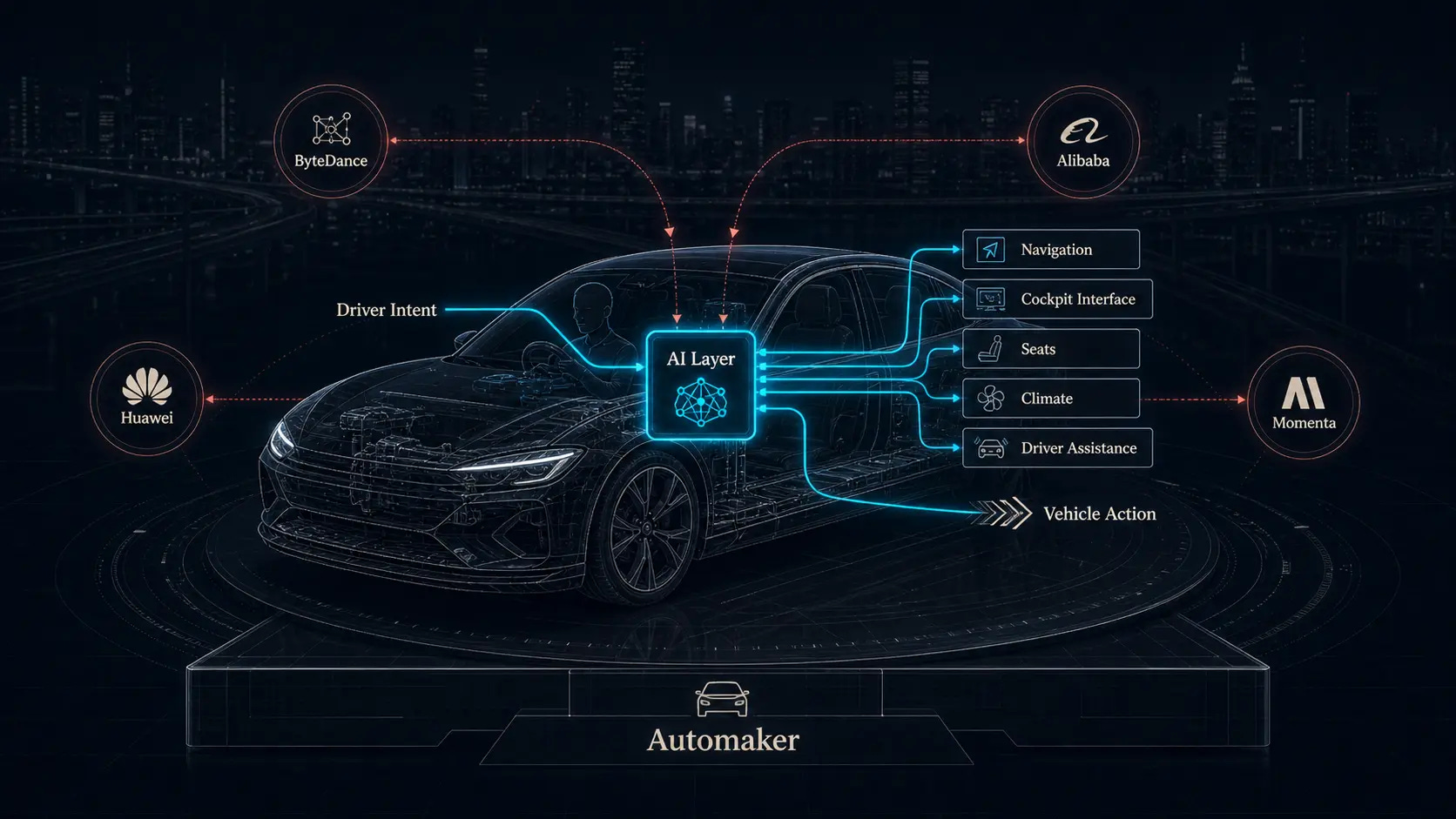
The compute arms race and model partnerships are easy to see. The harder question is structural: as AI agents move from cockpit features toward vehicle-level intelligence systems, a new layer of control is forming between the car and its occupants. Who defines that layer, who iterates it, and who captures value from it appear poised to reshape automotive supply chains. The common thread across these developments: the interface between user intent and vehicle action is being rebuilt, and the companies doing the rebuilding are not all automakers. That question matters beyond China because the Chinese market is testing a supplier structure that other auto markets may eventually confront.
The urgency is sharpened by convergence. Among the top 20 best-selling electric models in China priced above Rmb 100,000, driver-assist and in-car entertainment functions are already similar, according to consultancy AlixPartners. Technology “disseminates so quickly that you’re never going to be able to sustain a differentiated technology for long,” said Stephen Dyer, the firm’s Asia automotive head. The pressure is compounded by product exhaustion. Screens, voice assistants, rear-seat entertainment, refrigerators, and zero-gravity seats have become standard equipment across China’s smart EV market. Automakers need a new language of differentiation. AI agents are becoming that language.
If hardware features and cockpit functions converge quickly, the competitive frontier has to move somewhere else. In 2026, it appears to be moving into the intelligence layer, where the question is not which car has AI, but who gets to define what the AI can do.