

When 70 AI employees started handling government paperwork in Shenzhen’s Futian district this February, few outside China paid attention. These weren’t flashy chatbots or theoretical breakthroughs–just software processing documents with 95%+ accuracy while cutting review times by 90%. Yet this quiet deployment, powered by DeepSeek’s 67B parameter model, represents something potentially more significant than the latest Silicon Valley AGI announcement.
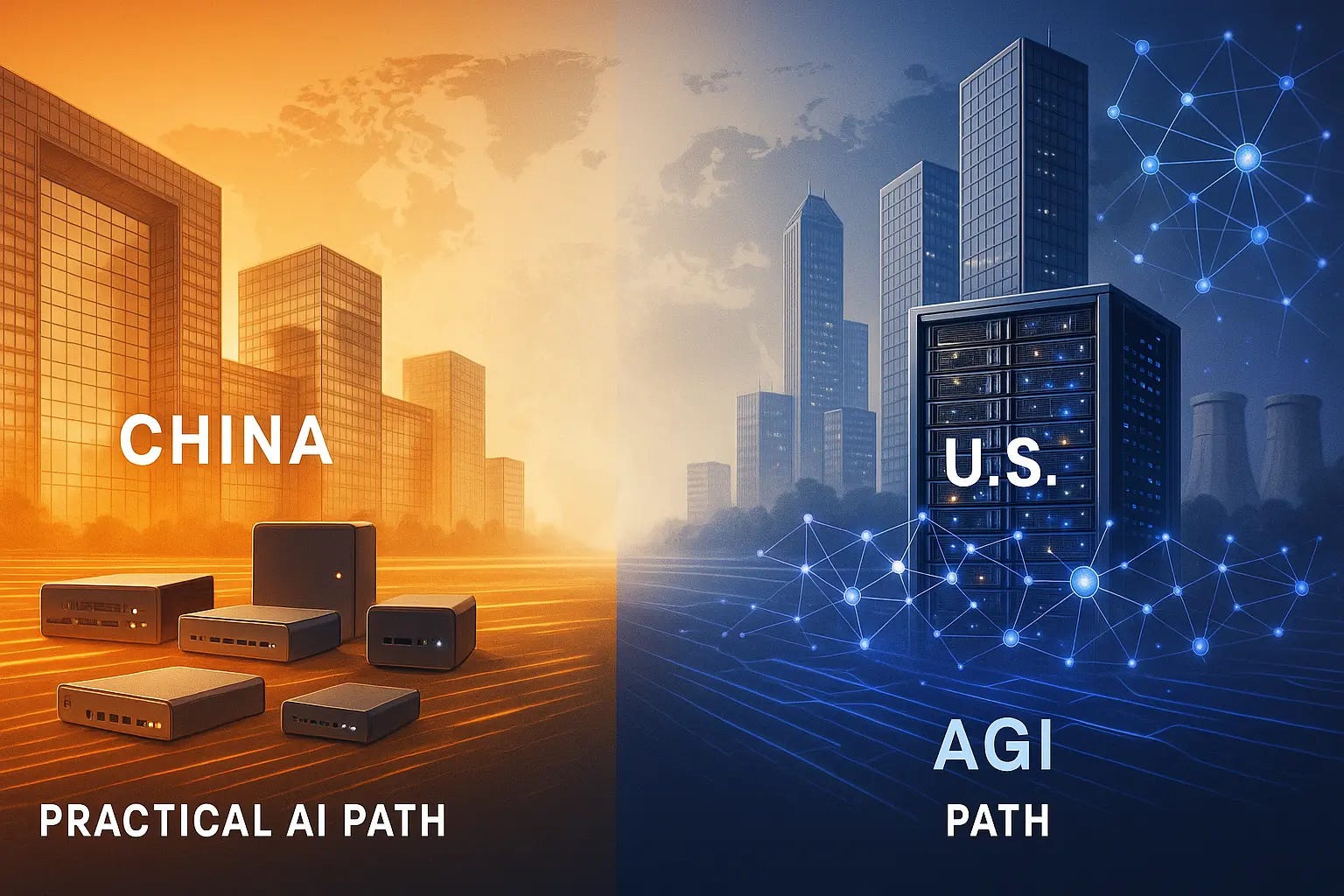
While American tech giants burn through hundreds of billions chasing artificial general intelligence, China is pursuing what might be called a “practical AI” strategy. The question isn’t which approach will win–both face significant uncertainties. Instead, it’s whether this divergence reveals fundamental differences in how the world’s two largest economies view AI’s commercial potential.
Two Capital Allocation Logics
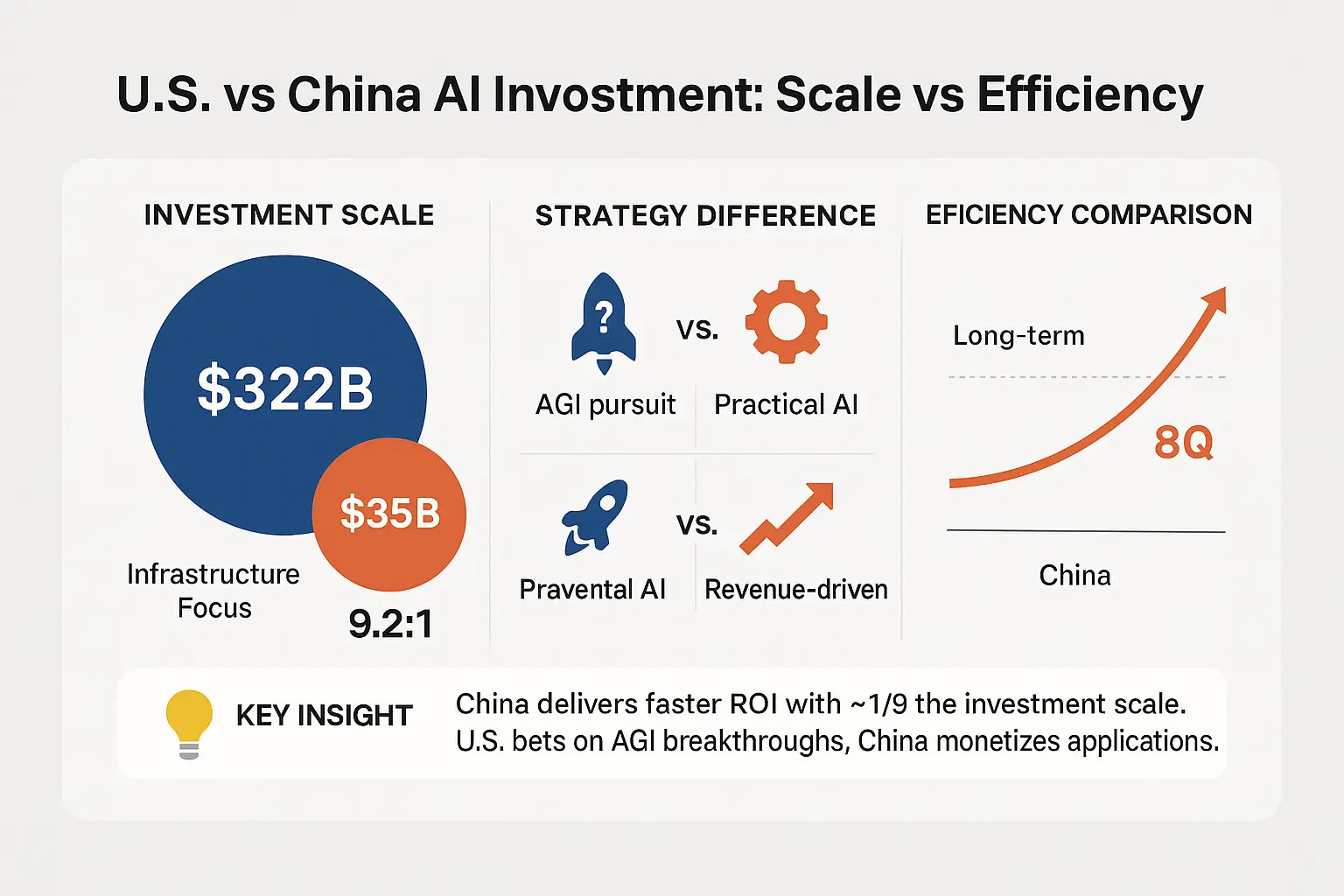
The numbers illustrate starkly different approaches to AI development. U.S. tech companies are expected to spend $280–$364 billion in 2025 on AI infrastructure, supporting what amounts to a speculative bet on future AGI returns. Chinese companies, constrained partly by semiconductor restrictions, are focusing on smaller language models that deliver immediate applications.
This divergence stems from both necessity and choice. Export controls on advanced chips have made it difficult for Chinese companies to compete directly with American giants in training the largest models. But recent financial results suggest Chinese companies may have found advantages in this constraint.
Alibaba Cloud reported triple-digit AI revenue growth for eight consecutive quarters. Tencent’s FinTech & Business Services segment–including cloud–recorded RMB 55.5 billion in Q2 2025 revenue, not RMB 555 billion as some misreports suggested (Tencent earnings). Combined capital expenditure by China’s major tech companies jumped 168% year-over-year to RMB 61.6 billion in Q2 2025 (Kechuang Daily), with immediate revenue returns rather than speculative investment.
The contrast with U.S. companies is notable. While American firms show impressive AI investment levels, Chinese companies appear to be achieving faster returns on invested capital through targeted applications.
The Unit Economics of “Right-Sized” Intelligence
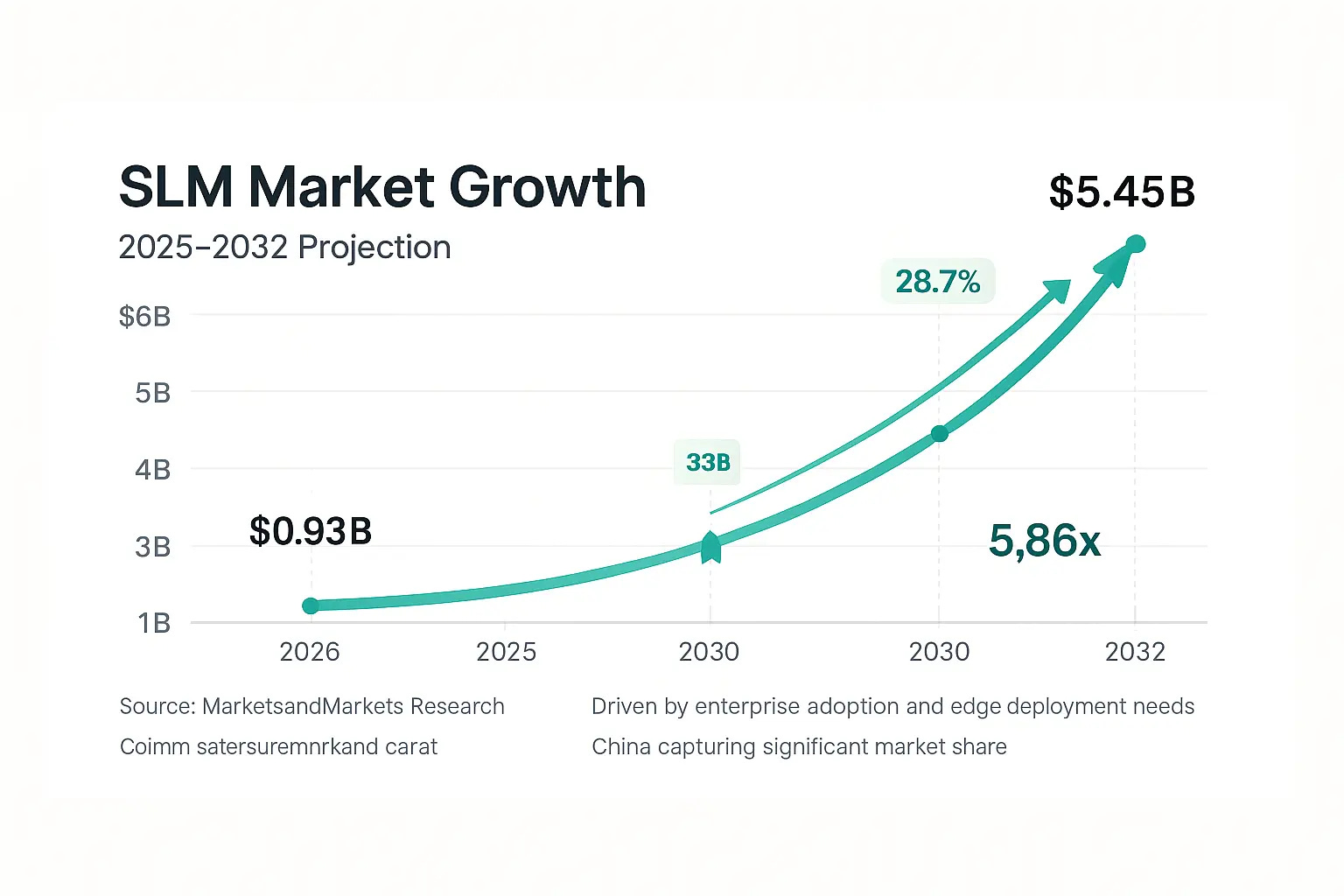
The small language model market, projected to grow from $0.93 billion in 2025 to $5.45 billion by 2032 (CAGR 28.7%), reflects demand for AI solutions that prioritize deployment efficiency over theoretical capabilities. Chinese companies are capturing disproportionate share through three factors: data sovereignty requirements favoring local deployment, cost sensitivity in manufacturing sectors, and infrastructure realities in smaller cities.
Consider the practical implications. A SaaS company executive described switching from cloud-based large models to a 4B parameter local model: “The large model performed well but had latency, cost, and data privacy issues. The smaller model deployed in hours, provided second-level response times, and protected privacy.” Similar stories are emerging across Chinese enterprises.
However, this approach has clear limitations. Small models lack the reasoning capabilities needed for complex, open-ended tasks. They require careful fine-tuning for specific use cases and may struggle with unusual requests outside their training scenarios. The question is whether these limitations matter more than the advantages in cost, speed, and privacy control.
Policy: From Slogan to Measurable Plans
Xi Jinping’s emphasis on technology being “applications-oriented” has translated into concrete policy support. The central government launched an $8.2 billion national AI investment fund in January 2025, specifically targeting practical applications over basic research. In August 2025, Beijing followed up with an official “AI+ Action Plan”requiring local governments to produce measurable implementation schemes.
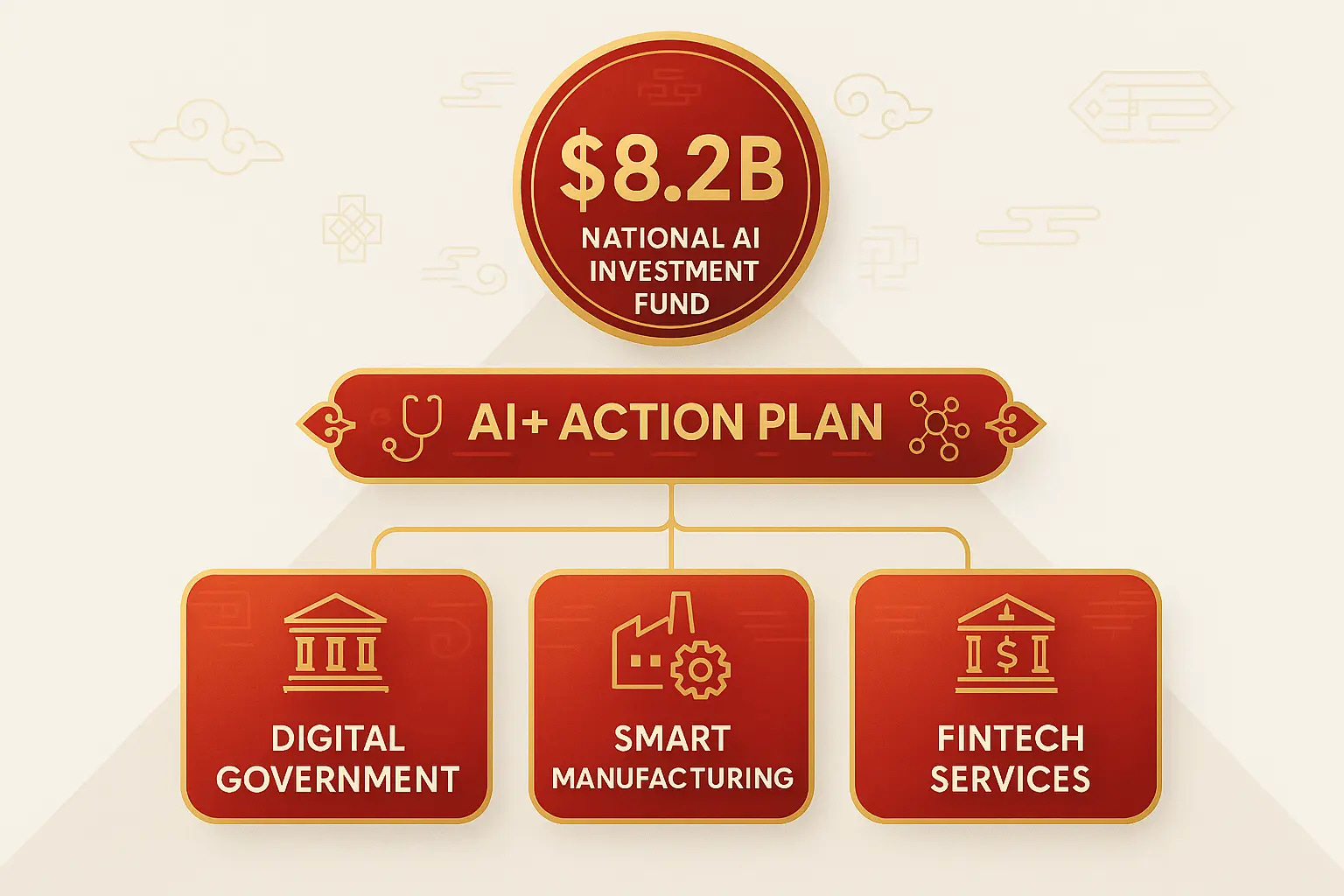
This policy framework creates advantages and risks. State backing accelerates deployment in government and state-owned enterprises, providing proof-of-concept opportunities that might not exist in purely market-driven systems. The “AI+” campaign mandates integration across sectors, creating demand that might otherwise develop more slowly.
Yet state direction also introduces constraints. Government priorities may not align with market opportunities. Emphasis on applications could come at the expense of fundamental research needed for longer-term competitiveness. The regulatory environment, while currently supportive, could shift if AI applications raise concerns about employment or social stability.
Next: Inside the technical playbook – from DeepSeek’s engineering shortcuts to Huawei’s chips, and what investors should really price in.
Innovation Under Constraints
Chinese companies have developed sophisticated approaches to maximize smaller models’ effectiveness. DeepSeek’s mixture-of-experts architecture activates only necessary neural network components for specific tasks, reducing computational requirements while maintaining accuracy. Its V2 paper reports a 42.5% reduction in training cost and 93.3% smaller KV cache, rather than the “70% compute cut” sometimes quoted. Other innovations include specialized inference frameworks optimized for edge deployment.
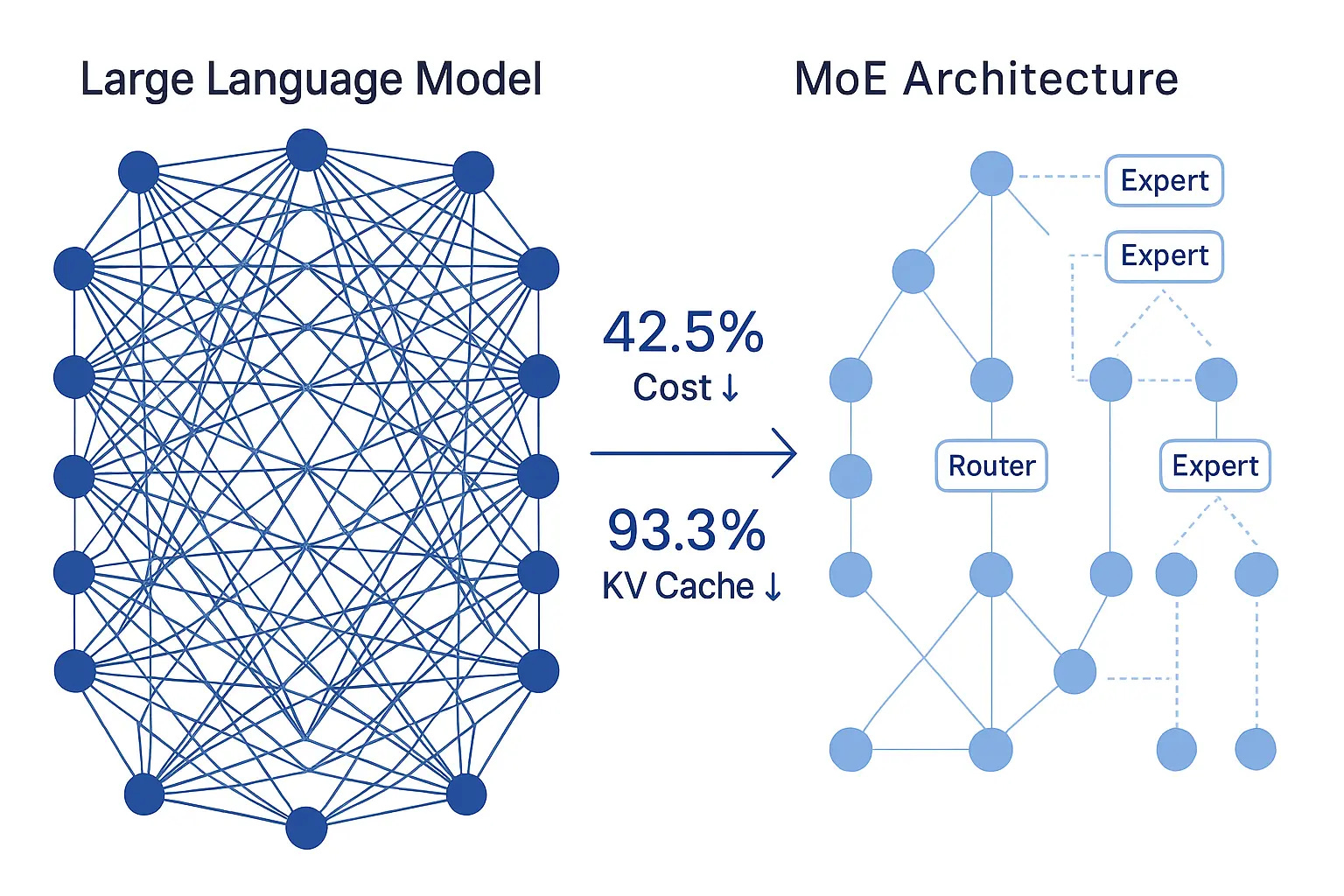
These technical advances address real problems, but they’re responses to constraints rather than fundamental breakthroughs. The patent landscape shows Chinese companies filing intellectual property in deployment architectures and compression algorithms–valuable for commercialization but potentially less significant than foundational model innovations occurring primarily in the U.S.
The talent allocation reflects this focus. While the narrative about Chinese AI “brain drain” may be overstated, it’s true that Chinese AI talent increasingly emphasizes implementation over theoretical research. This creates advantages in commercialization speed but potential disadvantages in foundational innovation.
Going Global, Staying Cost-Led
Chinese AI companies aren’t building only for domestic markets. Open-source models like DeepSeek R1 are gaining international adoption, creating network effects that could establish Chinese AI standards globally. In some benchmarked workloads, R1 has shown up to 95% lower cost than OpenAI’s o1, though such savings are scenario-specific rather than universal.
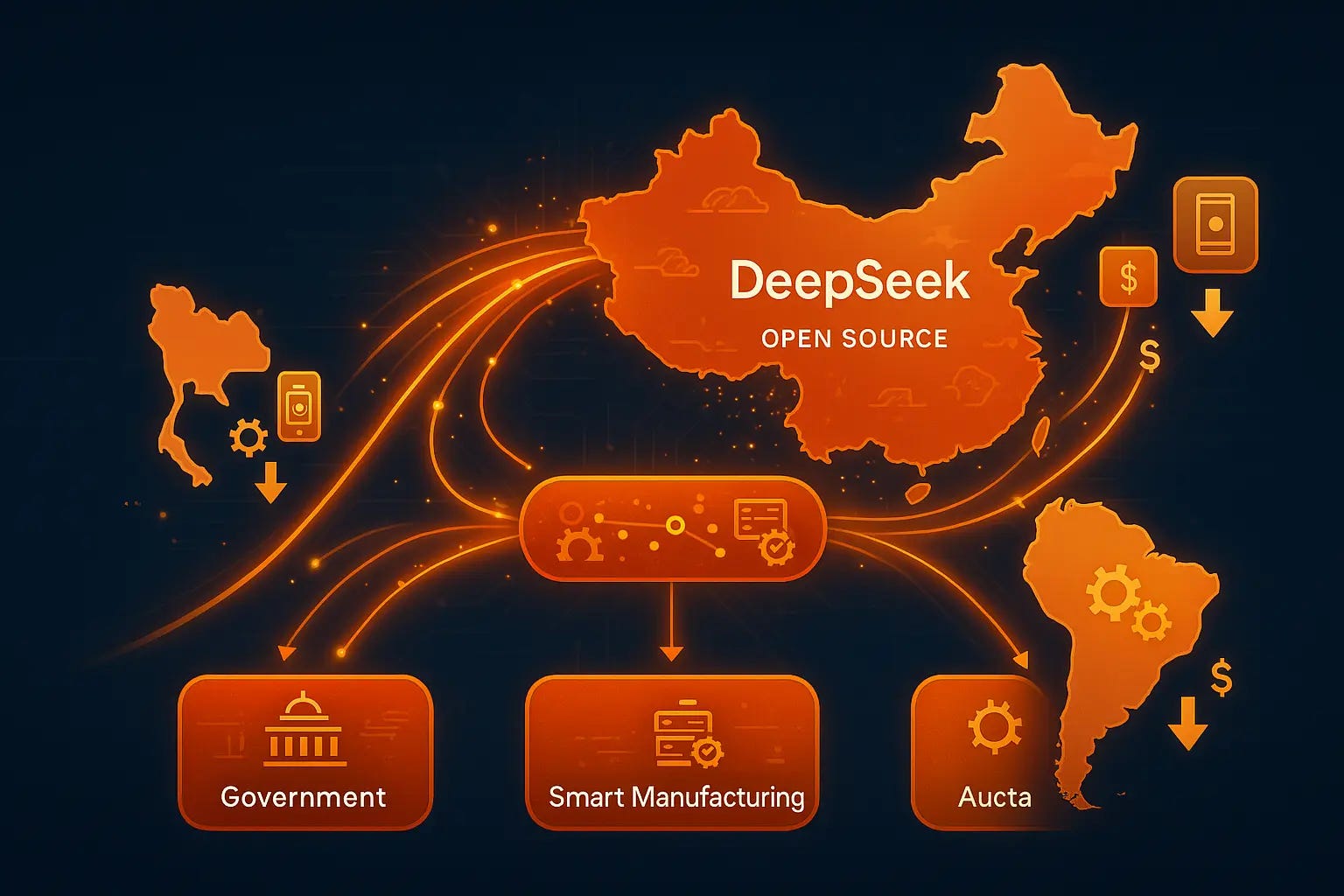
Yet global expansion faces significant challenges. Geopolitical tensions could limit market access in key regions. Technical support and integration capabilities may lag behind established Western providers. Quality perceptions could constrain adoption in premium market segments.
The supply chain situation illustrates both opportunities and vulnerabilities. U.S. semiconductor restrictions have accelerated indigenous chip development, with Huawei’s Ascend 910C reportedly delivering about 60% of NVIDIA H100 inference performance. This reduces dependence on foreign suppliers but may not fully close performance gaps, particularly for more demanding applications.
What Investors Should Underwrite
For international investors, China’s practical AI approach presents a complex picture. The bull case emphasizes immediate monetization, clear cost advantages, and government-backed adoption. Chinese companies demonstrate revenue visibility that contrasts with more speculative Western AI investments.
The bear case acknowledges significant risks. Technology ceilings could limit small models’ applicability to complex tasks. U.S. companies could pivot to practical applications, potentially eliminating Chinese advantages. Geopolitical constraints may limit global market access. Open-source strategies could accelerate commoditization, reducing differentiation opportunities.
Most likely, parallel development paths will create opportunities in different market segments. Chinese companies may establish leadership in cost-sensitive AI commercialization while U.S. companies continue pursuing breakthrough capabilities. The outcome will depend partly on whether practical AI applications prove more commercially valuable than theoretical advances.
This uncertainty is highlighted by the mixed reception of recent AI developments. OpenAI’s GPT-5 launch faced widespread criticism and user complaints, with CEO Sam Altman admitting the company “totally screwed up some things on the rollout.” This reception raises questions about whether the pursuit of more advanced models always translates to better user experiences.
A Bifurcated Future, Not a Single Winner
The most likely scenario isn’t a winner-take-all outcome, but rather a bifurcated global AI market. Chinese companies could dominate cost-sensitive enterprise applications, government services, and manufacturing automation–areas where efficiency and immediate deployment matter more than cutting-edge capabilities. American companies may maintain leadership in frontier research, complex reasoning tasks, and premium applications where performance justifies higher costs.
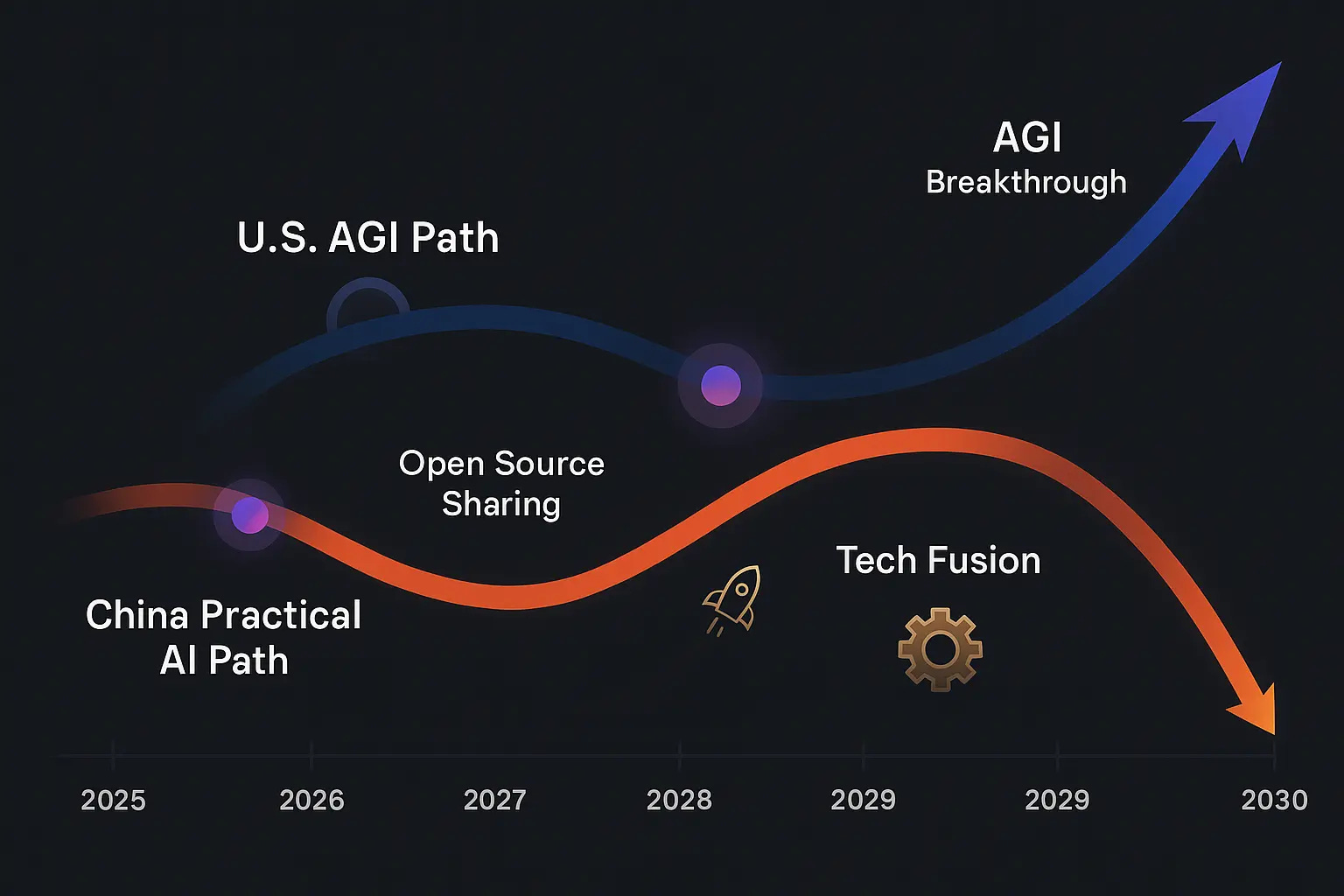
This division would create two distinct AI ecosystems with different technical standards, business models, and competitive dynamics. Enterprise customers might choose between Chinese solutions optimized for cost and deployment speed versus Western solutions offering advanced capabilities at premium prices.
The implications extend beyond commerce to geopolitical influence. If Chinese practical AI solutions prove more accessible to developing economies, China could establish technological standards across Belt and Road Initiative countries and cost-conscious markets globally. Conversely, if AGI breakthroughs prove transformative, American leadership in foundational research could maintain technological superiority despite Chinese deployment advantages.
For now, China’s practical AI bet represents a calculated response to constraints that may have revealed a more sustainable path to AI monetization. Whether this approach proves superior in the long term remains an open question that will reshape global technology competition for the next decade.
Further Reading
For a broader, policy-driven perspective on how Beijing is orchestrating large-scale AI deployments across state-owned enterprises, see While the West Builds Chatbots, China Is Building an AI-Powered State, — a free piece that unpacks China’s state-led adoption playbook.