


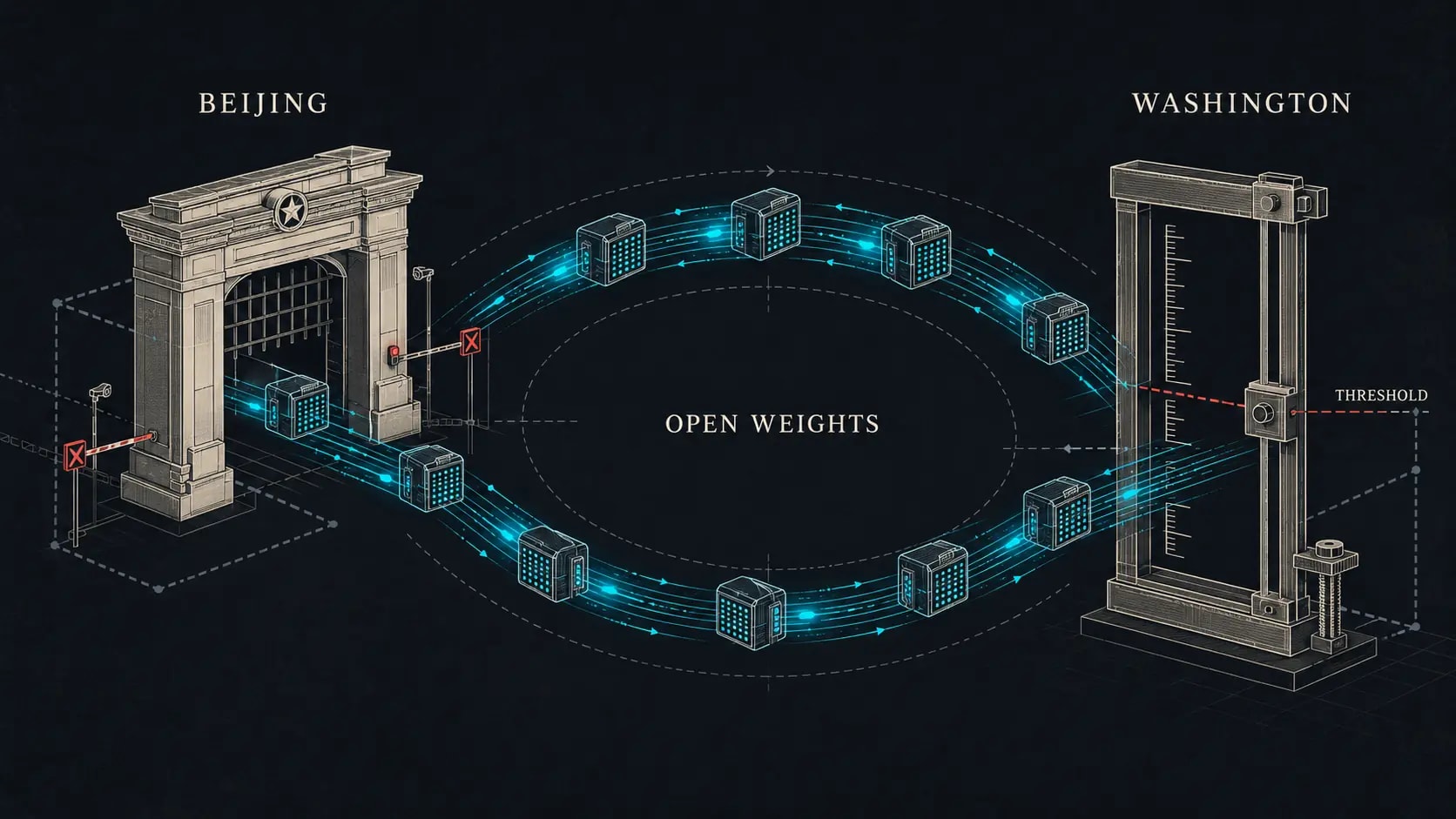
Beijing and Washington are independently considering controls on AI model access, each shaped by the other side’s capabilities.
Reuters reported that Chinese authorities had discussed potentially restricting overseas access to China’s most advanced AI models. The meetings, led by the Ministry of Commerce with National Development and Reform Commission officials present, included Alibaba, the Chinese cloud and e-commerce group, ByteDance, the parent company of TikTok, and Z.ai, the Hong Kong-listed AI company formerly known as Zhipu. The discussions covered both closed-source and open-weight models, including those not yet released. Officials raised the possibility of making any leak or theft of proprietary AI technology an offense under China’s national security law. The scope remains unsettled; Reuters reported it could not determine when, or whether, the restrictions would take effect.
Separately, The Washington Post reported that the Trump administration and AI industry groups had been discussing a capability framework for US-made models, covering both open-source and closed licensed systems, benchmarked against the capabilities of leading Chinese open-source models. Under this proposal, American models at or below that benchmark would face a streamlined path to market.
Last week, this newsletter documented the developer tool stack split between Alibaba and Anthropic at the enterprise level. The new proposals involve the state.
Why Beijing Is Considering Controls
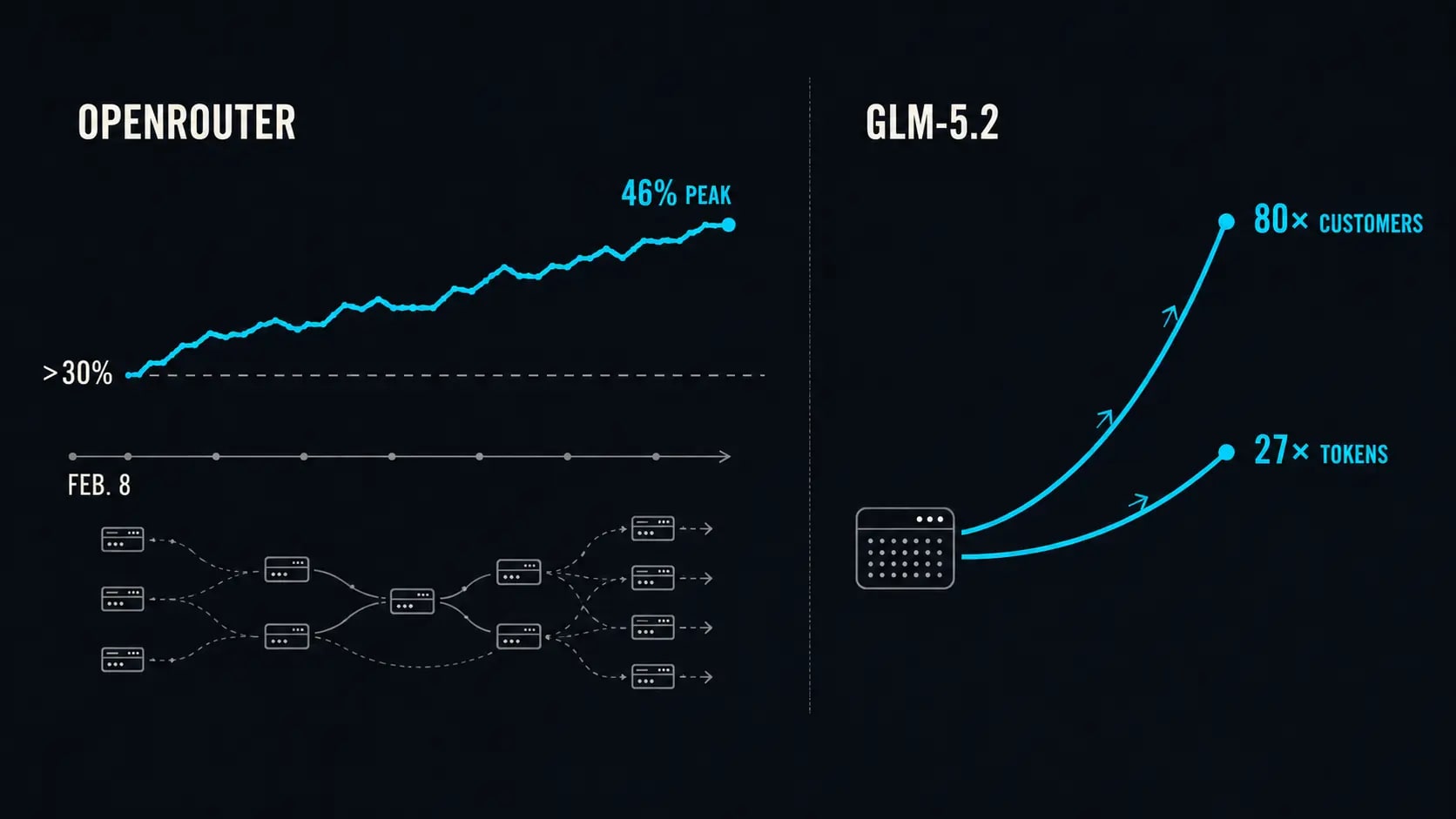
A visible catalyst is adoption speed. Chinese AI models have moved from cost-competitive alternatives to production infrastructure in months. Among US companies using OpenRouter, a developer API routing platform, Chinese models have accounted for more than 30% of weekly token volume since Feb. 8, peaking at 46%. Z.ai’s GLM-5.2, released in June, recorded the fastest initial uptake of any model on Vercel’s platform in 2026: daily token volume grew roughly 27 times and customer count rose about 80-fold within the first full week. At that scale, foreign developers are building business logic on top of Chinese models. That helps explain why overseas adoption has become a policy concern.
The discussions point toward a possible reclassification: AI models treated less as commercial products and more as strategic assets. Two catalysts appear to have accelerated the shift.
The first is defensive. Reuters reported that Chinese officials are deeply worried about Anthropic’s Mythos, a model designed for cybersecurity professionals whose access remains limited to select US organizations. Zhou Hongyi, founder of 360, a major cybersecurity vendor to Chinese government and enterprise clients, has publicly called for a Chinese equivalent. If Washington restricts its most capable models on security grounds, the logic extends naturally: Beijing should do the same.
The second is preventive. This year, the National Development and Reform Commission, China’s state planning agency, ordered Meta to unwind its $2 billion acquisition of Chinese-founded AI startup Manus. Chinese authorities then issued new rules tightening control over overseas deals involving Chinese technology and data. Reuters also reported that Chinese authorities had launched investigations into Manus and other AI startups that relocated abroad. Officials involved in the recent meetings also raised the possibility of restricting who can fund domestic AI startups. Each measure tightens the boundary between Chinese AI and foreign capital.
The resulting policy direction is visible even if the details are not. The overseas adoption that validates Chinese AI as commercially competitive is the same signal that triggers Beijing’s security response. The impulse to restrict appears driven by an uncomfortable form of strength: models good enough, and cheap enough, that foreign developers are building on them at scale.
Beijing’s concerns are intelligible. But the models it is considering restricting are the same ones Washington is weighing as its own regulatory baseline. When a rival government uses your models to calibrate its release rules, restricting those models carries implications well beyond trade controls.
How that circular logic works in practice, and where enforcement moves when model weights cannot be recalled, reveals a structural problem at the center of AI governance.
This piece extends a pattern this newsletter has tracked at every layer of the US-China AI contest: controls meant to slow one side keep reshaping the terms for both. If that lens on China’s AI, chip, robotics, and EV sectors is useful, subscribe free and get every new analysis as it publishes.