


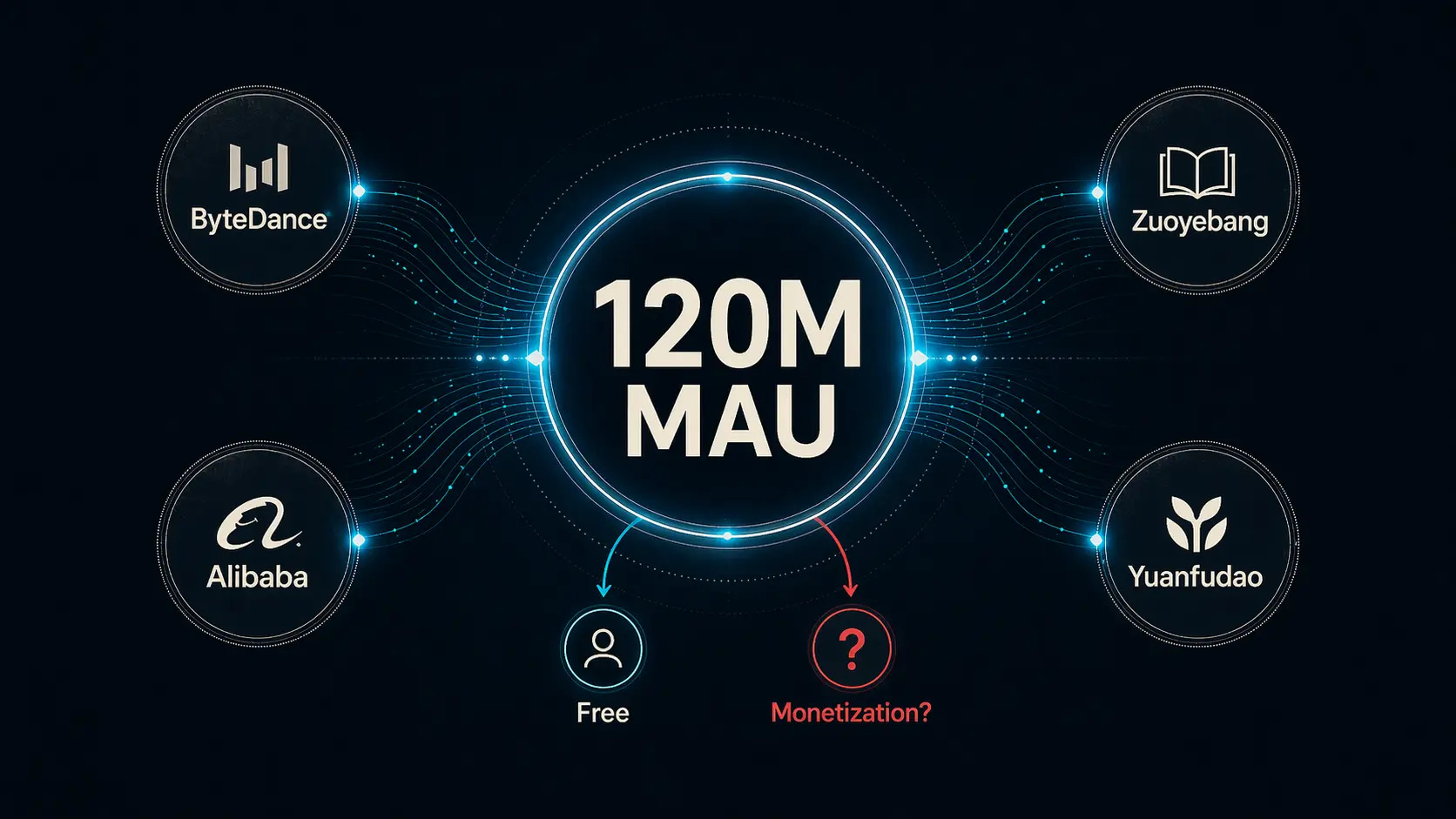
In mid-January 2026, ByteDance promoted its AI study feature, Doubao Aixue (豆包爱学), to a core entry point inside one of China’s most popular chatbot apps. Almost simultaneously, Alibaba’s Qwen chatbot added a function that lets students search and download exam papers from top schools across the country. Within days of each other, two of China’s largest tech companies signaled that Chinese students’ after-school hours were once again worth competing for.
Mobile analytics data from late 2025 shows AI education apps in China crossing 120 million monthly active users, a 340% jump year over year. That number makes AI-powered learning one of the fastest-growing consumer app categories in the country. And the companies flooding in carry very different product logic, cost structures, and paths to monetization. Understanding who wins requires understanding what each side brings to the table.
Two Product Architectures, One Unsolved Problem
The companies racing into this space carry different DNA, and that DNA shapes what their products can and cannot do.
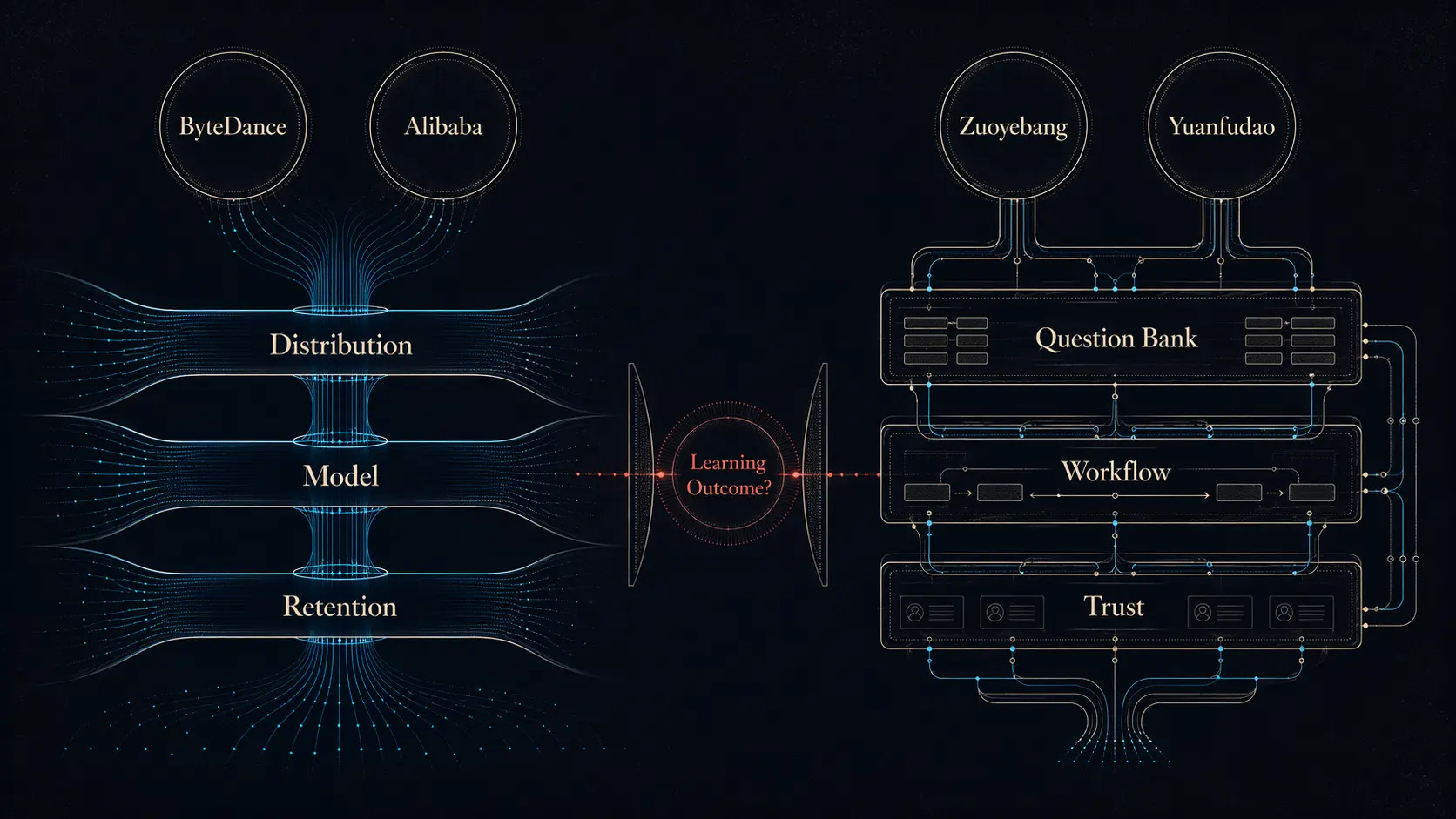
ByteDance and Alibaba entered through their existing chatbot apps. Doubao Aixue and Qwen Zhixue (千问智学) are AI conversation interfaces with an education tab bolted on. A student types or speaks a question; the underlying large language model reasons through it in real time. ByteDance’s version uses voice interaction that mimics a phone call with a patient tutor. The advantage is distribution: neither company needs to acquire education users from scratch. They already sit inside products with enormous reach.
Zuoyebang (作业帮, one of China’s largest homework-help platforms) and Yuanfudao (猿辅导, a former tutoring company that pivoted to AI) started from the opposite end. Their apps are built around structured learning workflows: scan a math problem, match it against a proprietary question bank curated by human teachers, then layer AI explanation on top. Yuanfudao’s version simulates a one-on-one lesson with a virtual blackboard and interactive pauses. Here, AI sits on top of an existing curriculum architecture rather than replacing it.
The gap between these two approaches shows up in a specific place: what happens when the model gets the answer wrong. For a general-purpose LLM, a hallucinated math solution is a known failure mode with no backstop. For an app built on a verified question bank with decade-old pedagogical scaffolding, the structured content layer offers at least a partial guardrail. In an industry where a single wrong answer can erode parental trust, that structural difference matters.
Yet neither camp has found a way to charge for what it offers. The flagship products competing for users today still offer core AI features for free, with some labeling the access as “limited time.” The tech giants subsidize education as a means of driving engagement across their platforms. The education companies absorb the cost to retain users they fear losing to those platforms. For now, monetization is a problem both camps are willing to postpone.
The traffic-first camp treats education as a retention feature. The content-first camp treats it as a product line. Which model monetizes first will likely depend on which side can demonstrate measurable learning outcomes to paying parents.
Why the Demand Is Structural
The user growth is not accidental. China’s household education spending is structurally inelastic. A 2023 Stanford study found that families spend an average of 17.1% of household income on education. Among the poorest quartile, that figure reaches 56.8%. Education spending in China functions as a necessity across income levels, not a discretionary expense.
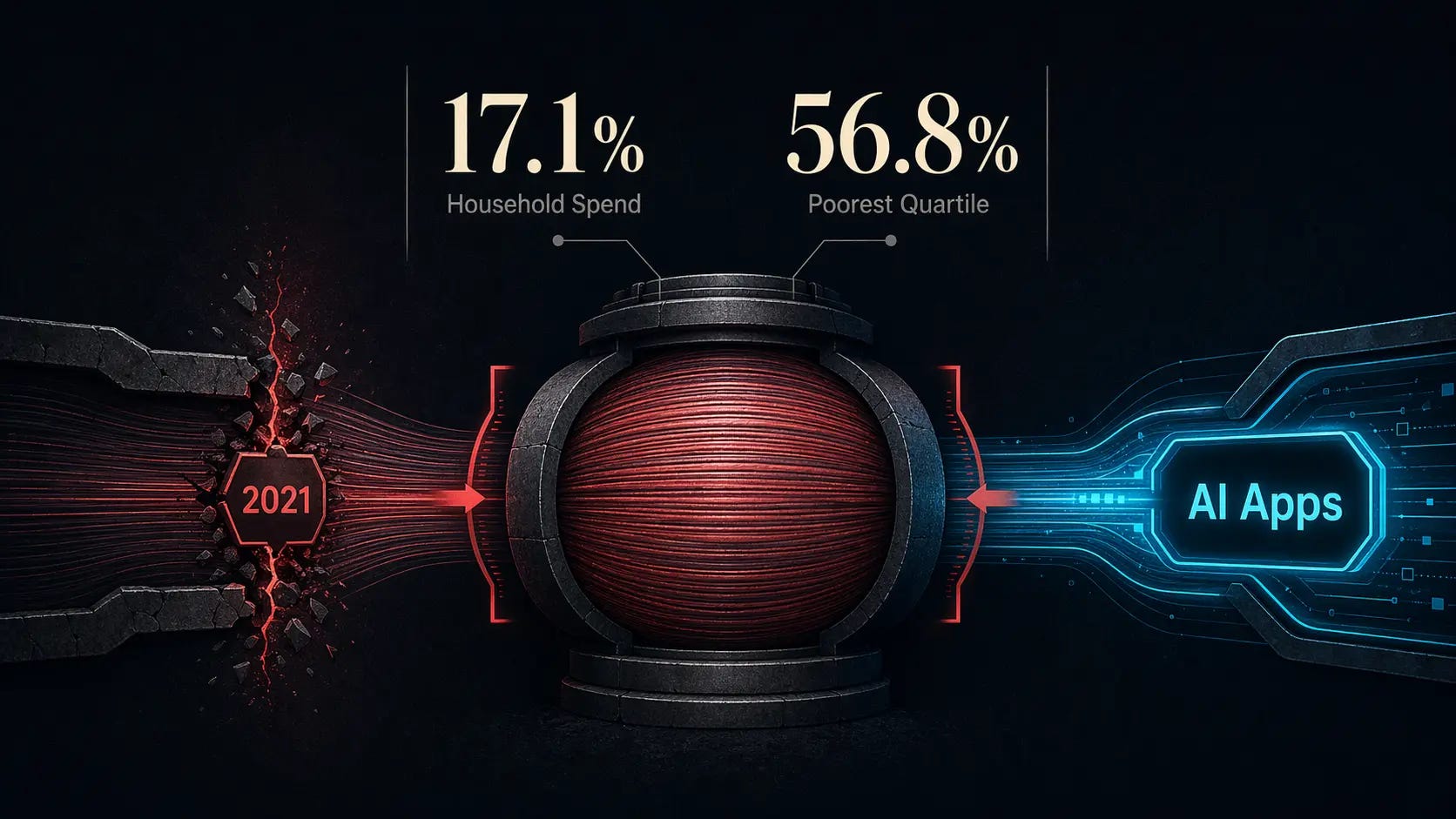
The 2021 regulatory reset of the for-profit tutoring sector removed the most visible commercial layer serving that demand. For 4 years, supplementary learning lacked a scalable delivery mechanism. Large language models provided one. AI study tools do not employ human teachers. They do not operate physical classrooms. They sit inside apps that families already use. And because they deliver supplementary learning through software rather than human instruction, they occupy a different product category from the classroom tutoring businesses that were restructured in 2021.
What both platform giants and education incumbents have already accomplished is a structural fact: supplementary learning is back inside the daily routines of Chinese families, delivered through mobile apps at near-zero marginal cost. The platform companies compete for traffic and engagement. The education companies compete on content depth and parental trust. Together, they have rebuilt the delivery layer for after-school learning in a new form.
Beijing Moves to Shape the Market
Beijing is not standing aside. On April 10, 2026, the Ministry of Education released a five-ministry AI+Education Action Plan (人工智能+教育行动计划) extending through 2030. It calls for AI literacy courses at every educational level, mandates the development of “intelligent learning companions” (智能学伴) for students, and envisions centralized data systems for student performance and resource allocation. It is the clearest national framework yet for AI’s role in education.
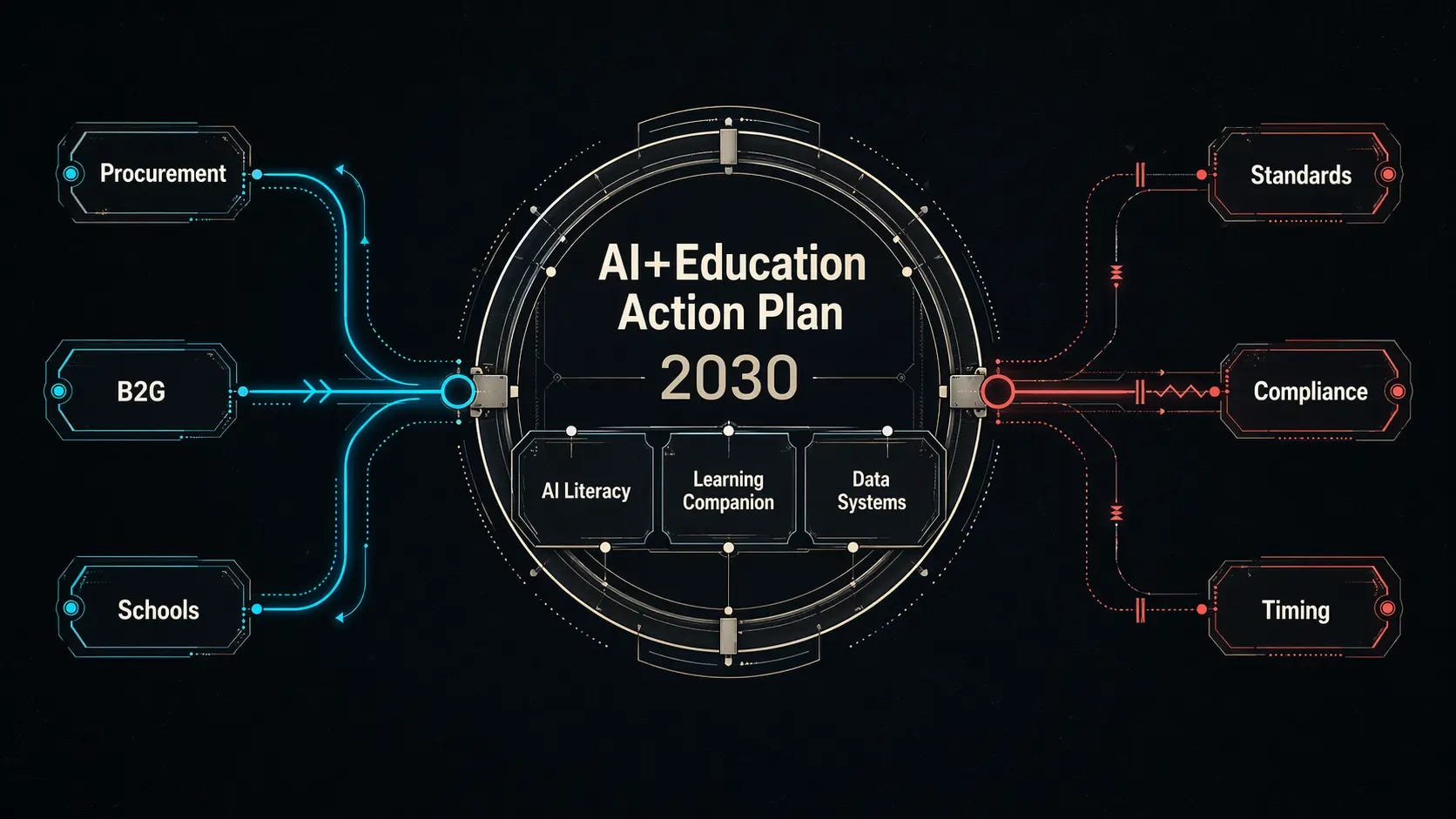
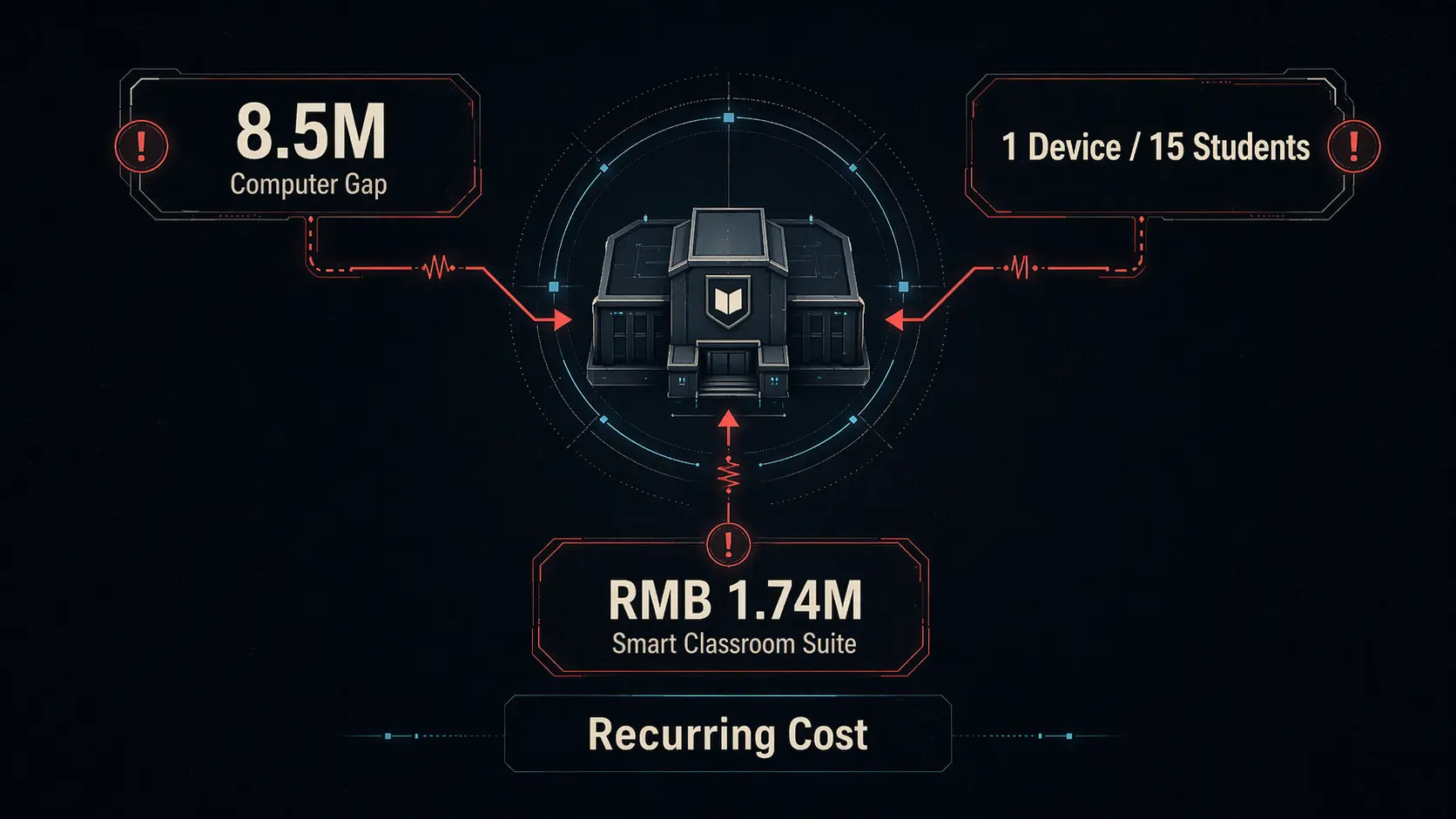
For companies in this space, the plan creates both opportunity and uncertainty. On the opportunity side, it opens a government procurement channel for AI teaching tools. On the uncertainty side, it introduces compliance and standards requirements that have not yet been specified. The plan is heavy on infrastructure ambition: compute platforms, model infrastructure, pilot bases, and future classrooms. What it leaves less defined is who absorbs the recurring cost of adoption inside individual schools: devices, software, maintenance, training, and subscriptions.
That matters because Chinese education policy has long faced a familiar implementation risk, one that officials themselves describe as “emphasizing construction while neglecting application” (重建设、轻应用). A 2024 review found a shortfall of 8.5 million computers against the government’s own baseline of 1 device per 15 students. Commercial classroom AI systems add another layer of cost: a 2022 procurement record shows iFlytek (科大讯飞), one of China’s largest education technology providers, charging a single school roughly Rmb 1.74 million for its smart-classroom software suite.
For AI education startups and platform companies alike, the B2G (business-to-government) channel carries real revenue potential. The question is timeline and predictability. Until the Action Plan’s standards and procurement rules take concrete shape, the near-term paying market remains concentrated in urban households that already have devices and the willingness to pay.
What to Watch
The products competing for students today optimize for one thing above all: how quickly they can deliver an answer. Speed is the selling point. Every major AI tutoring app now offers instant step-by-step solutions. Few offer a reason to pause and think before requesting one. Whether that trade-off matters for learning outcomes is an open pedagogical question. Whether it matters for monetization is a more immediate business question: parents will pay for tools that visibly improve test scores. The link between AI-assisted homework and exam performance has not yet been demonstrated at scale.
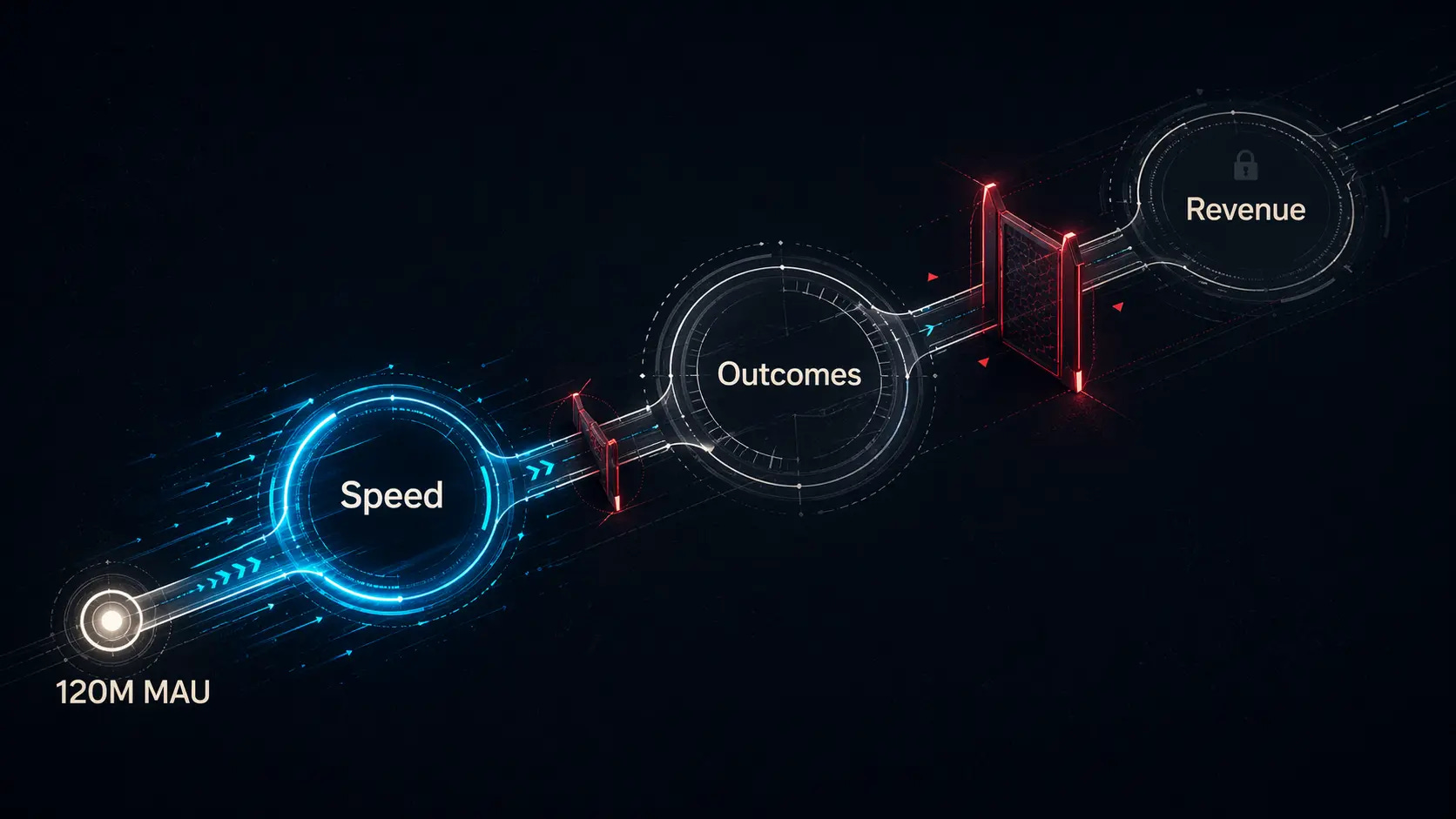
More than 120 million monthly active users are already using AI education apps. The companies serving them have yet to find a sustainable business model. The next phase of competition will not be about who acquires users fastest. It will be about who converts free usage into revenue before the subsidy window closes.
User growth is already here. Whether AI changes learning outcomes, or simply speeds up the race, is a much harder question.