

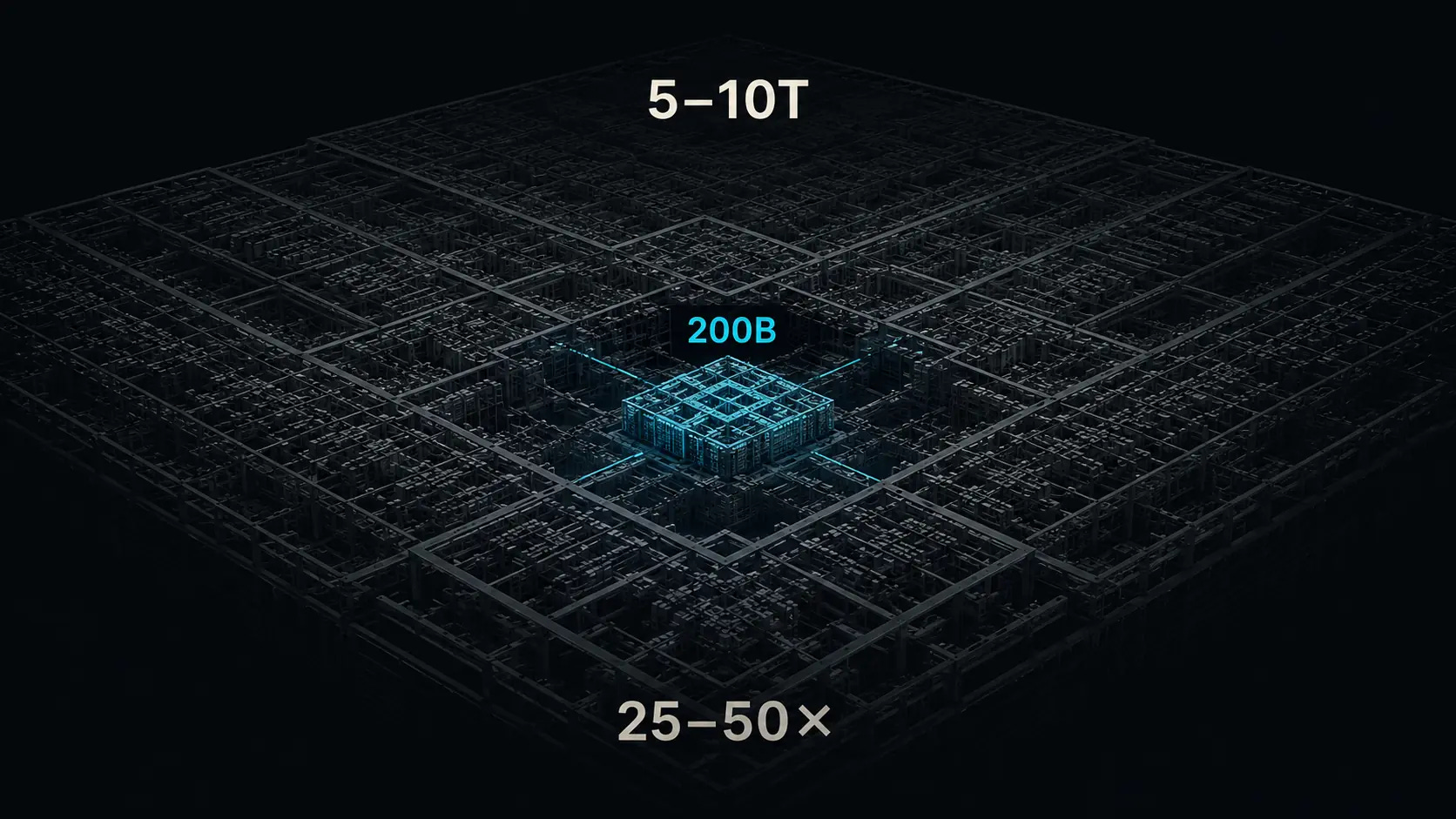
Two reports, published a day apart in August 2026, described the same project in different terms. LatePost, one of China’s most authoritative tech publications, reported on August 6 that ByteDance, TikTok’s parent company, was discussing a model exceeding 5 trillion parameters, still at an early stage and not necessarily destined for release. The Financial Times reported the following day that 3 people familiar with the effort described a model of up to 10 trillion parameters in early-stage training. One of them said pre-training had begun; the final scale remained undecided.
The reports diverge on the numbers. Both point to the same organizational commitment: ByteDance is concentrating talent, data, and compute behind a single long-duration technical bet.
In late July, ByteDance founder Zhang Yiming made a rare appearance at a Seed team all-hands alongside Seed chief Wu Yonghui. He told the team to accept falling behind competitors for a period and to push toward the frontier of model capability rather than benchmark positions. He also instructed them to stop relying on distillation of rival models. CEO Liang Rubo reinforced the message at a company-wide all-hands on August 6, calling AI the long-term strategic priority and noting that more than 90% of new clients for Feishu, ByteDance’s collaboration suite known internationally as Lark, had purchased AI products.
ByteDance built its empire on a specific operating system: launch parallel products, compare measurable outcomes, and concentrate resources once one route pulls ahead. The 5-to-10-trillion-parameter project retains one half of that formula, the belief that overwhelming scale can force a breakthrough, while discarding the other, internal competition among parallel teams. The question is whether concentration without the safety net of parallel bets can survive a project this large.
The Operating System That Built ByteDance
ByteDance’s founding myth is a scaling story. According to LatePost, the company launched 13 apps in its early years. Neihan Duanzi, a humor platform, and Jinri Toutiao, a news aggregator powered by algorithmic recommendation, emerged as its first large-audience successes.
The 2016 short-video push refined the template. Zhang Yiming told employees in a 2019 anniversary speech that ByteDance had decided not just to enter short video but to build two products, simultaneously pursuing domestic growth, international expansion, and acquisitions. Three products launched within months: Xigua Video, Huoshan, and Douyin, TikTok’s Chinese twin. Early user data favored Huoshan. Longer-term retention favored Douyin. Resources shifted accordingly.
The system had four components. Ship fast. Measure in days, not quarters. When data converges, consolidate. When it does not, cut. Dual-month OKR cycles forced teams to show progress within 60 days. Zhang Yiming described the approach in that same speech: “Looking back, many of our methods weren’t good at the start, but we were very dedicated, very focused. Sheer effort can work miracles.”
Where those conditions held, the method scaled. Where they did not, it produced expensive failures. ByteDance invested in or acquired more than 20 gaming companies through its gaming arm, with estimated spending of roughly Rmb 30bn. Management later acknowledged the strategy had been “big but not focused.” In March 2026, ByteDance sold Moonton, the Southeast Asian studio behind Mobile Legends, to Saudi Arabia’s Savvy Games Group at a valuation exceeding $6bn, according to Reuters. The sale ended an unsuccessful gaming strategy, though Moonton itself had appreciated from its roughly $4bn acquisition price. Its tutoring division, Dali Education, grew to over 10,000 employees by 2020, spanning K-12, early childhood, and adult learning. China’s tutoring crackdown in July 2021 forced closures, though the pattern of rewarding short-cycle metrics over long-cycle quality was visible before regulation intervened. Wukong Q&A, a Quora-style platform with an estimated Rmb 2bn in subsidies according to PE Daily (投中网), a Chinese venture-capital media outlet, shut down in January 2021.
The pattern is consistent. The operating system works when products ship quickly, feedback is quantifiable, and failed teams can be redeployed cheaply. Consumer apps met all three. Education, gaming, and community products required longer development cycles, harder-to-measure quality, and domain expertise that resists reallocation.
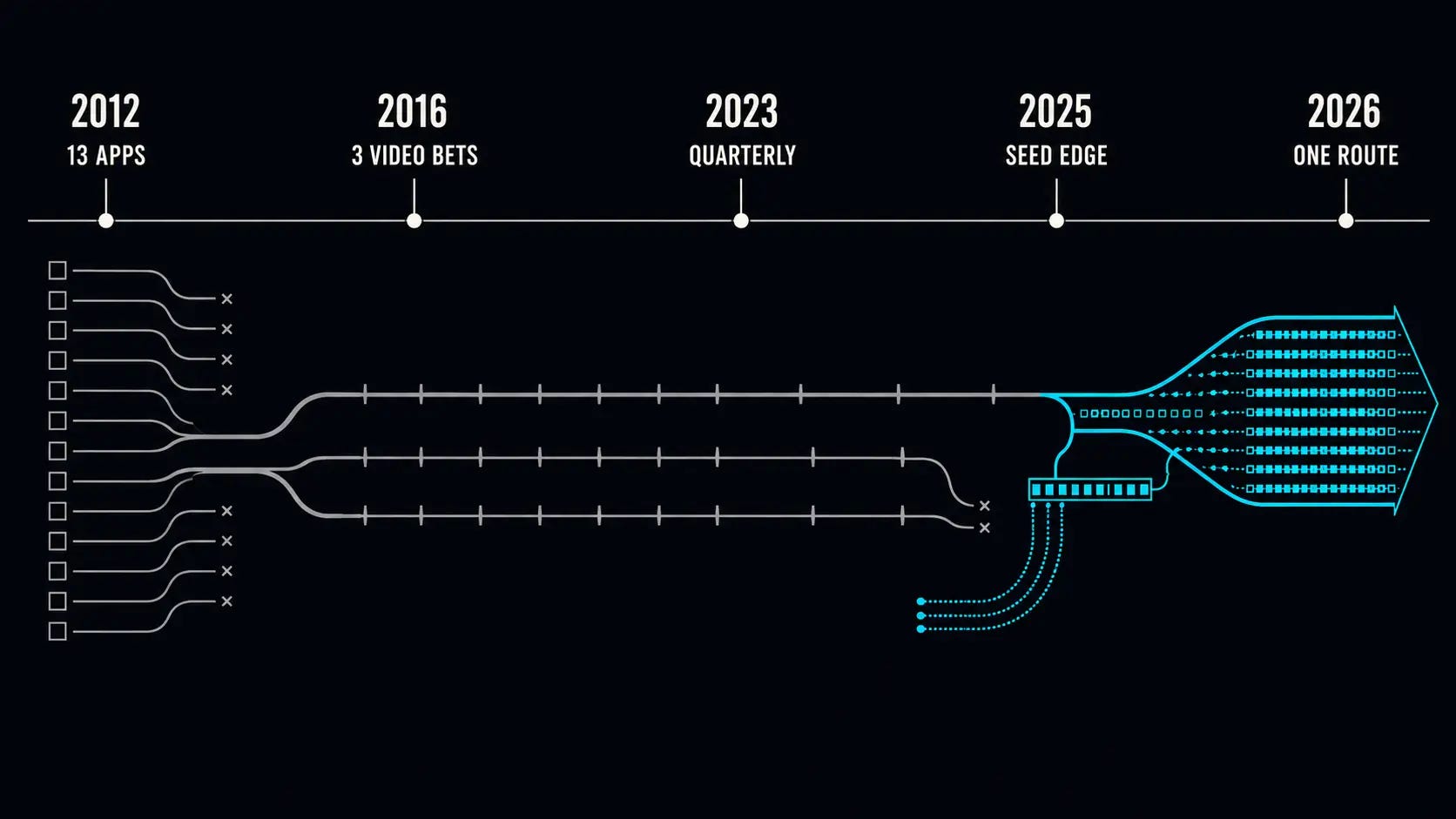
The question has always been which side of that boundary AI falls on. ByteDance’s consumer AI assistant, Doubao, sits comfortably inside it: 382 million monthly active users as of June 2026, according to QuestMobile, a Chinese mobile analytics firm, leading the country’s AI apps by a wide margin. Training a frontier model sits firmly outside. One run can consume months, cost several hundred million dollars, and offer limited intermediate signals to steer by. The feedback loop is as long as anything ByteDance has attempted.
The Seedance comparison grows less reassuring once model state, cluster architecture, and training data enter the calculation. Those are the three areas where ByteDance’s video-model advantage offers the least protection.
If the organizational history behind ByteDance’s AI research, from internal horse racing to concentrated bets, is new to you, this is a preview of what Hello China Tech does three times a week: reading China’s AI, chip, robotics, and EV sectors from primary sources most English coverage never touches. Subscribe free to get every new analysis as it publishes.
