

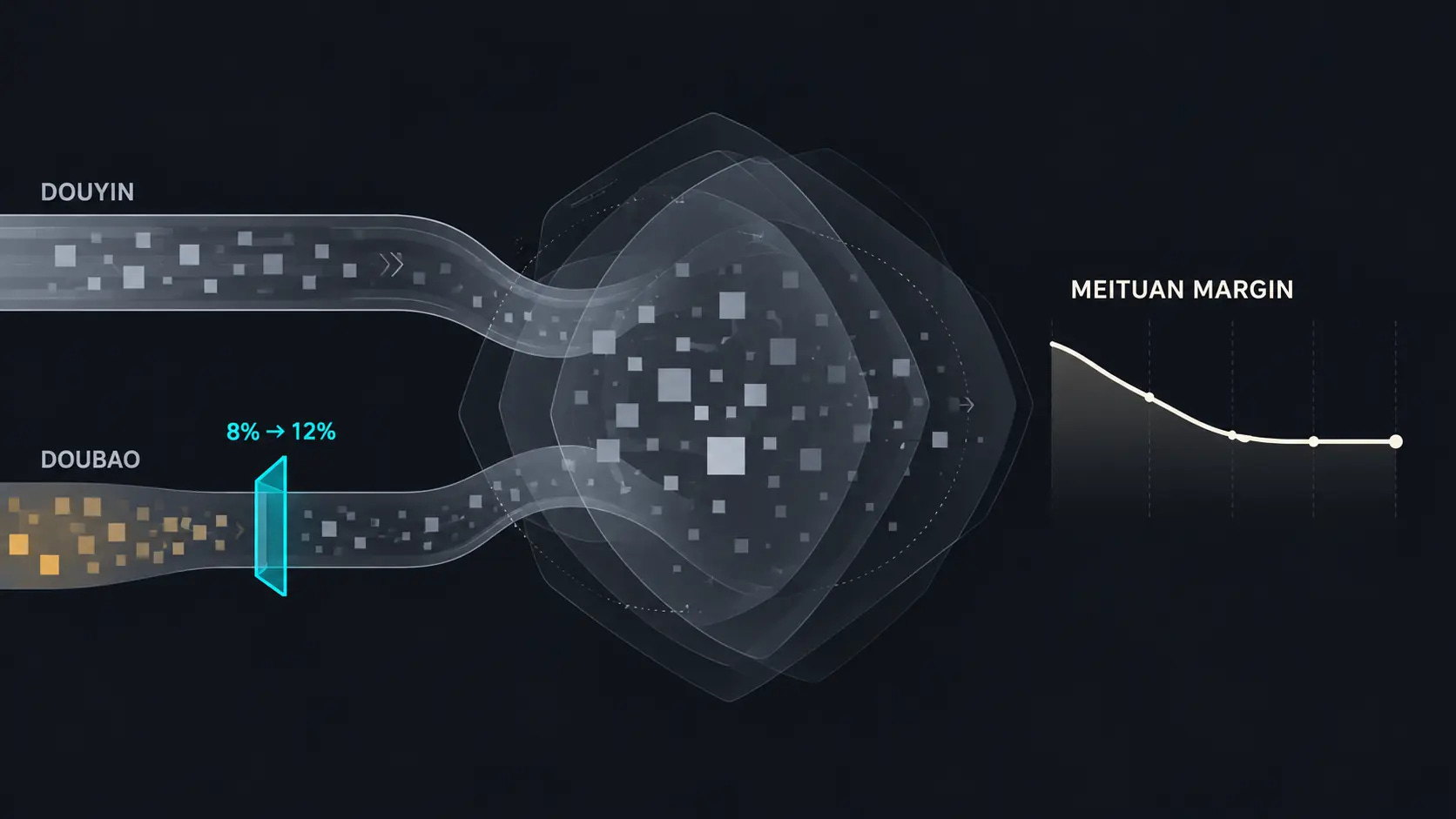
Two pricing moves in four weeks redrew the economics of China’s in-store services war.
On July 15, ByteDance’s standalone group-buying app Dou Sheng Sheng (roughly “Douyin Saver”) reportedly raised its commission rates. The increase was 2 to 5 percentage points above those on Douyin’s main app, according to Huatai Securities, a Chinese brokerage. The same month, Douyin (TikTok’s Chinese twin) reportedly ended strong promotional referrals from its main app to the standalone product, according to the same Huatai note. Then on August 10, Doubao (ByteDance’s AI assistant) began applying an all-in fee of about 12 per cent to hotel bookings routed through it: 11.4 per cent in software service fees and 0.6 per cent in payment processing. Yicai, one of China’s leading financial news outlets, cited ByteDance’s official disclosure.
The 12 per cent sits above the 8 per cent hotel rateon Douyin’s public fee schedule, which took effect in July 2024. Actual merchant rates in 2026 may differ. In hotels, the category with the clearest comparative data, ByteDance now charges fees that overlap with the 8 to 12 per cent range merchants have reported paying Meituan.
ByteDance remains in the field, now imposing greater pricing discipline. That matters for anyone tracking Meituan’s in-store profit margin. ByteDance’s pricing decisions may increasingly influence that margin alongside Meituan’s own operating performance.
If the gap between Douyin’s pre-redemption GTV and its actual completed transactions is new to you, this is a preview of what Hello China Tech does three times a week: reading China’s AI, chip, robotics, and EV sectors from primary sources most English coverage never touches. Subscribe free to get every new analysis as it publishes.
What Meituan Told Its Shareholders
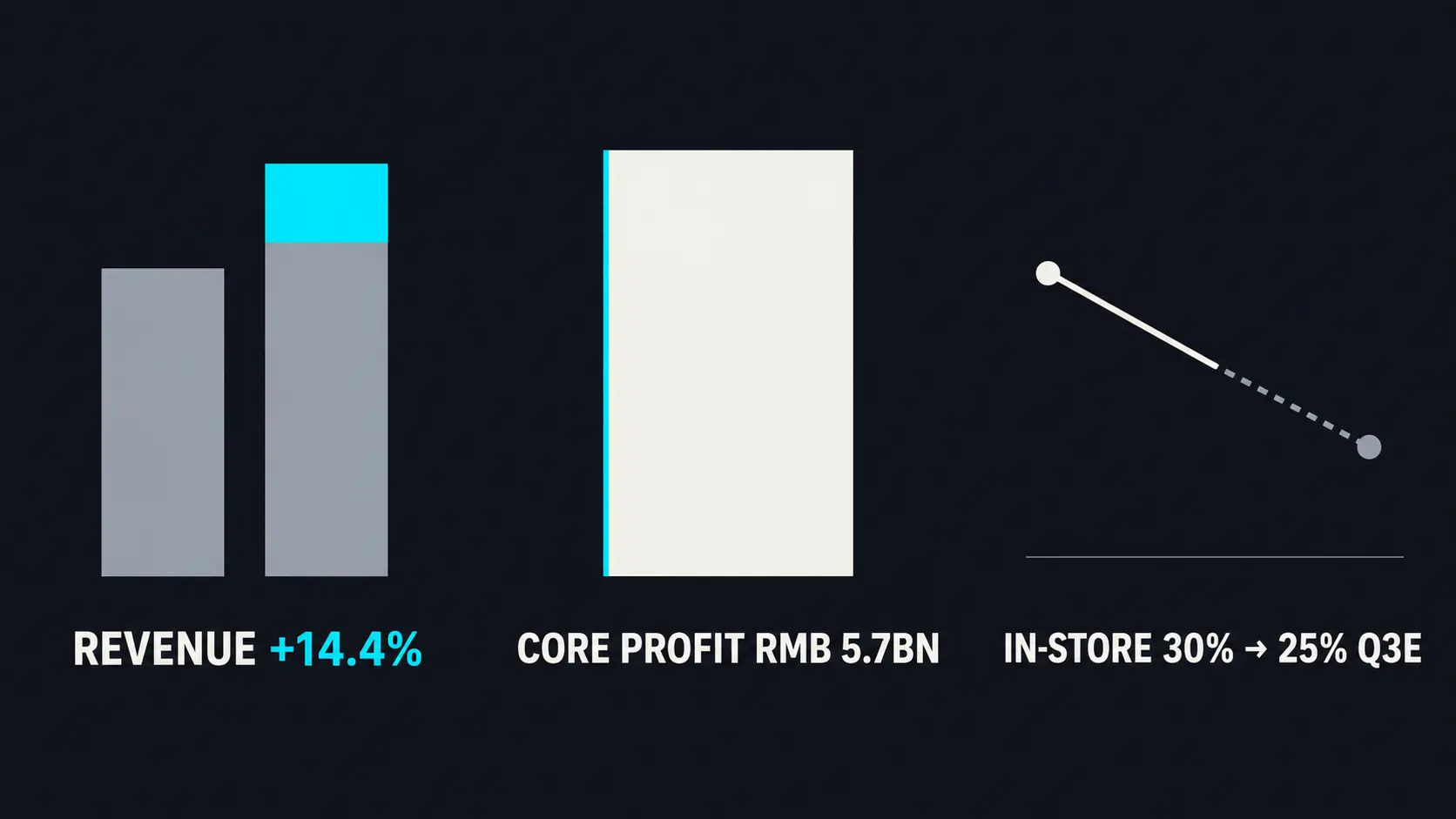
Meituan reported Q2 2026 results on August 28. Total revenue rose 14.4 per cent to Rmb 104.6bn. Core local commerce posted Rmb 5.7bn in operating profit at a 7.9 per cent margin, a return to the black driven largely by food delivery unit economics turning positive.
The in-store business received a narrower update. On the earnings call, management acknowledged a competitor that had launched “a dedicated shelf-based app,” backed by heavy subsidies to redirect traffic from a content-driven model. The subsidies attracted price-sensitive users in lower-tier cities, but management described their repurchase rates as weak. Its conclusion was direct: “We haven’t seen meaningful impact on our core users or our core merchants.”
According to a translated summary of a Nomura note, Meituan’s in-store operating margin reached roughly 30 per cent in Q2, above the brokerage’s 25 per cent forecast. Part of the beat came from marketing spend deferred to Q3. The same note projected the margin would settle back to around 25 per cent in Q3 as the delayed spending landed. Meituan’s CFO confirmed the direction on the call: “It’s likely the operating margin will come down from Q2 due to our increased investment in Q3 and Q4 for our in-store business.”
In the same answer, management used the word “normalize” to describe where the competitive environment was heading. Competition, it suggested, would return to rational levels. But the call did not say who was normalizing, or why. Part of the answer sits on the other side of the table. Meituan’s comments describe the competitive pressure during the quarter. The evidence of subsequent repricing comes from broker notes and Chinese media, not from Meituan or ByteDance.
The normalization has an author. What follows reconstructs when that author decided, what the available numbers suggest, and what would make it change its mind.
