

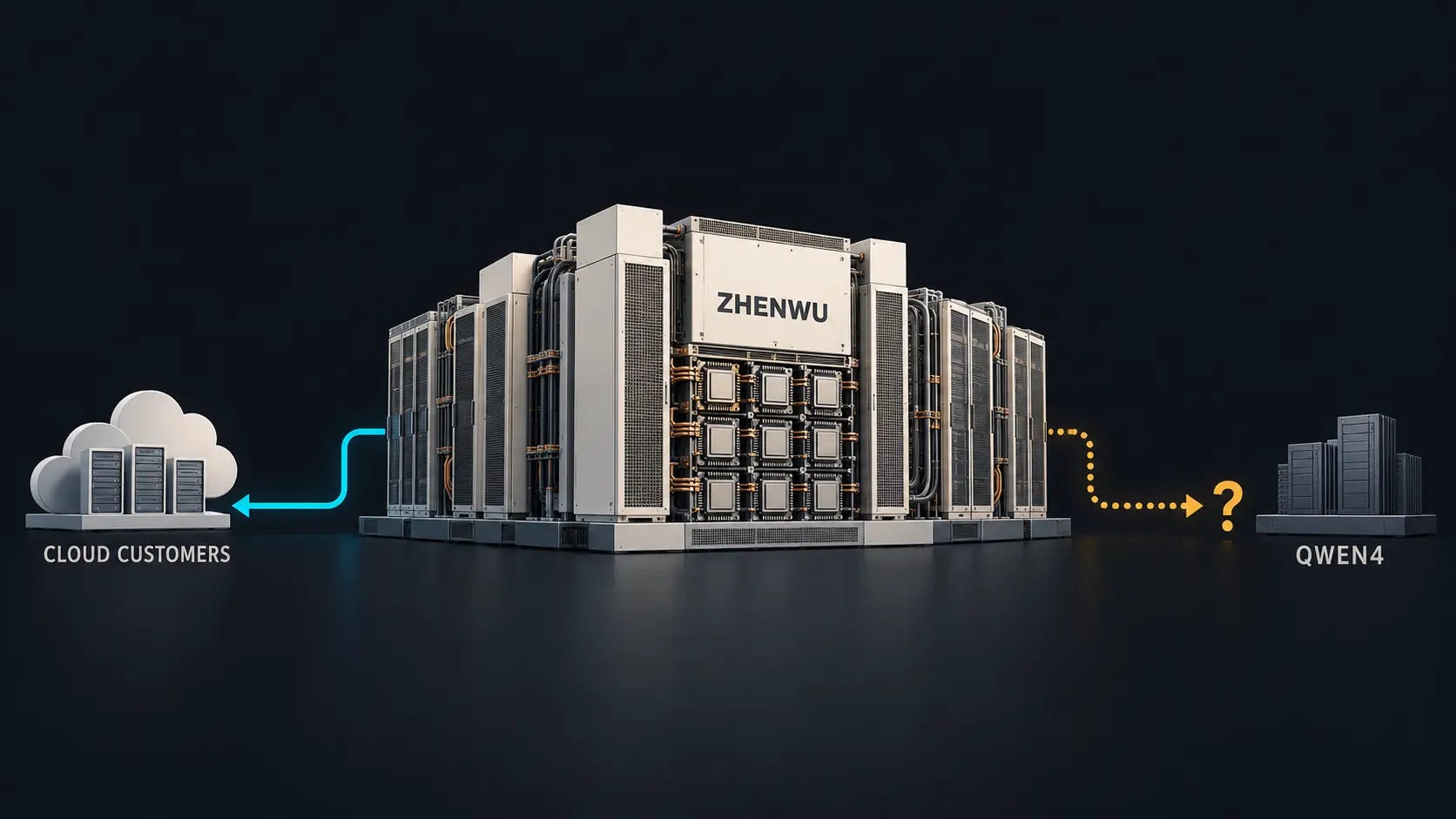
On September 17, Huawei said at its annual Huawei Connect conference in Shanghai that its next training chip, the Ascend 960DT, will be ready in the first quarter of 2027. That is three quarters earlier than planned. Five days later, at Apsara, Alibaba’s annual cloud conference in Hangzhou, Alibaba said its new Zhenwu V900 chip will enter mass production and go on sale in the same quarter. That is two quarters earlier than its May roadmap.
The announcements preceded Xi Jinping’s September 23 to 25 state visit to the United States.
Huawei is China’s largest domestic supplier of AI chips. T-Head, Alibaba’s chip design unit, is second. The two milestones differ, but the calendar is the same. Both also say demand is larger than what they can supply.
Both companies sell chips, and both rent computing through their clouds. What differs is what each has said about its own models. Huawei says its Pangu models will focus on its own products, and a senior Huawei executive has said the company keeps few chips for itself. Alibaba plans Qwen models of 5 trillion to 10 trillion parameters. Training them will take a large amount of chip time, and Alibaba has not said which chips will provide it.
My read: if Alibaba uses scarce Zhenwu capacity to train Qwen, its own models will compete with paying cloud customers for that capacity. Alibaba has not said how it will divide it.
Hello China Tech publishes three analyses a week on China’s AI, chips, robotics, and EVs, built from primary sources rather than second-hand coverage. If reading a chip launch by asking who gets the chips is the kind of reading you want more of, subscribe free and get each one as it publishes.
Two Roadmaps, No Named Factory
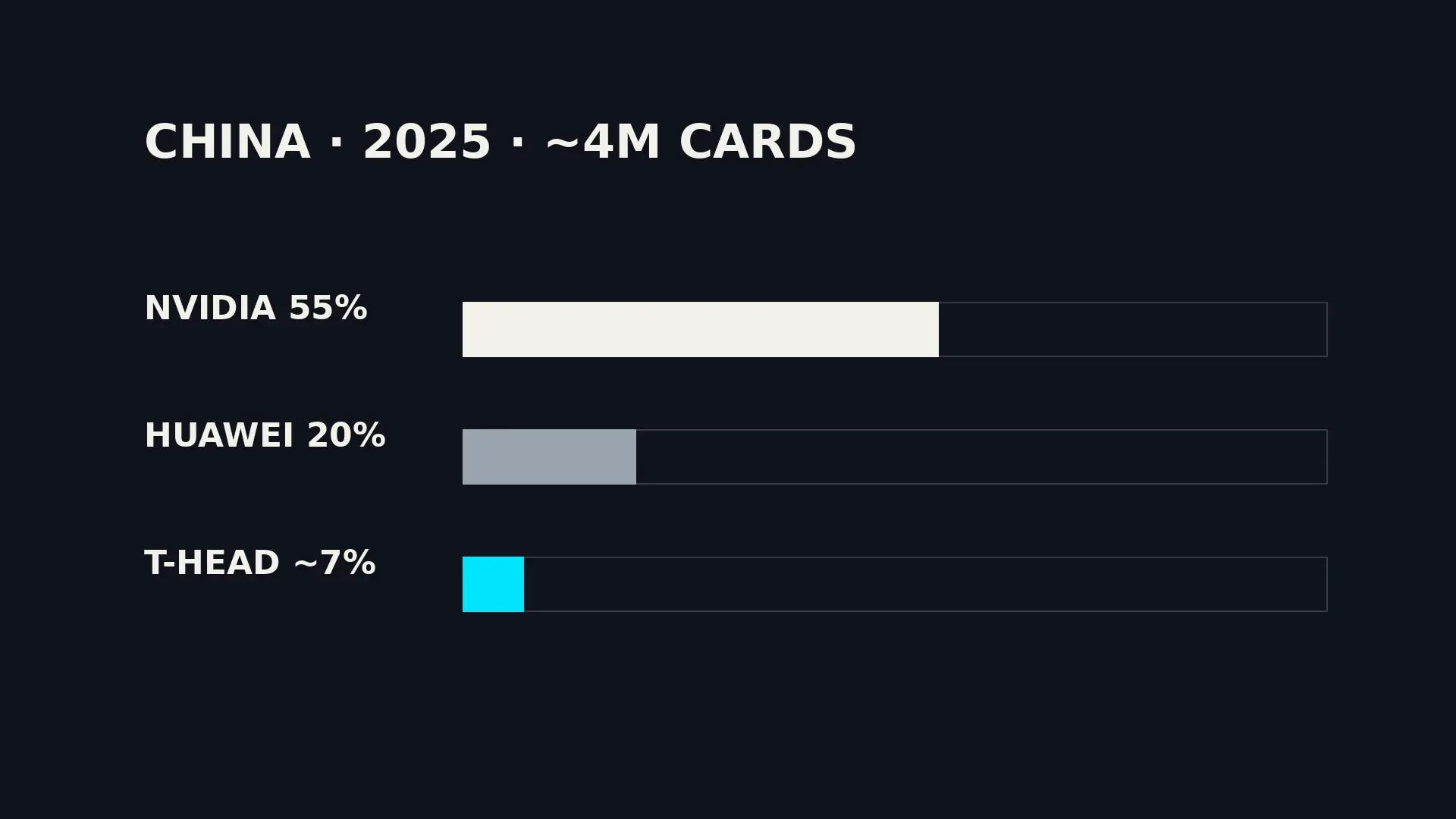
The size gap is large. IDC, a market research firm, put shipments of server AI accelerator cards in China at about 4m in 2025, Reuters reported. Nvidia shipped about 2.2m, or 55%. Huawei shipped about 812,000, or 20%. T-Head shipped about 265,000, roughly 7%. Huawei shipped about three times as many cards as T-Head. Shipment figures do not show how many chips either company kept for its own use.
Both have lost easy access to advanced overseas foundries, the contract factories that make chips. In November 2024, a letter from the US Commerce Department led TSMC to stop shipping certain AI and graphics chips made at 7 nanometres or below to affected Chinese customers, Reuters reported. Huawei has also faced company-specific US restrictions since 2019. Neither Huawei nor Alibaba names its foundry. Tom’s Hardware, a US technology site, links Huawei’s supply limits to the difficulty SMIC, China’s largest contract chipmaker, has had in raising output at 7nm and 6nm-class nodes.
Few advanced foundries remain open to either company. My read is that in 2027 the 960DT and the V900 will probably compete for the same domestic foundry capacity, because the domestic options are few. Neither company has disclosed its foundry, process node or production target, so the degree of overlap is unknown.
Eric Xu, one of Huawei’s rotating chairmen, spoke to reporters on the sidelines of Huawei Connect, Reuters reported. “Since we do not have enough capacity to even satisfy the demand in China, we do not have a plan to expand into the international market in a fully-fledged way.” He said Huawei supplies limited volumes to some countries where demand is strong. On Alibaba’s August earnings call, chief executive Eddie Wu said there is an industry consensus that the shortage of AI computing will last until at least 2030.
Both companies face the same shortage, and they have disclosed different things about how they use their chips. What follows looks at what each has said about who gets its chips, what training Qwen could cost Alibaba, and what neither company disclosed.